
 Admin
Admin 
One in five UK homes will report a blocked or slow-running drain this year, and sinks are the most common offender — yet most people wait weeks before doing anything about it. Understanding slow draining sink causes early can be the difference between a five-minute fix and a call-out bill. This guide compares the DIY route against professional jetting, so you know exactly where your money is best spent.
What Are the Most Common Slow Draining Sink Causes?
Before troubleshooting, it helps to know what you’re dealing with. Every sink connects to a P-trap, a branch pipe, and eventually the main waste stack — and a restriction anywhere along that route slows the flow. The most frequent slow draining sink causes we see across South East England properties are:
- Hair and soap scum — tangles into a sticky mass just below the plughole, especially in bathroom basins.
- Grease and fat build-up — cools and hardens inside kitchen pipework, narrowing the bore over months.
- Mineral scale from hard water — gradually coats pipe walls, a slow-burn problem in London’s hard-water areas.
- Foreign objects — jewellery, cotton buds, or food scraps lodged in the trap.
- Root ingress or a collapsed section — a structural issue further down the run, often in older pitch fibre pipework.
Spotting which of these applies determines whether a kettle of hot water will do the job, or whether you need a drainage engineer with proper kit.
DIY vs Professional: What’s the Real Cost Difference?
Budget is usually the first question homeowners ask, so here’s a straight comparison of what each route actually costs and what it actually fixes.
| Method | Typical Cost | Best For | Limitations |
|---|---|---|---|
| Boiling water flush | Free | Light grease or soap film | Won’t shift solid clogs or root ingress |
| Baking soda & vinegar | Under £5 | Minor organic build-up | Cosmetic fix at best on hard blockages |
| Plunger or hand auger | £5–£15 (one-off tool) | Hair clogs near the P-trap | Can push debris further down instead of removing it |
| Chemical drain cleaner | £5–£10 per bottle | Last-resort DIY option | Risks corroding older pipework; repeat purchases add up |
| Professional drain jetting | From roughly £70–£150 depending on access | Grease, scale, root ingress, recurring blockages | Higher upfront cost, but clears the full pipe run, not just the visible clog |
If you’re only ever treating the symptom with shop-bought chemicals, you can end up spending more over a year than a single professional jetting visit would have cost — and chemical cleaners can quietly damage older pipework in the process.
When Does a Slow Drain Point to Something Bigger?
Not every slow draining sink causes list ends at the P-trap. If several fixtures are sluggish at once, or water backs up when you run the washing machine, the problem usually sits further down the system. This is especially true in South East England, where a lot of housing stock still relies on pitch fibre pipework installed before 1970 — material that’s prone to blistering, deforming, and collapsing under root pressure decades later. Victorian-era clay pipes, common in Croydon and Wimbledon conversions, are similarly vulnerable to root ingress at joints. Homes built from the 1980s onward with PVC guttering and waste pipes tend to fare better, but scale build-up and poor falls can still cause chronic slow drainage.
Signs it’s no longer a DIY job:
- The sink drains slowly again within days of clearing it yourself.
- Multiple fixtures gurgle or drain slowly at the same time.
- A persistent sewage-like smell lingers around the drain.
- Water rises in a different fixture when you use the sink.
- You’ve already tried a plunger, hot water, and baking soda without lasting success.
A CCTV drain survey at this stage is far cheaper than guessing — it pinpoints the exact metre of pipe that’s failing rather than paying for guesswork.
Is Professional Jetting Worth the Cost?
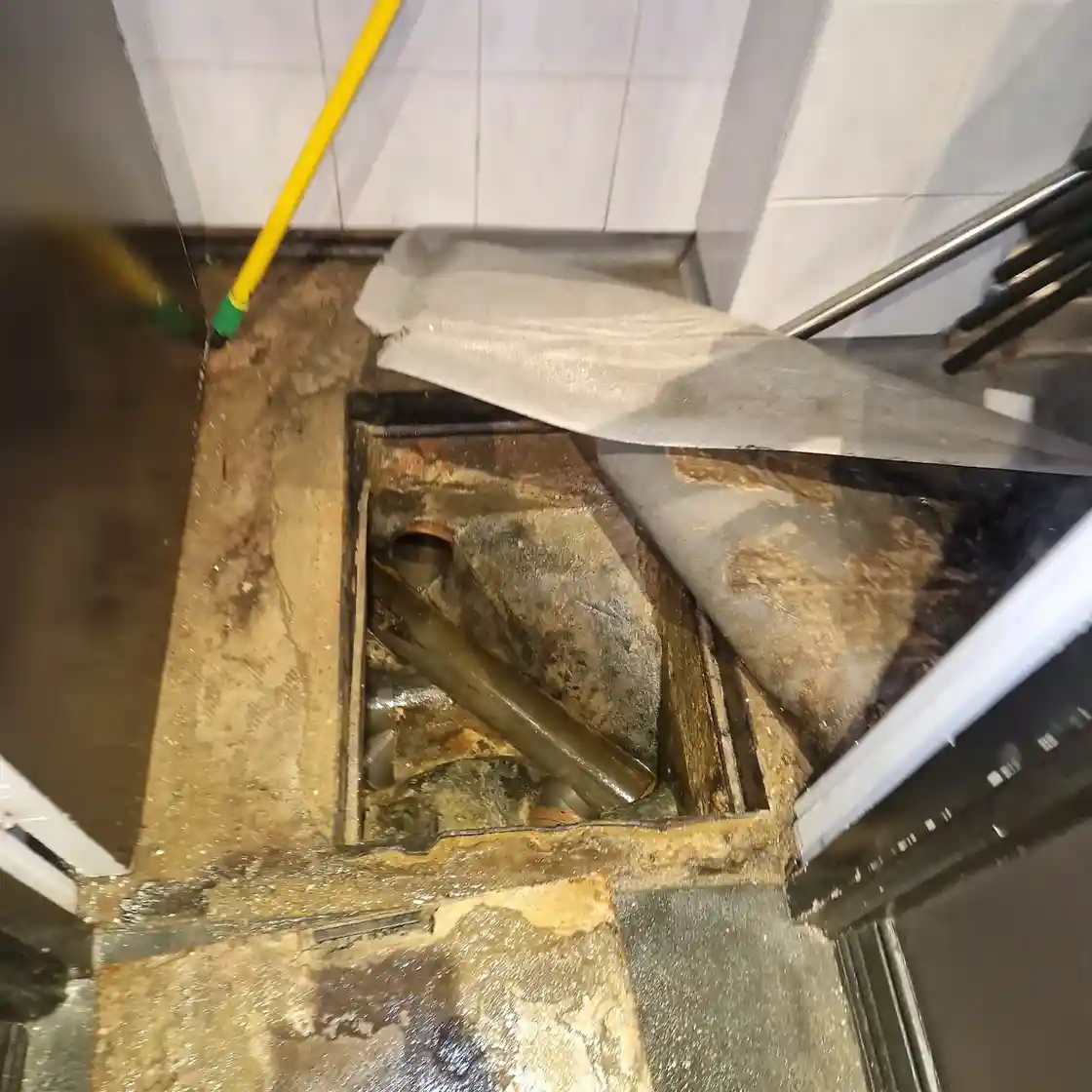
High-pressure water jetting scours the full internal diameter of the pipe, rather than just punching a hole through the middle of a clog the way a plunger or auger does. For grease-heavy kitchen sinks, this matters — a hand tool might restore flow today, but leaves a coating on the pipe wall that narrows again within weeks. Jetting strips that coating back to bare pipe, which is why most professional call-outs come with a longer-lasting result even at a higher upfront price.
Where jetting genuinely pays for itself is on recurring problems. If you’re calling someone out (or buying chemical cleaner) every few months, you’re likely paying more over a year than one thorough jetting visit would cost, and you’re still risking pipe damage from repeated chemical use. Landlords managing multiple properties in particular tend to find scheduled jetting cheaper than reactive emergency call-outs, since out-of-hours rates are almost always higher than a booked daytime visit.
For readers in South London specifically, our guide to drain unblocking in South London breaks down local pricing in more detail, and our piece on blocked drains fixes that last covers which methods actually hold up long-term rather than offering a temporary reprieve.
How Can You Prevent Slow Draining Sink Causes Recurring?
Prevention is the cheapest fix of all, and most of it costs nothing beyond a change of habit.
- Fit a cheap drain strainer or hair catcher — under £3 and it stops the single biggest cause of bathroom sink clogs.
- Never pour fat, oil, or grease down a kitchen sink; let it solidify in a container and bin it.
- Run hot (not boiling, if pipes are older plastic) water through the sink weekly to discourage scale and soap build-up.
- Avoid “flushable” wipes and cotton buds going anywhere near a plughole.
- Book an annual CCTV drain survey if your property has pre-1970 pitch fibre or Victorian clay drainage — catching root ingress early avoids a full excavation later.
Homeowners dealing with recurring root problems specifically may find our guide to preventing drain root ingress in Coulsdon useful, and if you want to understand where slowly draining water ends up once it leaves your property, our explainer on how a soakaway works covers a part of the system many homeowners never think about until it fails.
Frequently Asked Questions
What is the most common cause of a slow draining sink?
Hair and soap scum are the leading cause in bathrooms, while grease and food debris dominate in kitchens. Both build up gradually inside the P-trap until flow is restricted.
Can a slow draining sink fix itself?
Rarely. Minor soap film may clear with regular hot water flushes, but hair, grease, and scale build-up tend to worsen without intervention.
How much does it cost to fix a slow draining sink professionally in the UK?
A straightforward call-out and jetting visit typically runs from roughly £70–£150 depending on access and severity, though recurring or root-related blockages can cost more if excavation is needed.
Is it bad to ignore a slow draining sink?
Yes — left unaddressed, a partial blockage typically becomes a full one, risking overflow, water damage, and unpleasant odours, and can point to a deeper issue like root ingress in older pipework.
Getting Your Drain Properly Diagnosed
If you’ve worked through the DIY options above and the sink is still slow, or the problem keeps returning, it’s worth getting a proper diagnosis rather than repeating the same fix. Water companies such as Thames Water only take responsibility once a fault reaches the public sewer, so anything on your side of the boundary — including most slow draining sink causes — is down to you to resolve. Following the drainage guidance set out under the Water Industry Act 1991 and industry standards like WRAS guidance on water fittings helps ensure any repair work is compliant and doesn’t cause bigger problems down the line. For homes in older housing stock, understanding British Standards around drainage design (such as BS EN 752) can also explain why some properties are more prone to slow drainage than others. If you’d rather skip the guesswork, our team can run a CCTV survey, confirm the cause, and quote a fixed price before any work starts — no hourly surprises. See our related read on causes of blocked drains Croydon homeowners often get wrong for more on diagnosing tricky cases correctly the first time.
No comments yet. Be the first to leave a review.
Comments are closed for this post.