
 Drainage & Plumbing Ltd
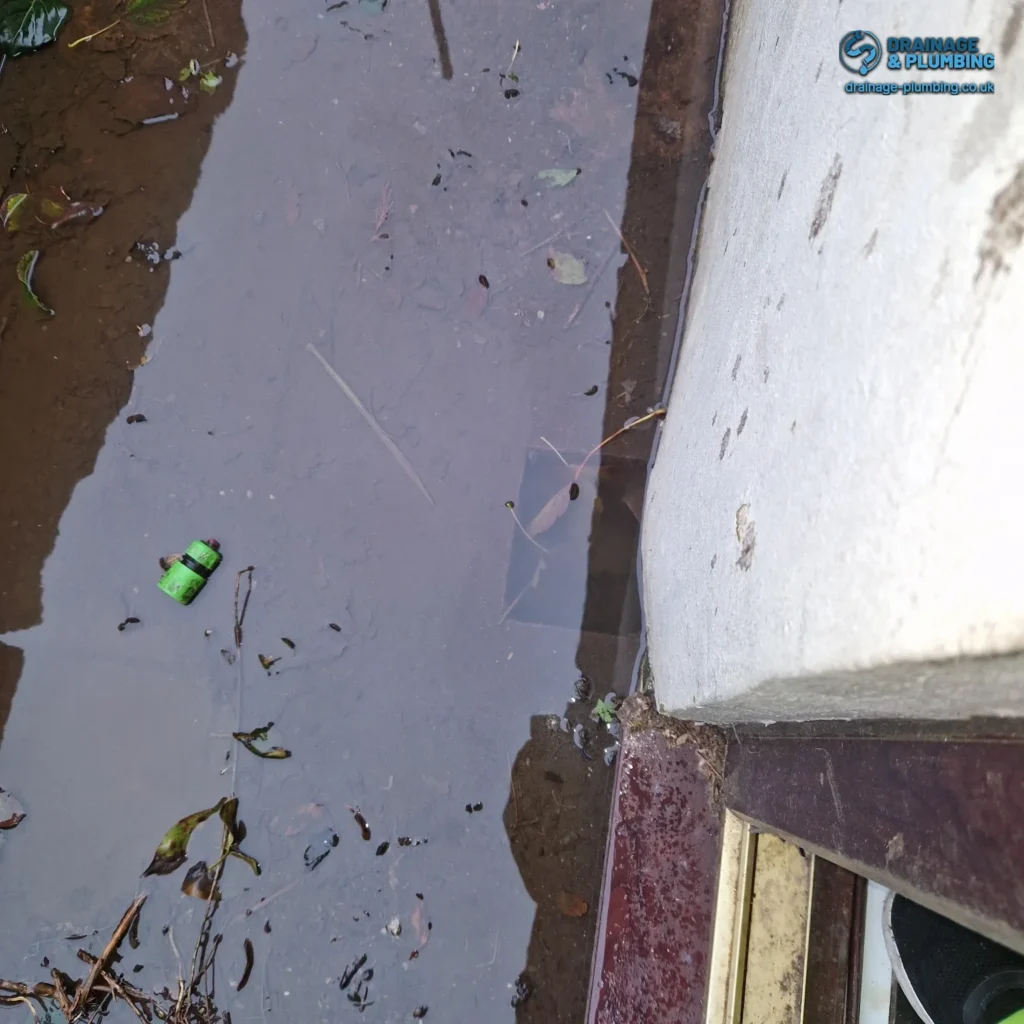
An outside drain overflowing when it rains can be a sign that water has nowhere to go further along the system. At this Brighton home, storm-blown leaves mixed with existing food fat and debris, leaving several gullies and inspection chambers backed up.
We attended the property, cleared the blockage with high-pressure water jetting and checked the restored flow with a dye test. The job showed why washing leaves down a gully can turn a visible problem into a harder-to-reach blockage.
Outside drain overflowing in the rain?
Tell us what you can see. We can advise on the next step and arrange an inspection if needed—you do not have to identify the cause yourself.
The job at a glance
- Location
- Residential property in Brighton
- Problem
- Several outside gullies and inspection chambers backed up, with water overflowing during rain
- System
- Combined rainwater and household wastewater drainage
- Cause
- Tree leaves mixed with existing food fat and other debris
- Method
- Inspection through accessible chambers, followed by high-pressure water jetting
- Outcome
- Normal flow restored and checked with a dye test
Why is your outside drain overflowing when it rains?
Rain adds water to the drainage system. If leaves, fat or other debris restrict the route out, water can back up and escape through gullies or inspection chambers. In a combined system, rainwater and household wastewater share that route, so one blockage can affect several connected drains.
If you have an outside drain overflowing whenever it rains, note whether toilets or other drains also back up. Tell the engineer which outlets are affected; this helps explain whether the symptoms are confined to one gully or involve a connected system. Keep clear of any overflowing water.
That was the problem we found at this Brighton property. It does not mean every overflowing drain has the same cause: intense rainfall or a problem in the wider sewer network can also lead to flooding.
How leaves in a gully became a larger blockage
Storm-blown autumn leaves collected in the outside gully at this Brighton home during Storm Austen. With rain continuing to enter the combined drainage system, the leaves added to an existing build-up of fat and debris.
The customer told us they had poured a bucket of water into the outside gully to try to clear it. From their account and what we found, the likely sequence was that leaves moved further into the drainage system towards an inspection chamber and contributed to a larger obstruction.
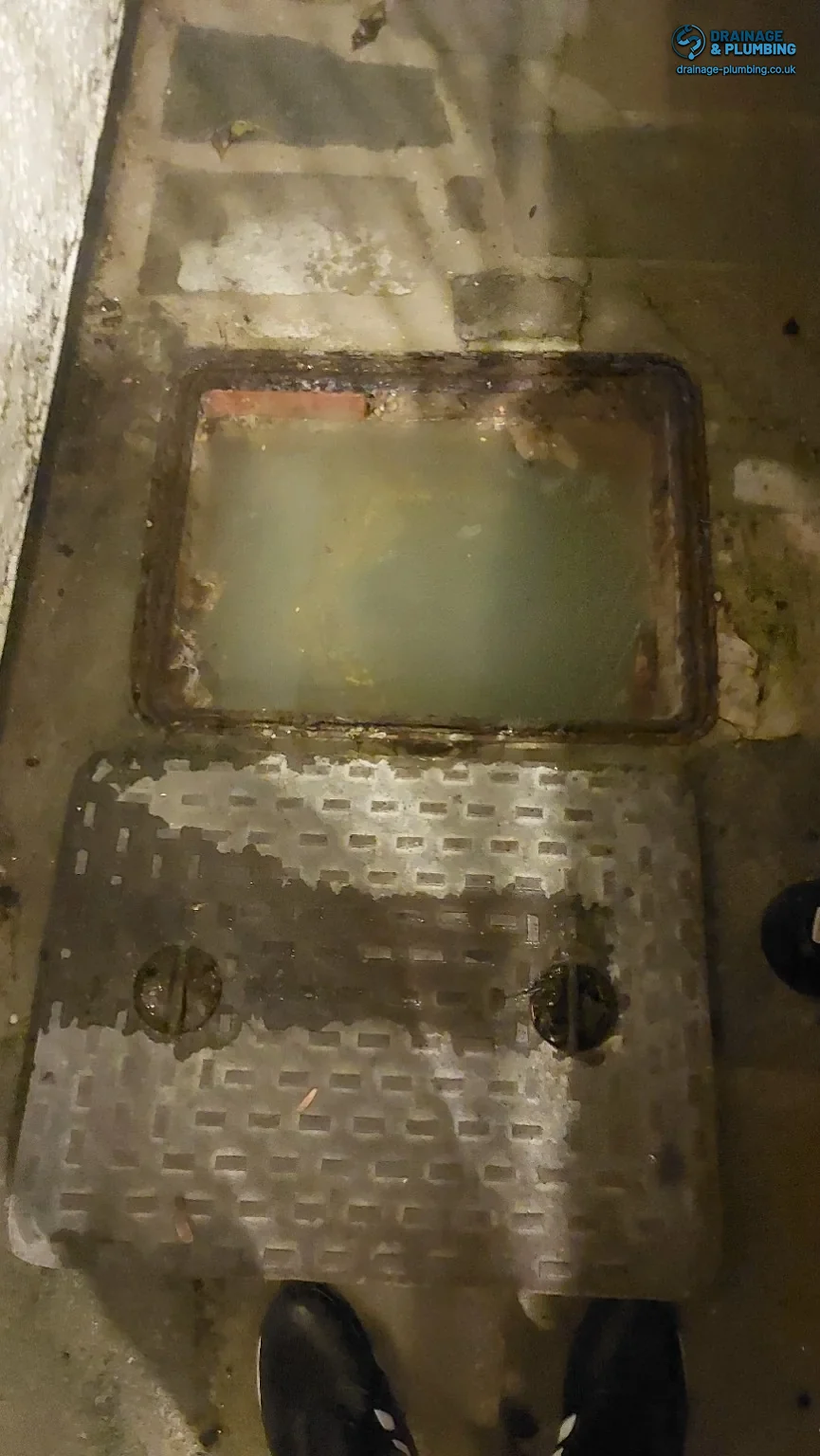
By the time we arrived, several gullies and inspection chambers were full. Water was overflowing, and the continuing rain was adding more water to a system that could not drain properly.
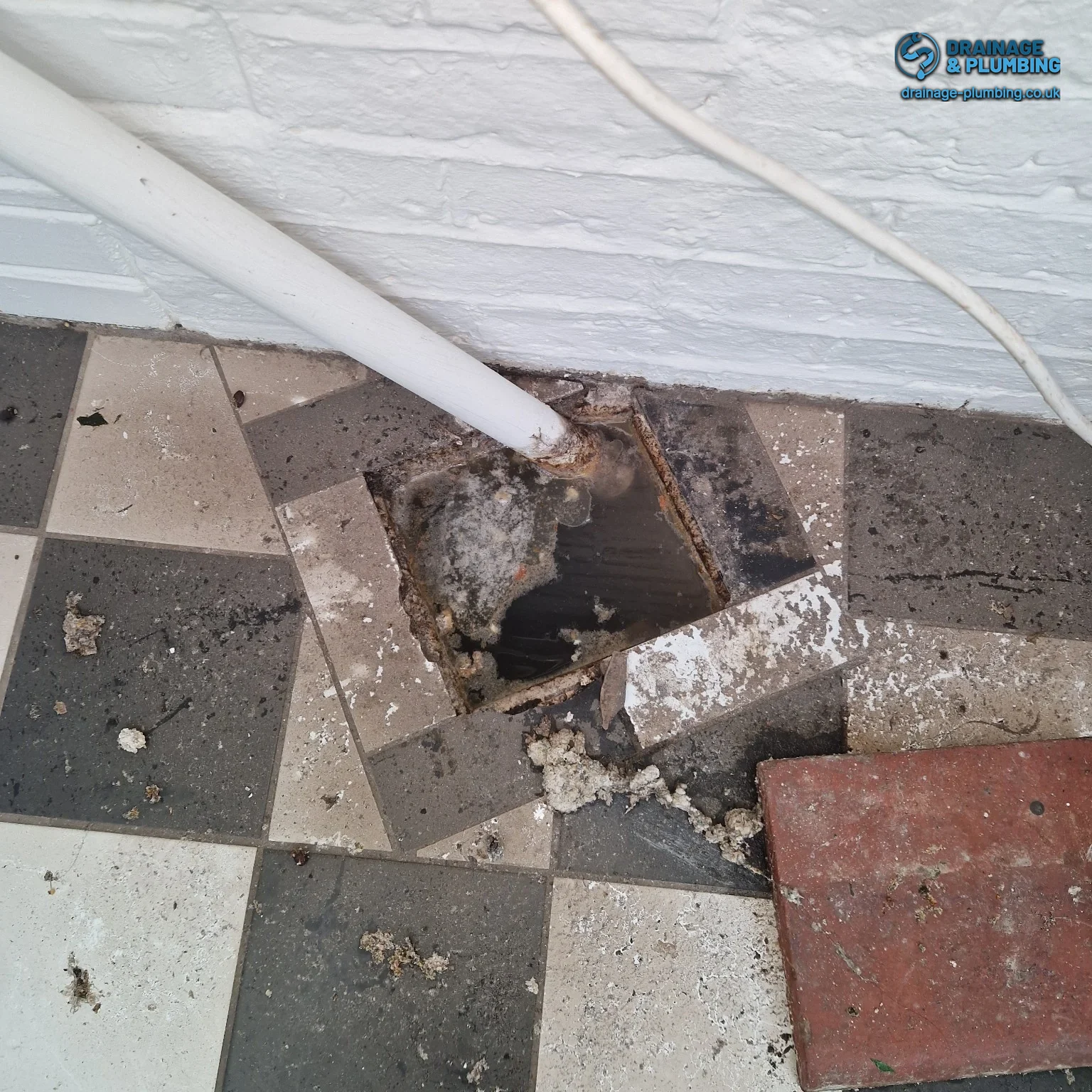
The material we encountered was mainly tree leaves mixed with food fat and other debris already in the wastewater system. Clearing leaves from the top of one gully would no longer have been enough: the obstruction was further along the connected drains.
How we cleared the drains and checked the result
We lifted the inspection chamber covers one by one to investigate the backed-up system and identify where to work. We then used high-pressure water jetting to clear the obstruction and restore flow. Our guide explains more about how we clear stubborn blockages with jetting.
Once the drainage was running normally again, we carried out a dye test to check that water was travelling through the system as expected. The blockage was cleared and normal flow returned. The dye test confirmed flow at that time; it was not a structural survey of the underground pipes.
Why a bucket of water may make a leaf blockage worse
Pouring water over leaves does not remove them from the drainage system. It may simply move them out of sight. Where there is already a restriction downstream, adding water and debris can make the situation worse.
Our advice to this customer was to remove accessible surface leaves before they enter the gully, rather than trying to wash them through. Our guide to drains backing up after heavy rain covers the wider warning signs and what to do next.
Several drains backing up together?
Stop adding water and call 07771 200075 to explain what is happening. We can advise on the next step. If water is rising or sewage is overflowing, our team provides urgent drainage help.
5 ways to prepare your outside drains before the next storm
Regular maintenance can reduce avoidable blockages, particularly where trees shed leaves near gullies. It cannot guarantee protection from extreme rainfall or problems in the wider sewer network.
- Sweep leaves away from gullies. Collect fallen leaves before heavy rain can wash them towards the drain.
- Lift accessible leaves off the grating. Where there is no flooding or suspected sewage contamination, wear gloves and remove surface leaves. Do not reach into a drain or lift heavy inspection covers yourself.
- Dispose of the material appropriately. Clean garden leaves can go into garden-waste collections where accepted. Sewage-contaminated material needs separate disposal advice and should not go into garden waste.
- Keep food and cooking fat out of sinks. Scrape plates and collect waste fat for appropriate disposal. Southern Water’s blockage prevention advice explains how kitchen waste contributes to blocked pipes.
- Investigate repeated slow drainage. A gully that repeatedly fills, or several drains that back up together, needs attention before the next downpour.
If a combined drainage system is overflowing, treat the water as potentially contaminated. Keep children and pets away, avoid contact and seek professional help.
Questions about leaves and overflowing outside drains
Why is my outside drain overflowing when some water still drains away?
Yes. Water may still pass a partial blockage. In this case, leaves combined with existing fat and debris further into the system, leaving too little capacity for the incoming water.
Does every full gully need unblocking separately?
Not necessarily. Several connected gullies can back up because of one obstruction further downstream. An investigation helps establish where the blockage is, rather than assuming each gully has a separate problem.
Who is responsible for a blocked outside drain in Brighton—me or Southern Water?
A drain serving only your property within its boundary is usually the property owner’s responsibility. Southern Water normally maintains public sewers, including shared sewers and adopted lateral drains beyond property boundaries. Responsibility depends on where the blockage is and who owns that pipe—not simply where water overflows. If a shared or public sewer may be affected, contact Southern Water before arranging private clearance. Their blocked-drain guidance explains who is responsible. If you rent, inform your landlord or managing agent too.
Not sure who to contact? Call 07771 200075, describe what you can see and tell us whether neighbouring properties are affected. We can advise whether to contact Southern Water or arrange a private drain inspection.
Outside drain overflowing in Brighton? Get advice
If you have an outside drain overflowing, our Brighton drainage team can discuss the symptoms and arrange an inspection where needed. If work is required, we inspect first and agree a fixed price before starting.
Call 07771 200075 — speak to our team
Have your postcode ready and tell us whether one drain or several are affected, and whether the water level rises when it rains.
No comments yet. Be the first to leave a review.
Comments are closed for this post.