
 Admin
Admin If your manhole is overflowing, stop using water in the house straight away. Every flush, shower and washing-machine cycle adds to what’s coming up out of the cover. Keep children and pets away, take a few photos from a safe distance, and get advice before anyone starts rodding.
I’m Ash, an engineer at Drainage & Plumbing Ltd. I’ve been clearing drains across South London and Surrey for over 17 years. Below is what I’d tell a friend who rang me with this problem, and a job in Purley that shows how a simple blockage can turn into a long one.
Manhole overflowing right now?Call, or WhatsApp us a photo for advice · 24/7 · No call-out fee
What to do right now
- Stop using water. Toilets, sinks, showers, the washing machine and the dishwasher. Tell everyone in the house.
- Keep children and pets away. Avoid contact with sewage. Thames Water recommends keeping off affected outdoor surfaces for between 6 and 20 days, depending on the season and surface. Follow its guidance for the affected area.
- Take photos and a short video. One wide shot and one closer view from a safe position. The level can drop before anyone arrives, and your insurer or landlord may want to see it.
- Keep people away from an open chamber. If the cover has lifted or been removed, prevent access and leave handling a heavy or displaced cover to someone equipped to do it safely.
- Ask whether neighbours are affected. Tell the engineer about any other overflowing chambers you can see without lifting covers or approaching sewage.
What not to do
- Don’t flush to push it through. It can raise the level in the garden.
- Don’t pour bleach, caustic soda or drain unblocker into the chamber. Chemicals may remain hazardous in standing waste and can splash onto whoever clears it.
- Don’t put a hose or domestic pressure washer in it. Adding water can worsen the overflow.
- Don’t climb or lean into the chamber. Underground chambers can contain dangerous gases and too little oxygen.
- Think twice about hiring rods. Sections can separate or become lodged if used incorrectly. The Purley job below shows how a lost rod can complicate a clearance.
Why is my manhole overflowing?
The manhole in your garden or drive provides access to an inspection chamber on your drain run. When a pipe downstream becomes blocked, wastewater can back up and escape beneath the cover. The causes I find most often are:
- Wet wipes and kitchen fat, which can collect inside the pipe and restrict the flow.
- Tree roots that have found their way into a joint and grown into a mat inside the pipe.
- A cracked or dropped pipe, often old clay, that catches material flowing past it.
- A blocked interceptor trap. Some older drains have a U-shaped trap at the chamber outlet. Debris or a displaced access cap can obstruct it.
- A full public sewer. If it only overflows in heavy rain, the sewer may be overloaded, although a partial blockage is another possibility. Our post on blocked drains after heavy rain explains more.
Who is responsible for the blocked drain?
You’re usually responsible for a drain that serves only your property and lies inside your boundary. Most shared sewers and lateral drains outside the property boundary are the sewerage company’s responsibility, subject to adoption and other exceptions. If you are unsure about your drain layout, contact our team for advice. Our guide explains more about who is responsible for a blocked drain.
- A full chamber upstream and an empty one downstream can help an engineer locate a blockage between them. That does not establish ownership on its own: the boundary, connections and adoption status matter too.
- Not sure where the blockage is? Call 07771 200075 or send us a photo on WhatsApp. Tell us whether neighbouring properties are affected. We can advise on the next step and explain whether the problem appears to involve a private drain or a shared sewer.
- The type of house is only a clue. A detached house can still connect to a shared sewer. The actual pipe layout and boundary determine responsibility.
A real job: the Purley bungalow
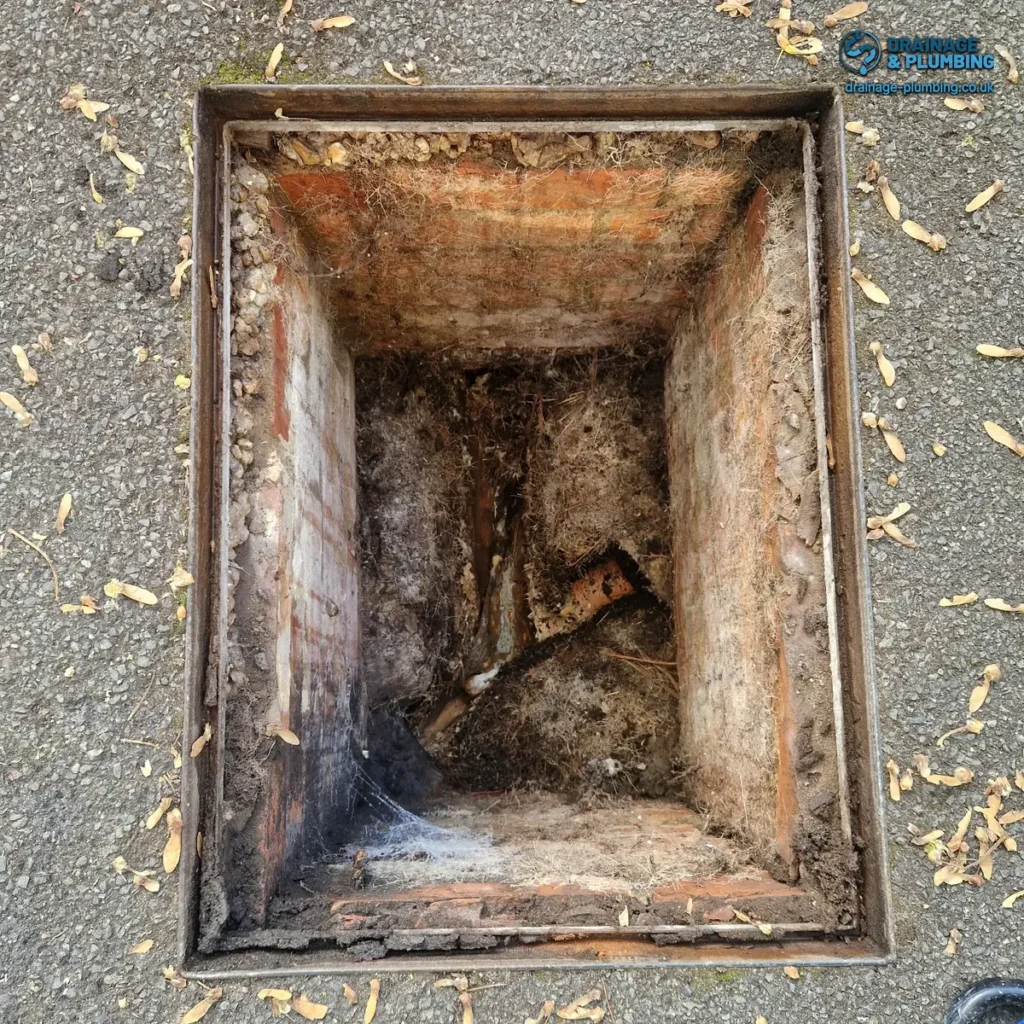
A man in Purley rang us because the manhole in his garden was overflowing. By the time he called, he’d already had a go himself with a set of drain rods. I don’t blame anyone for trying; it looks simple. But when I got there, one section of his rods had come off and was stuck somewhere down the pipe.
The affected section served this property alone and was within its boundary, so this was a private-drain job. The resident was renting and could not reach his landlord abroad to discuss authorising the work.
How it was cleared
- Found the rod. I used the drain camera to locate where the lost section had lodged.
- Got it out. I used a retrieval tool on the end of my own rods to catch it and draw it back to the chamber.
- Found the original obstruction. With the rod out of the way, the underlying blockage was tree roots that had grown into the pipe.
- Cleared it. High-pressure jetting cleared the root obstruction and flushed the line through.
- Checked it. I ran the camera through again to check the cleared section before I left.
We were there about three hours, and most of that was getting the rod back. The roots on their own would have been a much shorter job.
Once roots have found a way into a joint, they can grow back. Clearing an obstruction does not repair the entry point. If the same drain keeps blocking, it’s worth investigating a longer-term repair. Our guide to tree roots in drains explains the options.
How we clear an overflowing manhole
Every job is a bit different, but this is how our drain unblocking visits usually go:
- On the phone. We ask what is overflowing and whether next door is affected. A WhatsApp photo helps. If it sounds like the water company’s problem, we’ll tell you.
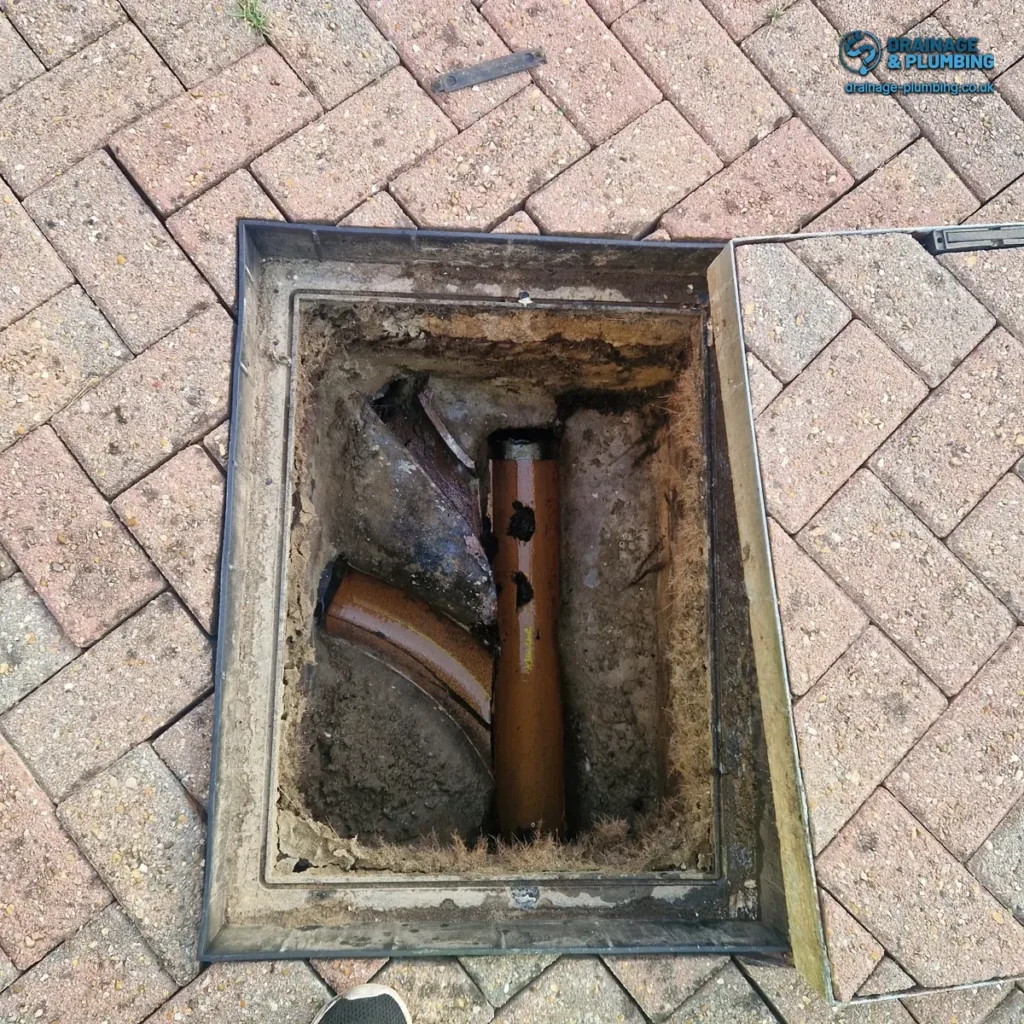
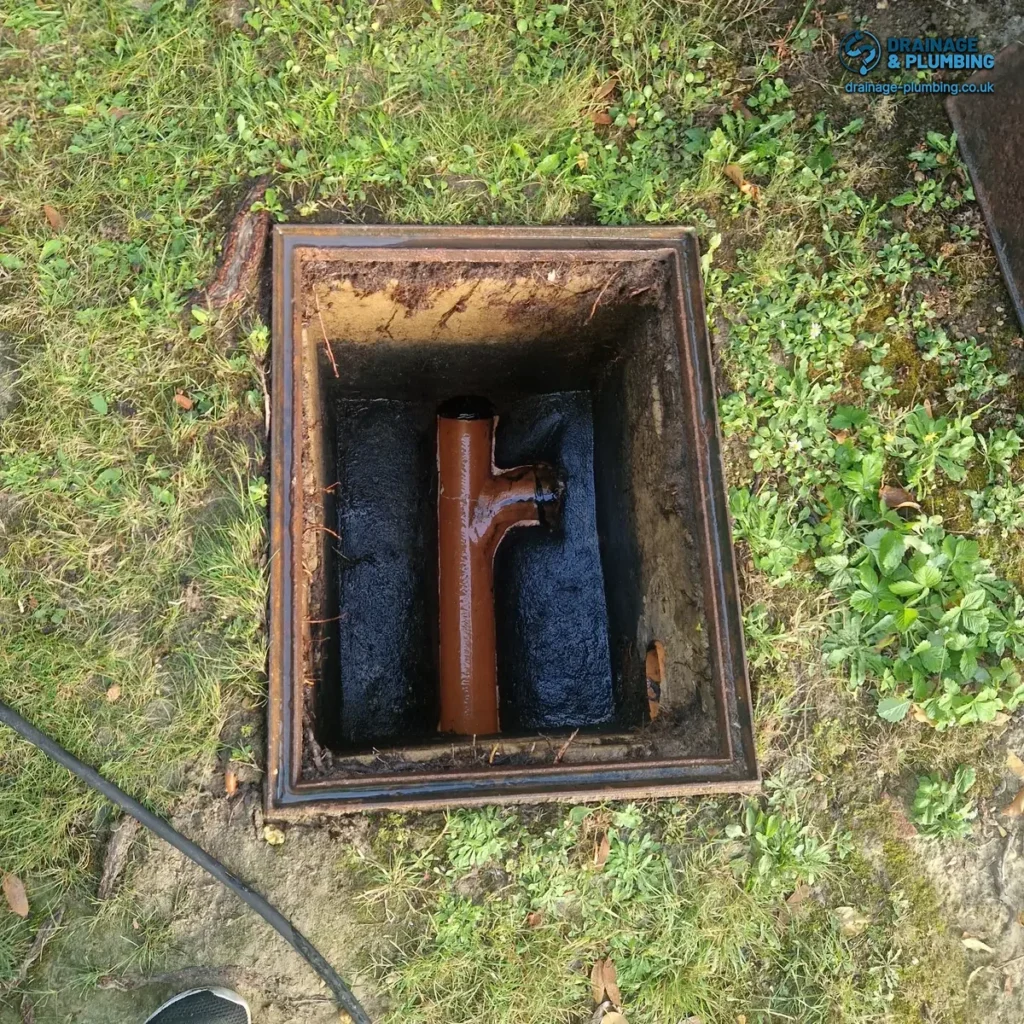
- Find the blocked stretch. On site, we assess the layout and safely inspect accessible chambers to narrow down the obstruction.
- Agree the price. You get a fixed quotation before clearance work starts, and there’s no call-out fee.
- Use an appropriate method. Rodding can suit a straightforward accessible blockage. High-pressure jetting is often better suited to deposits or obstructions further along the run and can clear some root blockages with suitable equipment. The choice depends on the blockage and pipe condition. Read our guide to rodding and jetting.
- Check the flow. Where appropriate, we run taps and flush toilets while checking that wastewater passes through the chambers.
- Use the camera when there is a reason. For example, an object stuck in the pipe, recurring blockages or signs of damage.
- Explain the findings. Before we leave, we explain the likely cause and recommend any maintenance or further investigation needed.
What affects the price
There’s no call-out fee, and the price for the agreed work is fixed before we start. Factors that affect the quotation include:
- Access: the chamber location, access through the property and seized covers.
- The blockage location: how far along the run it lies and how accessible it is.
- The obstruction: wipes, deposits, roots and foreign objects can require different equipment and time.
- Anything stuck in the pipe: a lost rod or another object may need separate retrieval.
- The pipe condition: damage may require further investigation or a separate repair quotation.
Cleaning up afterwards
Once the flow is restored, affected areas still need attention. Thames Water’s sewer flooding advice recommends:
- Wash your hands frequently and decontaminate footwear with a mild disinfectant.
- Arrange appropriate cleaning and disinfection of affected hard surfaces. A professional cleanup may be needed.
- Discard food and garden produce touched by floodwater, and do not grow food crops in affected soil for 12 months.
- Keep children and pets off contaminated areas, following the surface-specific guidance.
- Contact your doctor if you develop diarrhoea or vomiting after exposure.
Tell your insurer early. Our guide to whether blocked drains are covered by home insurance explains what may be included. Thames Water says some severe external sewer-flooding compensation claims must be made within three months; check the applicable conditions with your sewerage company.
Overflowing manhole FAQs
Is an overflowing manhole an emergency?
Ongoing sewage flooding needs urgent attention, especially if it is entering the house. We run a 24-hour emergency service, including nights, weekends and bank holidays. If sewage is also backing up indoors, see emergency sewer backups.
Can I still use the toilet?
Avoid flushing until the drain is flowing again. Reporting a blockage to the water company does not mean it is clear; follow the attending engineer’s advice.
Do I need a plumber or a drainage engineer?
For an overflowing inspection chamber or an underground blockage, contact a drainage specialist with suitable equipment. Some plumbers also provide drainage services. Our guide explains more about drainage and plumbing.
I rent. Who pays?
Landlords generally have repairing obligations covering drains under section 11 of the Landlord and Tenant Act 1985, but responsibility for blockage costs depends on the circumstances and cause. Contact your landlord or agent promptly and follow up in writing with photos. If you authorise emergency work yourself, retain the invoice and engineer’s notes; reimbursement is not automatic. Shelter or Citizens Advice can help with a dispute.
Do you cover my area?
We’re based in Purley and work across Croydon, the rest of South London, Surrey and Sussex. See all the areas we cover.
Overflowing manhole? Talk to an engineer.Drainage services across South London, Surrey and Sussex · Available 24/7
No comments yet. Be the first to leave a review.
Comments are closed for this post.