
 Admin
Admin 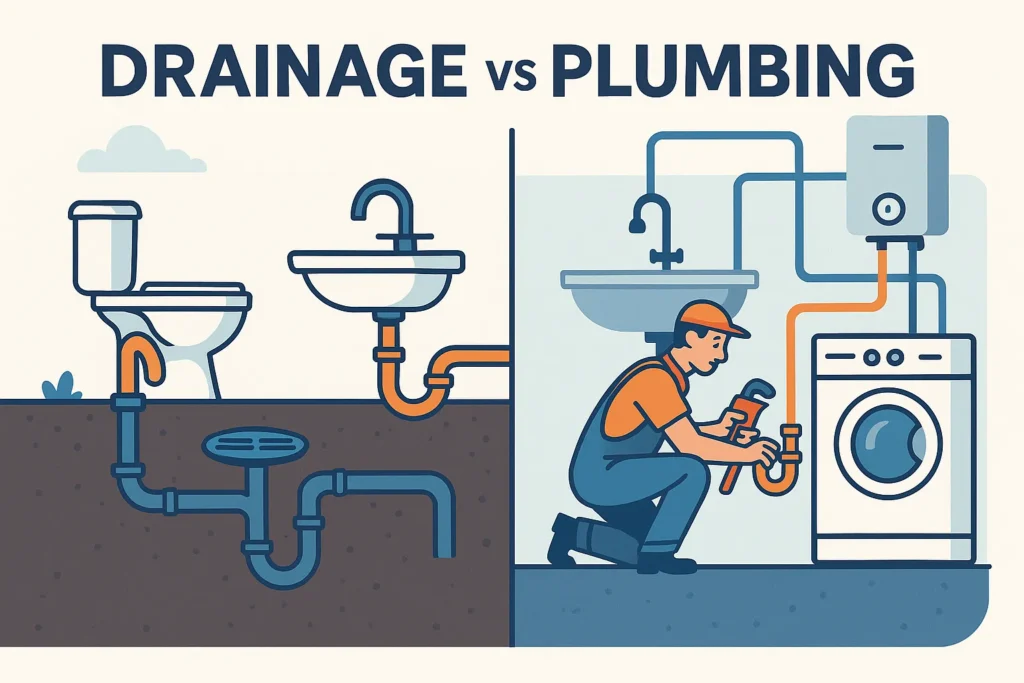
Get the drainage vs plumbing difference wrong and you could pay two call-out fees instead of one. Most homeowners make this mistake when their drain blocks — they ring a plumber first, wait in for a visit, and then get told it’s actually a drainage job and they need someone else entirely. That single mix-up can cost you a wasted morning and an avoidable second call-out fee.
What’s the Actual Drainage vs Plumbing Difference?
The simplest way to remember the drainage vs plumbing difference is direction of water flow: plumbing brings clean water in, drainage takes wastewater out. Plumbing covers the pipes, boilers, taps and fixtures inside your walls; drainage covers the underground pipework, manholes and sewer connections that carry waste away from your property. If your problem involves water arriving where it shouldn’t (a leak, low pressure, no hot water), that’s a plumbing issue — but if water isn’t leaving properly (gurgling, slow draining, bad smells, flooding outside), that’s drainage, and it’s a different trade with different tools entirely.
How Do I Know If It’s a Drainage Problem, Not a Plumbing One?
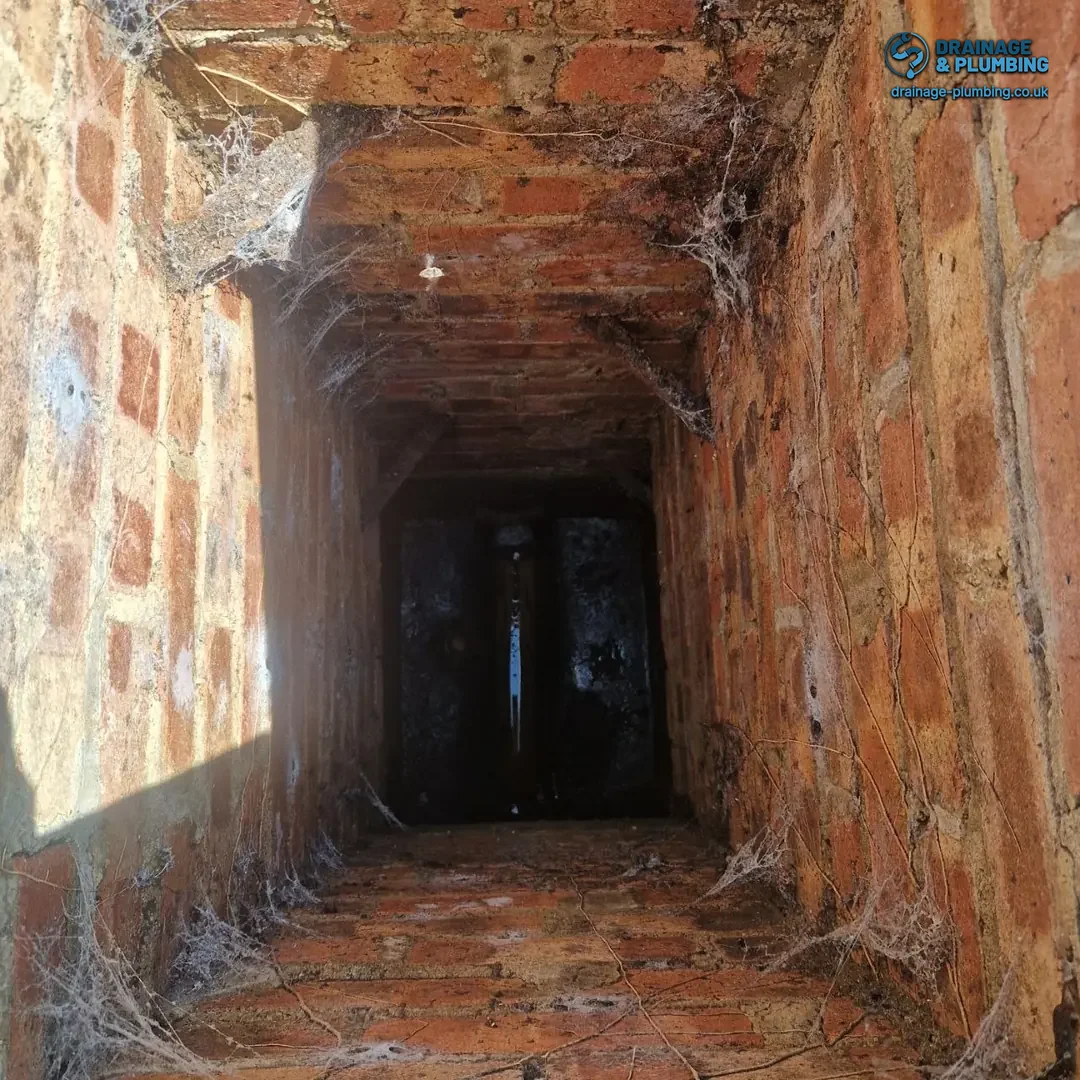
Listen and look before you call anyone — gurgling noises from a plughole, water backing up in a different fixture, or smells from an outside gully are classic drainage signs, not plumbing ones. Blocked drains almost always sit downstream of your internal pipework, in the underground runs that connect your property to the public sewer. If you’ve noticed strange sounds from a waste pipe, it’s worth reading up on what gurgling or banging drains usually mean before you decide who to ring.
A lot of South East England properties still run on older pipework, which changes how a fault behaves. Homes built before around 1970 often still have pitch fibre drain runs, which deform and collapse under root pressure or heavy traffic loading over time; Victorian-era terraces frequently still rely on original clay pipework, which is durable but prone to joint failure and root ingress after a century of ground movement. Anything installed from the 1980s onward is more likely to be PVC, which is more resilient but not immune to blockages from fat, wipes, or poor installation falls. An engineer who knows the difference between these materials on sight will diagnose faster and avoid recommending the wrong repair method.
Which Costs More to Fix — a Plumbing Fault or a Drainage Fault?
This is where the drainage vs plumbing difference really matters to your wallet. A plumbing call-out for a dripping tap or minor leak is usually the cheaper, quicker fix; a drainage job — especially one needing a CCTV survey or excavation — carries a wider price range because you’re often paying to diagnose a problem you can’t see. Getting the trade right the first time avoids paying for a diagnostic visit twice.
- Confirm the direction of the fault — is water arriving somewhere it shouldn’t, or failing to leave? This decides which trade you need.
- Ask for a fixed-price CCTV survey first — this maps the blockage or damage before any digging starts, so you’re not paying for guesswork.
- Get jetting quoted separately from repair — many blockages clear with high-pressure jetting alone and never need a repair quote at all.
- Check if the fault is on your property or the shared sewer — this affects who’s liable for the cost, including whether your water company should be picking up the bill.
- Compare like-for-like quotes — a drainage specialist and a general plumber quoting the same ‘blocked drain’ job are not comparing the same scope of work.
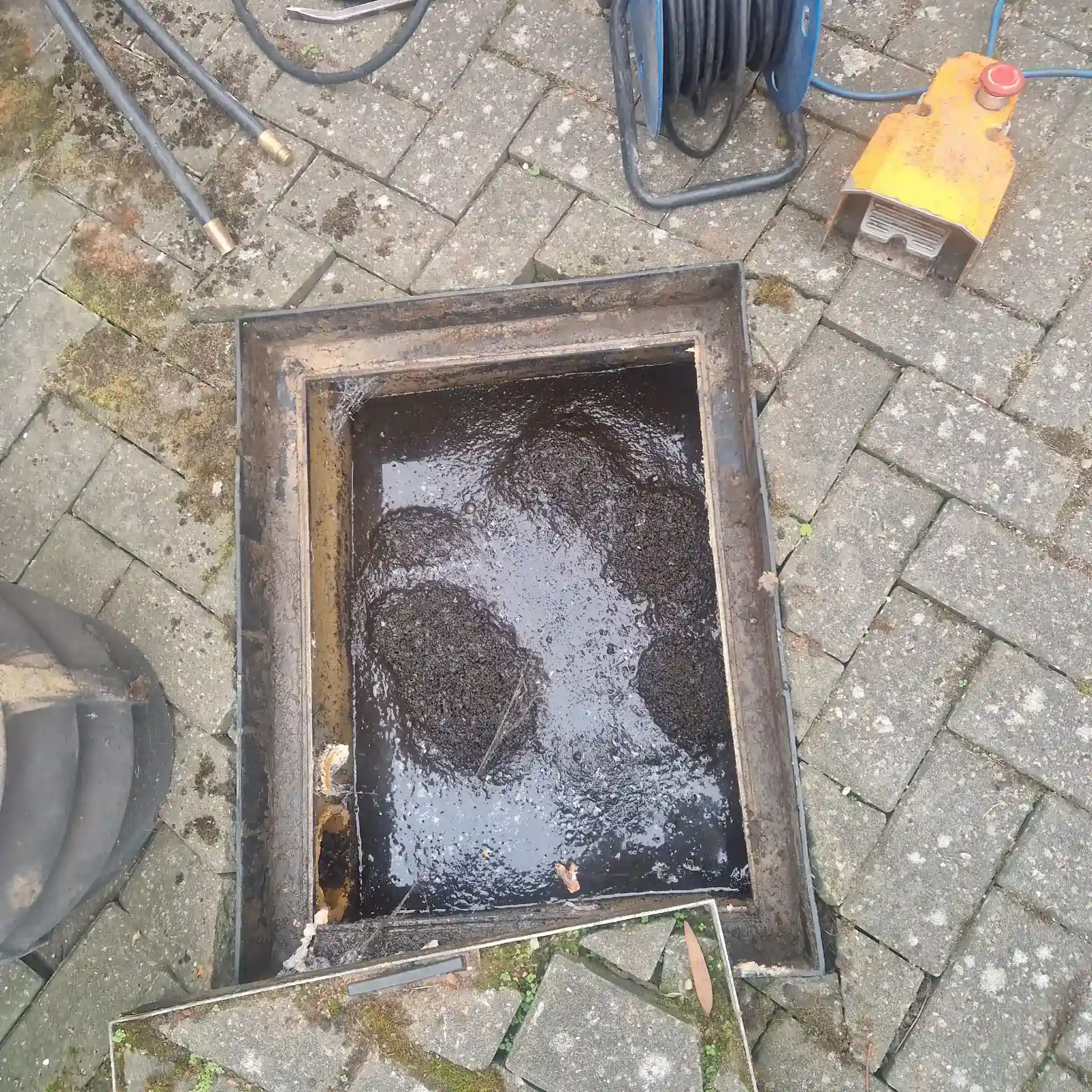
Kitchens and commercial units add another layer of cost risk. Fat, oil and grease (FOG) build-up is one of the most common — and most preventable — causes of recurring blockages, and it’s a plumbing-adjacent problem that’s actually a drainage one. If you run a food business, it’s worth reading about the most common drainage problems in restaurants and how they’re fixed before a blockage forces an emergency call-out at a worse rate.
Can a Blocked Drain Turn Into a Bigger, More Expensive Problem?
Yes — and this is the part that hits budgets hardest. A blockage left untreated can lead to a collapsed section of pipe, and repairing a collapse costs considerably more than clearing a blockage, because it usually means excavation rather than jetting. Regulatory guidance from bodies like the UK government’s legislation database and standards such as those referenced by the Water Regulations Advisory Scheme exist precisely because poorly maintained drainage causes property damage and environmental problems, not just inconvenience. If you’re seeing early warning signs — sinking ground, damp patches, or drains that block repeatedly in the same spot — it’s worth checking our guide on how to tell if you have a collapsed drain before it becomes an excavation job. Shower drains are another spot where small blockages get ignored until they’re a bigger job — if yours is running slow, see what’s typically blocking a shower drain and how to check it yourself.
Landlords in particular should treat drainage as a maintenance-budget line item rather than a reactive spend. A CCTV survey every few years on an older property — especially anything with suspected pitch fibre or clay pipework — is far cheaper than an emergency excavation after a tenant reports flooding. The Health and Safety Executive’s guidance on confined spaces and drainage work also explains why manhole and underground drain work needs a trained specialist rather than a general tradesperson working outside their expertise.
Who Should I Actually Call for a Drainage vs Plumbing Difference in My Case?
If water is going out and has stopped — blocked drain, bad smell, flooding gully, gurgling pipe — that’s a drainage specialist, not a plumber. If water is coming in and something’s wrong with it — a leak, a boiler fault, low pressure — you need a plumber, and a proper drainage company will tell you that upfront rather than take a wasted call-out fee. We work drainage only across South East England, including Croydon, Sutton, Wallington, Coulsdon, Banstead, Bromley, Mitcham, Epsom, Reigate, Redhill, Leatherhead, Kingston upon Thames, Wimbledon, Richmond, Caterham, Guildford, Crawley and Haywards Heath, and if you’re in RH7 specifically we cover drain unblocking in RH7 as a local specialism.
Our approach is straightforward: fixed-price CCTV surveys before any digging, jetting quoted separately from repair work, and an honest answer if your problem turns out to be plumbing rather than drainage. We’d rather tell you that up front than charge you for a visit we can’t actually resolve. Call us, and we’ll ask the right questions on the phone first — direction of the fault, age of the property, and symptoms — so you’re not paying to find out which trade you needed.
No comments yet. Be the first to leave a review.
Comments are closed for this post.