
 Admin
Admin 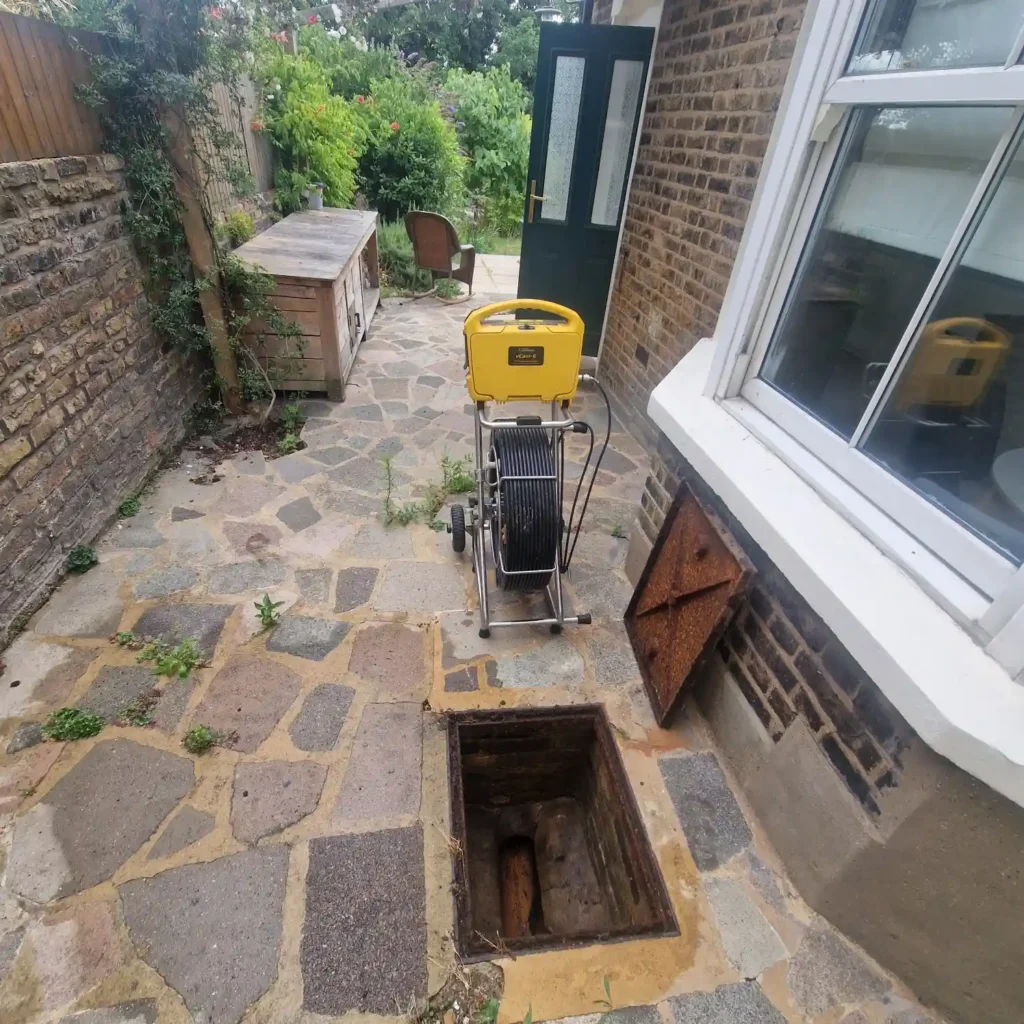
You’ve probably heard that a slow drain will “sort itself out” if you just wait, or that a bottle of supermarket gel is basically the same as professional drain unblocking South London households actually need. It’s wrong — and it’s exactly why so many drains get worse instead of better before anyone calls for help.
Drain blocked right now in South London?Same-day callouts, 24/7 · No call-out fee · Fixed price before we start
The Myth: “A Gurgling Drain Is Just a Bit of Trapped Air”
Plenty of South London residents assume a gurgling sink or toilet is nothing more than air settling in the pipework. In reality, gurgling is almost always a symptom of a developing blockage further down the line, where trapped air is being forced back up through the water in your trap because something downstream is restricting flow. When one fixture gurgles as another is used — say, the shower burbles when the toilet is flushed — that’s a classic sign the obstruction sits in a shared section of pipe, not in the fixture itself. Ignoring it doesn’t make it disappear; it gives the blockage more time to compact and grow, particularly if fats, oils, grease, or wet wipes are involved.
The Myth: “Any Blockage Can Be Cleared With a Bottle of Drain Cleaner”
Chemical drain cleaners are marketed as a universal fix, but they’re only ever effective against fresh, shallow, organic clogs — and even then, repeated use corrodes pipework over time. For anything involving solidified grease, root intrusion, or a partially collapsed pipe, chemicals simply sit on top of the obstruction or get diluted before they reach it. Professionals rely on two very different tools depending on the job, and knowing the difference matters if you want a lasting result rather than a repeat callout.
| Method | Best For | Limitation |
|---|---|---|
| Rodding / snaking | Localised clogs, hair, small debris | Can push material further down rather than removing it |
| High-pressure water jetting | Grease build-up, root intrusion, compacted debris along the full pipe run | Requires specialist equipment and trained operators |
| Chemical drain cleaner | Very minor, fresh organic clogs only | Ineffective on deep or structural blockages; can damage pipes with repeated use |
For most stubborn or recurring blockages across South London properties, jetting clears the full diameter of the pipe rather than just punching a hole through the clog, which is why it’s the method professionals reach for first on anything beyond a simple sink trap.
The Myth: “Tree Roots Only Bother People With Trees in Their Own Garden”
Many homeowners assume root intrusion is only a risk if they personally have large trees on their property. In truth, roots travel considerably further underground than most people expect, and South London’s mix of mature street trees and Victorian terraces means roots from a neighbour’s garden — or even the pavement — can reach your pipework. Roots seek out moisture and will exploit the smallest crack or joint in ageing clay or concrete pipework, then expand once inside, restricting flow and trapping debris around themselves.
Why Older South London Pipework Is Especially Vulnerable
Boroughs with large stocks of Victorian and Edwardian housing — Dulwich, Clapham, Lewisham and similar areas — often still have original clay drainage runs that have shifted, cracked, or partially collapsed over decades of ground movement. Once a crack forms, it’s not just an entry point for roots; it also allows silt and groundwater to enter, accelerating further deterioration. It’s also why the condition and exact position of the pipe get established before any repair work starts, so nobody digs up more of the garden than the job actually needs.
The Myth: “If the Water Eventually Drains, There’s No Real Problem”
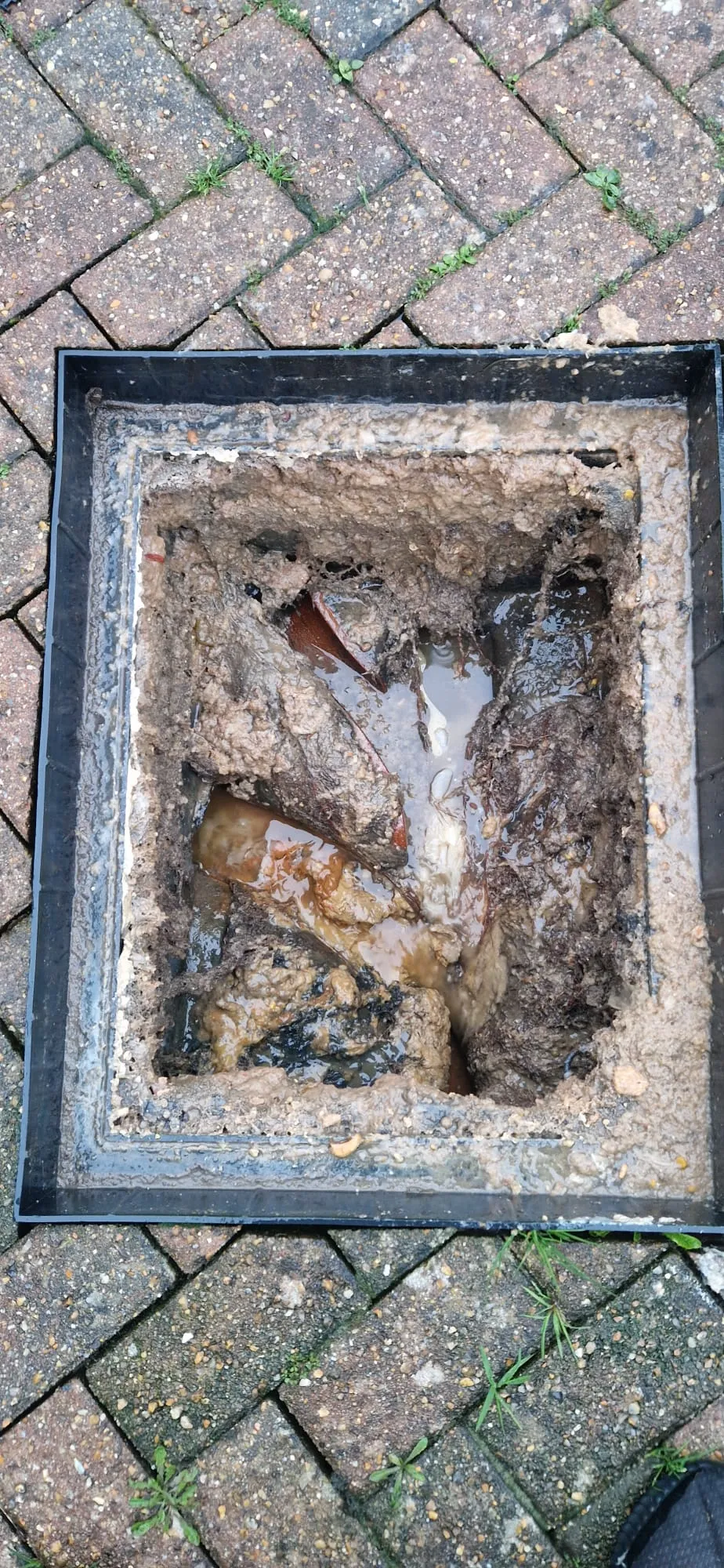
Slow drainage that eventually clears is often dismissed as trivial, but a drain that empties slowly is already telling you the pipe’s internal diameter is compromised. Left alone, partial blockages typically narrow further as grease, silt, and debris continue to cling to whatever is already restricting the flow. This is especially common in kitchens where fats, oils, and grease are poured down the sink while still warm; they solidify further along the pipe run rather than in the trap itself, which is why the problem often reappears days or weeks after a DIY fix. For anyone wanting to avoid this cycle, our guide on how to properly dispose of cooking grease without clogging drains covers the habits that actually prevent it.
The Myth: “Calling a Professional Is Only Worth It for a Total Blockage”
Waiting until a drain is completely blocked before calling for drain unblocking South London services usually means paying for a harder, longer job than necessary. A partial blockage is far easier and cheaper to clear than one that has had weeks to compact, and it avoids the risk of sewage backing up into the property, which is a genuine health hazard under UK water byelaws and something the Health and Safety Executive flags as a serious contamination risk. Multiple drains struggling at once — toilet, shower, and kitchen sink all sluggish simultaneously — is a strong signal that the problem sits in a shared or main drainage run, not in an individual fixture, and DIY tools simply can’t reach that far.
What Actually Drives the Cost of Clearing a Blocked Drain
Cost depends on how far into the system the blockage sits, what caused it, and what equipment is needed to clear it safely. A trap clog cleared with rodding is a quick job; a root-damaged main run that needs tracing and jetting, or a section of pipe repair, understandably costs more — but it’s also the difference between a temporary fix and a lasting one. We quote a fixed price on site before any work starts, and there’s no call-out fee.
The Myth: “All Drainage Companies Offer Roughly the Same Service”
Not every callout involves the same equipment or expertise, and that gap shows up the moment a job turns out to be more than a simple clog. A properly equipped team carries high-pressure jetting units and electro-mechanical snaking gear, and knows which tool suits which blockage rather than defaulting to the same approach every time. Work should also meet the design and performance principles set out in BS EN 752, the British Standard covering drain and sewer systems outside buildings, and any wastewater discharge should respect the requirements referenced by the Water Regulations Advisory Scheme. If you’re comparing options, our full list of drainage services sets out exactly what’s included in a proper callout, from initial diagnosis through to repair.
Common misconceptions we correct every week
First, customers often believe a plunger fixes any blockage — it only ever helps with a shallow, fixture-level clog, not anything in the main run. Second, many assume flushable wipes are safe because the packaging says so; they don’t break down like toilet paper and remain one of the leading causes of severe blockages in both private drains and the wider sewer network. Third, people frequently think a blockage that clears itself won’t return — in most cases the underlying restriction is still there and simply moved slightly, which is why the same drain tends to act up again within weeks.

Blocked drain FAQs for South London homes
How quickly can you unblock a drain in South London?
Usually the same day you call. We run a 24/7 service, so emergencies such as sewage backing up or an overflowing manhole are attended at any hour, including weekends and bank holidays.
How much does drain unblocking cost in South London?
We work to fixed prices with no call-out fee, and the price is agreed before any work starts. A simple internal blockage cleared by rodding costs less than a main run that needs jetting or a CCTV survey; your engineer will explain the options on site.
Is a blocked drain my responsibility or Thames Water’s?
Pipes serving only your property are yours. Shared pipes (serving more than one property) and public sewers are Thames Water’s responsibility. If you’re unsure, call us — we can tell you where the blockage sits and whether it’s one we clear or one to report.
Which parts of South London do you cover?
All of it — Clapham, Balham, Brixton, Streatham, Tooting, Dulwich, Peckham, Lewisham, Greenwich, Bromley, Croydon, Sutton and everywhere in between. We’re based in Purley, so South London is a short drive. See all areas we cover.
Recurring blockages, foul smells, or gurgling across multiple fixtures aren’t problems that improve with time — they’re early warnings from a system that’s already under strain. Property owners across Clapham, Balham, Dulwich, Lewisham, Greenwich and the wider area tend to get the best outcome by getting an engineer out as soon as symptoms appear, rather than waiting for a full blockage to force the issue. If the problem is in a garden gully, our piece on clearing drains outside your property is worth a look, and our soakaway guide explains what’s going on if it’s a soakaway rather than a drain.
Getting ahead of a blockage — rather than reacting once it’s total — is the single biggest factor in keeping repair costs down and avoiding damage to the wider drainage system.
Don’t wait for a full blockage.Local engineers out today across South London · Rated 5.0 on Google · 9.83/10 on Checkatrade
No comments yet. Be the first to leave a review.
Comments are closed for this post.