
 Admin
Admin 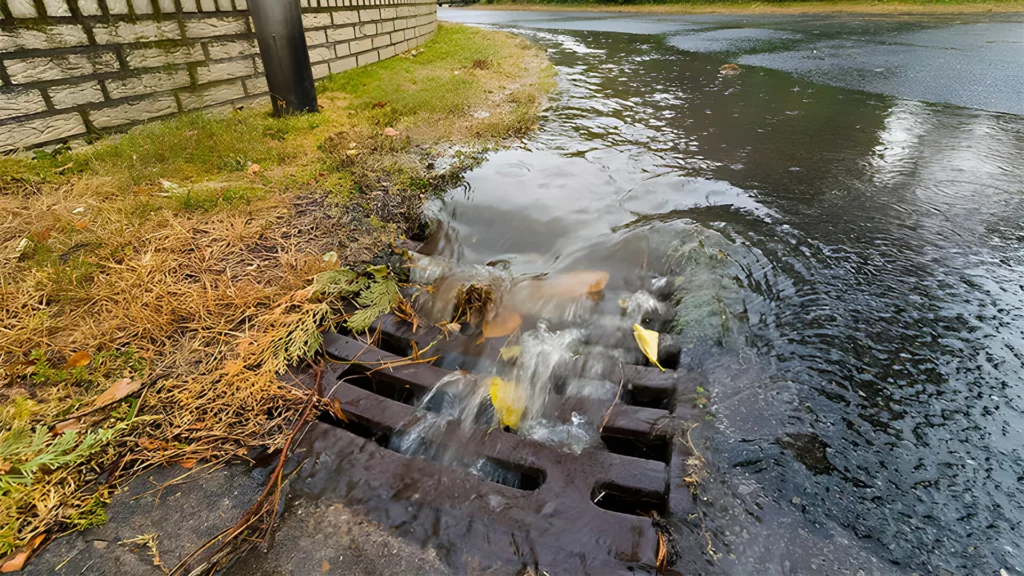
You’ve probably heard that overflowing drain pipes are just a nuisance that clears itself once the rain stops. It’s wrong — and it’s why so many drains get worse instead of better. In Reigate last winter, a homeowner watched grey water bubble up through her patio drain during a storm, assumed it was simply surface flooding, and waited three days before calling anyone. By then, tree roots had cracked the pipe joint beneath her garden, and what should have been a same-day jetting job turned into a partial excavation.
Overflowing Drain Pipes: What the First Hour Really Tells You
The first hour after you notice water backing up is the single most important window you have. If a toilet is slow to clear, a sink gurgles, or water pools around an outside gully, that is your pipe network telling you it’s already under strain — not a one-off blip. Act in this hour and you’re usually looking at a straightforward clear. Ignore it, and the standing water starts finding its own way out, seeping into foundations, saturating soil around the pipe run, and giving any existing crack time to widen under pressure.
I’ve been working South East England drains for over 15 years, and the pattern rarely changes. Someone rings me on day three or four saying “it’s got so much worse overnight,” when the truth is the blockage was building quietly for weeks before it ever reached the surface. A call at the first hour of visible overflow is rarely urgent in cost terms. A call after the first day almost always is. If you’re dealing with a stubborn block right now, our team handles drain unblocking in Redhill and the surrounding RH1 postcode on a same-day basis, and the sooner we’re on site, the less invasive the fix tends to be.
What causes that first-hour overflow varies more than people expect. Sometimes it’s simply hair, fat, and food debris that has built up gradually inside a kitchen or bathroom branch pipe, narrowing the bore until anything more than a trickle backs up. Other times it’s non-flushable material — wet wipes, sanitary products, kitchen roll — that has snagged at a joint and formed a dam. Neither of these is dramatic on its own, but both behave the same way if left alone: they trap more debris behind them, and the overflow gets worse with every use of the drain, not better.
Overflowing Drain Pipes After a Day of Neglect: When Roots and Cracks Take Over
By the first day, a simple blockage has usually stopped being simple. Standing water sitting in a pipe for 24 hours softens any weak joint, and if there’s already a hairline crack from ground movement, old age, or nearby construction work, that crack starts to widen under the extra hydraulic pressure. This is also the point at which tree roots become relevant. Roots don’t cause the initial overflow, but they exploit it — they’re drawn to the moisture and nutrients leaking from a strained joint, and once inside they grow fast, turning a slow drain into a near-total blockage within days. Homes in Victorian-era streets across Croydon, Sutton, and Bromley are particularly exposed, since original clay pipework was never designed with modern root growth or rainfall volumes in mind.
This is also usually the stage where people ask whether they should just tackle it themselves. It’s a fair question, and the honest answer depends entirely on what’s actually happening below ground.
| Approach | Best for | Risk if wrong |
|---|---|---|
| DIY plunger or drain rods | Fresh, shallow blockages near a single fixture | Pushes debris further down the run, masking a deeper problem |
| Professional high-pressure jetting | Grease, root intrusion, scale build-up along the full pipe run | Minimal — clears the full bore, not just the visible symptom |
Once a blockage has been sitting for a day, rodding alone often just punches a hole through the debris rather than clearing it, which is why we lean on emergency drain unblocking across South London when things have clearly escalated past a quick DIY fix. Jetting under high pressure strips the pipe wall back to bare clay or plastic, rather than just carving a channel through the clog, which is exactly why it’s the professional standard for anything beyond a single blocked sink.
Overflowing Drain Pipes a Week Later: Structural Damage and What It Costs to Ignore
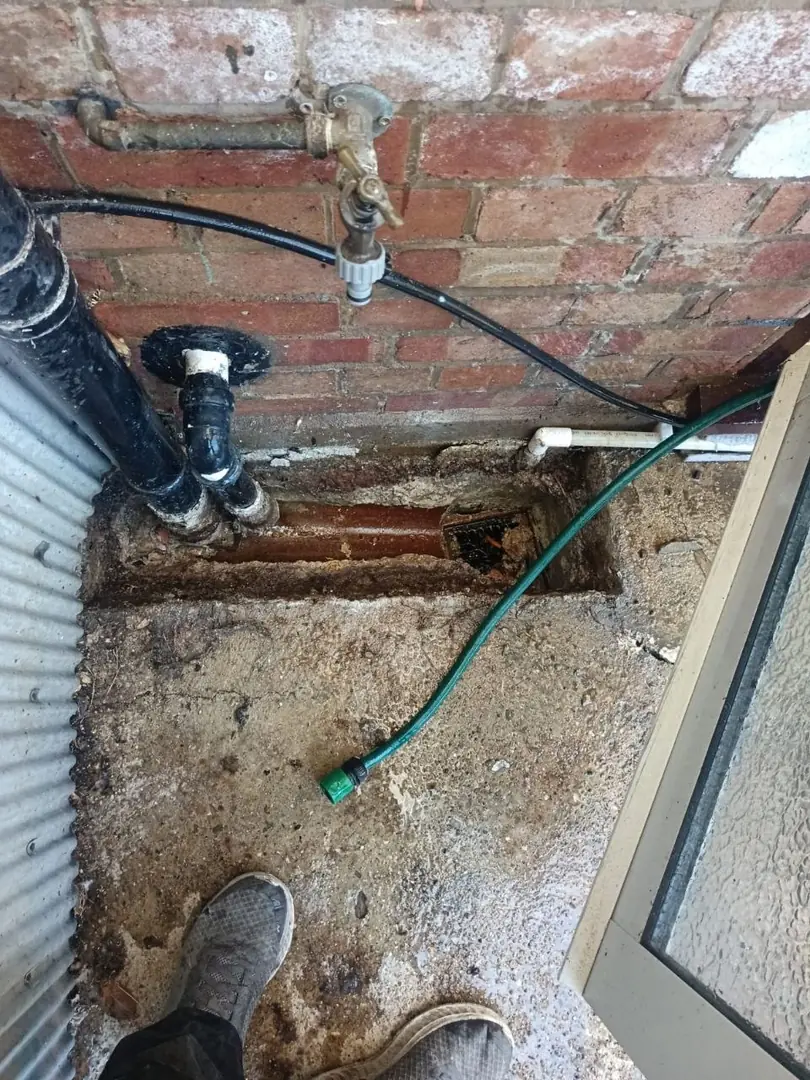
Leave overflowing drain pipes for a full week and the problem is rarely still just a blockage. By this stage, water has typically been pooling repeatedly against the same weak point in the pipe, and root ingress — if present — has had time to widen a hairline crack into a genuine fracture. What started as slow drainage in one bathroom can progress to a collapsed section of pipe, with wastewater escaping into the surrounding soil instead of reaching the sewer at all. That’s when gardens develop soft, sunken patches, patios crack, and internal walls near the pipe run can start showing damp that has nothing to do with the weather.
This is the point at which guessing stops being good enough. An engineer has to establish whether you’re dealing with a stubborn clog, a root mass, or an actual structural collapse, because that decides whether the fix is a clearance or a repair. We’ve written in detail about how to tell if you have a collapsed drain issue, and if it does turn out to be a collapse, it’s worth understanding the likely cost range before work starts — our guide to collapsed drain repair cost in the UK breaks down what affects the price. For anyone managing a larger property or a portfolio where recurring overflows keep happening, a proper drainage consultancy and reporting service can identify systemic weak points before they turn into emergencies, and it’s worth checking a contractor’s approach against the standards set out in WRAS guidance and the Water Industry Act 1991, which governs responsibility for shared and lateral drains.

Heavy rainfall adds another layer once a week has passed, because a system that’s already compromised has far less capacity to cope when the public sewer network is running near its limit. The Health and Safety Executive notes that standing wastewater carries genuine contamination risk, which is worth remembering before anyone attempts to clear a persistent overflow by hand. If you’re weighing up whether a repeated blockage justifies calling someone in, our breakdown of what a drain unblock typically costs in the UK is a useful starting point, and standards such as BS EN 752 for drain and sewer design give a sense of why proper fall, sizing, and jointing matter so much in preventing this cycle from starting again. The homeowner in Reigate ended up needing a section of pipe re-laid because roots had fully occupied a cracked joint by the time we arrived — a job that would have been a two-hour jetting visit had she called on day one instead of day three.
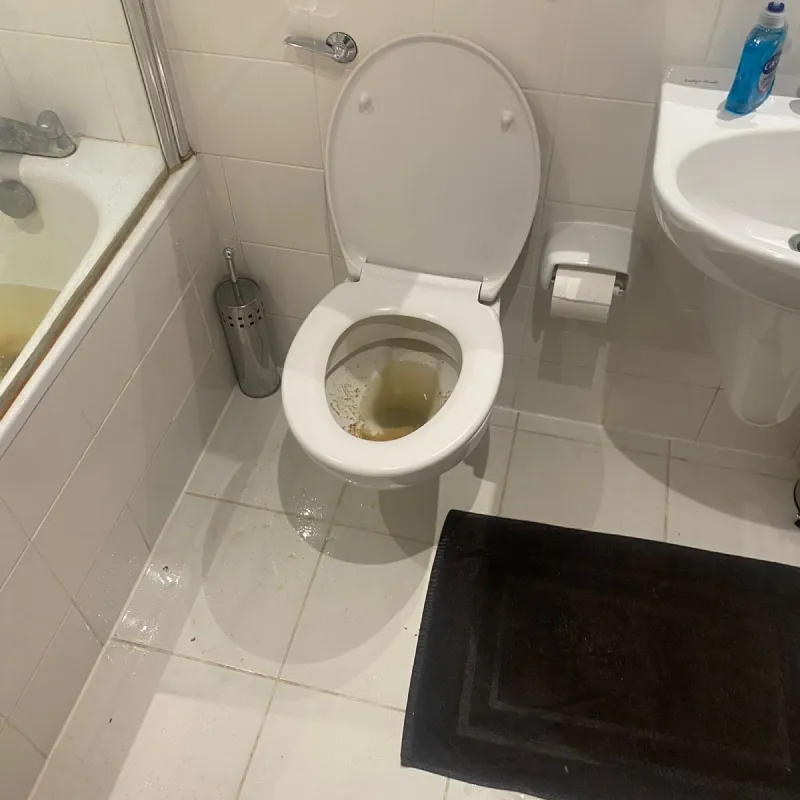
The lesson across all three stages is the same one I give every customer on site: overflowing drain pipes are a symptom, not the problem itself, and the gap between a simple fix and a structural repair is measured in days, not months. Catch it in the first hour and you’re usually looking at a routine clear. Wait a week and you’re often looking at excavation. If you’re seeing any of these warning signs right now, get someone qualified to look at it before the next heavy rain makes the decision for you.
No comments yet. Be the first to leave a review.
Comments are closed for this post.