
 Admin
Admin 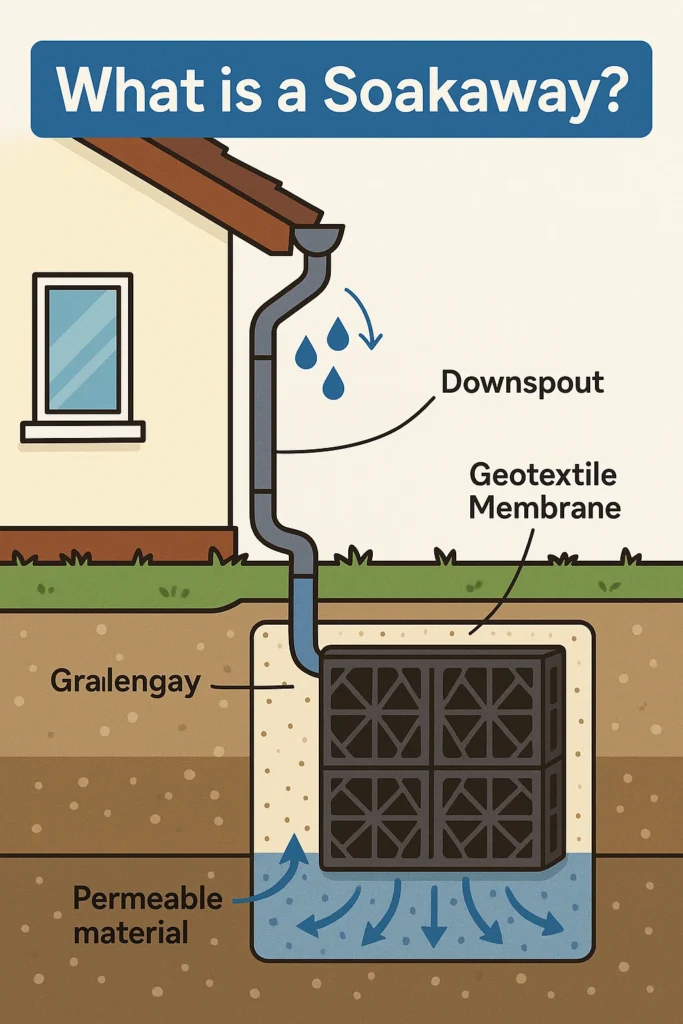
If part of your garden turns to a swamp after every downpour, or rainwater from your downpipes has nowhere to go, a soakaway is usually the fix. It is the most common way UK homes deal with surface water without piping it into the public sewer — which, in most cases, you are not allowed to do anyway. This guide explains exactly what a soakaway is, how to tell whether you already have one, how they are sized to the rules building inspectors actually use, what they cost, and the signs that yours has stopped working.
What is a soakaway?
A soakaway is an underground pit or chamber that collects surface rainwater and lets it soak away slowly into the surrounding soil instead of flooding the surface or overloading the drains. Water is fed in through a pipe from your roof downpipes, driveway or a patch of waterlogged ground, held briefly in the void below, then released into the subsoil at a rate the ground can cope with.
Older soakaways were little more than a hole packed with brick rubble and hardcore. Modern ones use stacked plastic crates (sometimes called soakaway cells or storm cells) wrapped in a membrane. The reason crates have taken over is simple: a rubble-filled pit holds water in maybe 30% of its volume, while a crate holds it in around 95%. That means a far smaller hole does the same job. It is one type of what engineers call an infiltration device, and it counts as a Sustainable Drainage System (SuDS) because it recharges groundwater rather than shunting water off-site.
What is a soakaway drain and how does the pipework connect?
People often search for “what is a soakaway drain” expecting something different from a soakaway — it’s the same system, just described by the pipework that feeds it. A complete system has three working parts, and getting the soakaway pipework right matters as much as the pit itself.
- The inlet pipework. A solid drainage pipe (commonly 110mm) runs from your downpipe or gully, set on a gentle fall so water flows toward the pit by gravity. The invert — the bottom of the pipe where it enters — usually sits around 500–600mm below ground.
- A silt trap or catchpit. Fitted on the run before the pit, this catches leaves, grit and debris so they don’t clog the crates. It is the single cheapest thing you can add to make a soakaway last, and the one most DIY installs leave out.
- The soakaway chamber. The crates (or rubble) wrapped in a non-woven geotextile membrane. The membrane is the critical detail — it lets water pass out into the soil but stops fine soil washing back in and silting the system up.
One rule worth stating plainly: never connect a foul drain — toilets, sinks, washing machines — into a rainwater soakaway. It is illegal, it will block, and it contaminates groundwater. Soakaways are for surface water only.
Do I already have a soakaway? How to tell
Plenty of homeowners have a soakaway and don’t know it, especially in older suburbs across South East England where properties were built before mains surface-water connections were standard. Here’s how to check before you assume you need a new one:
- Your surface drains or downpipes lead into the garden rather than into a visible mains drain.
- There’s an isolated manhole or inspection cover that doesn’t seem to connect to the public sewer.
- A patch of ground stays damp or spongy long after the rest of the garden has dried out — often directly above an old, failing soakaway.
- Your property deeds or drainage plans mention one, or the local authority has it on record.
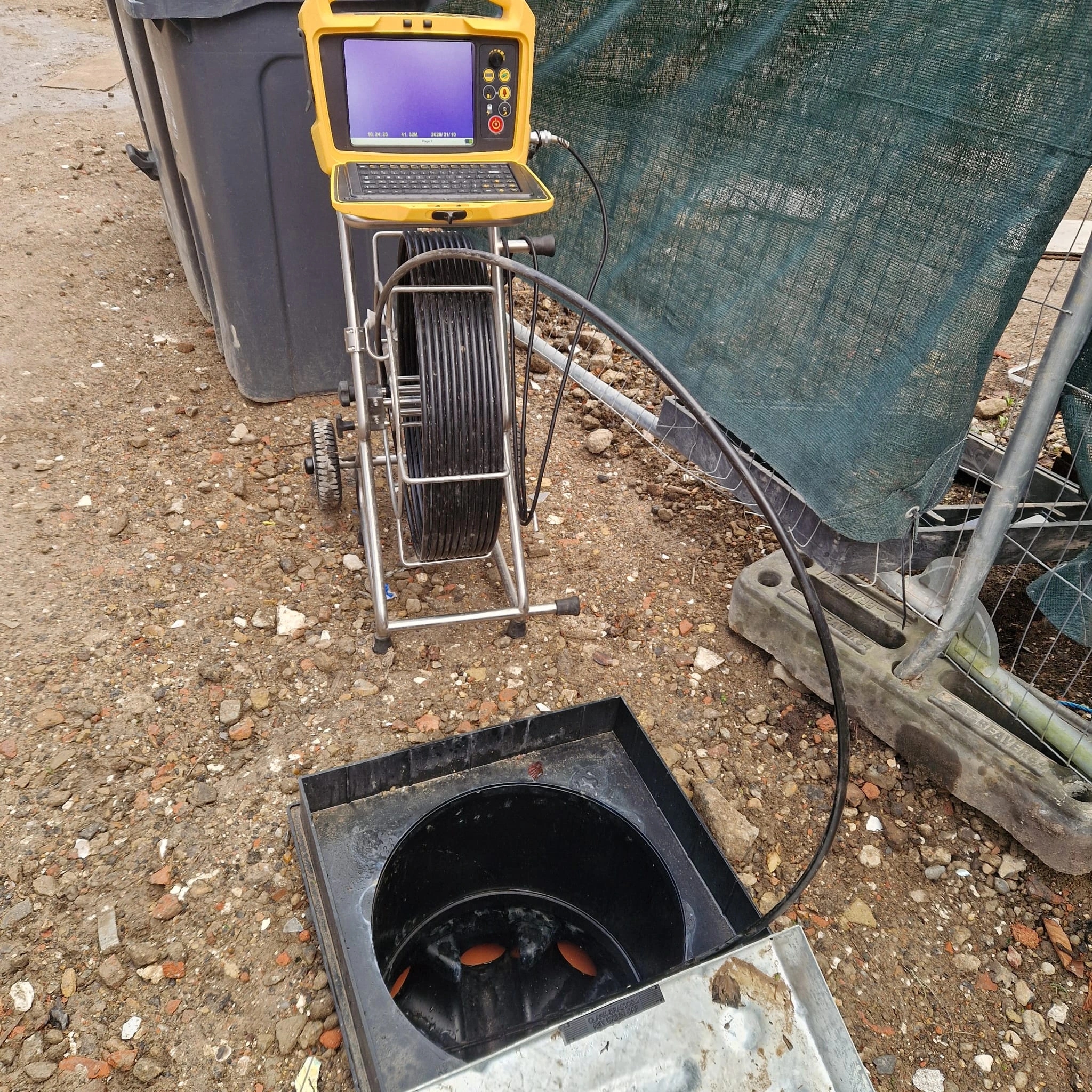
If you can’t locate it and the garden keeps flooding, tracing the buried pipework is the fastest way to confirm whether a soakaway exists and whether it’s still doing its job.
How is a soakaway sized? (the part most guides skip)
This is where good soakaways are won or lost. Undersized or untested installs are the number one reason these systems fail. The UK standard and Building Regulations Approved Document H references it directly. Three things decide the size:
- The catchment area — how much roof or paving drains into it. A pitched roof runs off nearly 100% of the rain that lands on it; a gravel driveway, much less.
- Design rainfall — the intensity your soakaway must cope with. A 1-in-10-year storm is a common minimum, with a climate-change allowance added on top for newer designs.
- Soil infiltration rate — how fast your specific ground actually absorbs water. You cannot guess this. You measure it with a percolation test.
The percolation test, in plain English
Dig a trial pit roughly 300mm square to the depth your soakaway will sit. Fill it with water and let it drain fully, two or three times, to wet the ground. Then on the final fill, time how long the water takes to drop from 75% full to 25% full. That time feeds into the BRE 365 formula to give your soil’s infiltration rate. If the water vanishes in minutes you have free-draining sand; if it barely moves after hours you have clay — and a standard soakaway probably won’t work, so you’d look at an attenuation tank with controlled discharge instead. Run the test in at least three spots, because soil varies across a single garden.
| Soil type | Drainage speed | Soakaway suitability |
|---|---|---|
| Sandy / gravel | Fast | Excellent |
| Loam | Moderate | Good — size correctly |
| Clay / clay-based | Very slow | Often unsuitable — seek advice |
As a rough feel only: a typical detached house with around 80m² of roof on free-draining soil might need roughly 2.5–4m³ of storage. That is an illustration, not a design — always test your own ground.
Soakaway rules and distances
A few non-negotiables before anyone digs:
- At least 5m from any building, road or retaining wall — closer, and you risk water undermining foundations.
- At least 2.5m from a boundary.
- The base should sit at least 1m above the seasonal high water table — if groundwater reaches the soakaway, it can’t drain.
- It must empty from full to half-volume within 24 hours, so it’s ready for the next storm.
- For areas over 100m², or for new builds, the design must follow BRE Digest 365 and may need building-control sign-off, where the runoff has to soak away within set limits.
Soakaways for rainwater: the benefits
Done properly, a rainwater soakaway is one of the most effective bits of drainage you can have:
- It stops surface water pooling on lawns, patios and driveways.
- It protects foundations by keeping concentrated rainwater away from the building.
- It eases pressure on the public sewer — and keeps you on the right side of the law, since discharging rainwater into a foul sewer is generally prohibited.
- It recharges groundwater naturally, which is why it qualifies as sustainable drainage.
Signs your soakaway has failed
A soakaway isn’t forever. Most need attention every 10–15 years, sooner if no silt trap was fitted. Watch for:
- Standing water or a permanently boggy patch over the soakaway, even days after rain.
- Gutters and downpipes overflowing in moderate rain because the water has nowhere to go.
- Damp creeping up walls or pooling near the foundations.
- A drain that keeps backing up no matter how often it’s cleared.
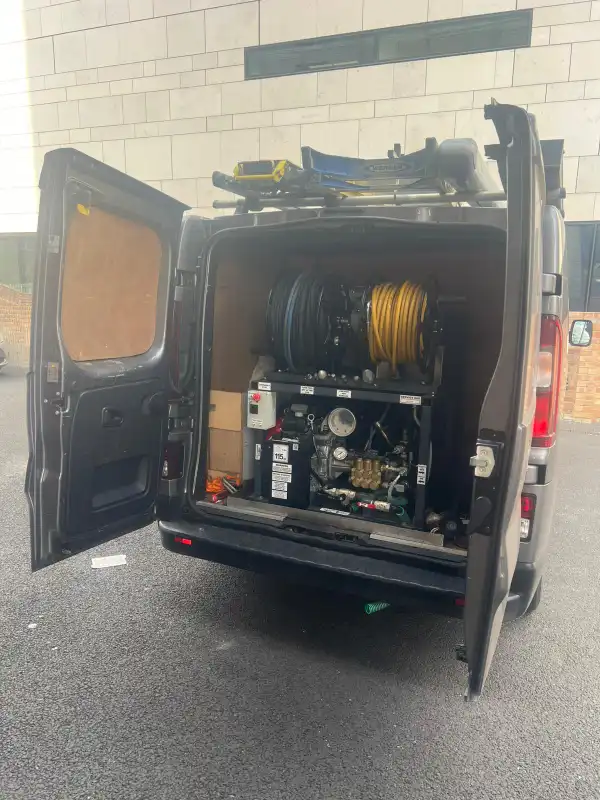
Most failures come down to one thing: silt. The voids fill with fine soil and debris, the membrane clogs, and the water stops infiltrating. Where the crates aren’t physically collapsed, a high-pressure jetting clean can often restore flow without excavating. Where the structure has failed, it usually needs rebuilding — and a silt trap added so it doesn’t happen again.
DIY or call a professional?
A small soakaway for a single downpipe on free-draining soil is within reach of a confident DIYer. But the failure points are rarely the digging — they’re the things that don’t show: getting the percolation test right, sizing to BRE 365, keeping the legal distances, and fitting silt protection. Get any of those wrong and you’ve buried an expensive problem that resurfaces in a wet winter. If your soil is heavy, the area is large, water is already near the house, or you simply want it signed off correctly, it’s worth bringing in a drainage specialist. The same applies if an existing soakaway has failed and you need a survey to work out whether it’s a clean or a rebuild.
For more on tackling a sodden garden beyond just soakaways, our guide to common drainage problems and how to fix them covers the wider picture, and if water is already backing up indoors, see our 24-hour emergency drainage service. And if the culprit is a blocked pipe rather than the soakaway itself, our fixed-price drain unblocking service covers the whole of South East England.
Soakaway problems across South East England?
From percolation testing and surveys to jetting a silted soakaway clear, our drain unblocking specialists cover Surrey, Sussex, Kent, Hampshire and South London — no call-out fee, fixed price agreed upfront.
Soakaway FAQs
What is a soakaway in simple terms?
A soakaway is an underground pit or set of plastic crates that collects rainwater from your roof or garden and lets it drain slowly into the soil, instead of flooding the surface or running into the sewer. It keeps gardens, driveways and foundations dry during heavy rain.
How long does a soakaway last?
A well-built soakaway with a silt trap typically lasts 10–15 years before it needs cleaning or renewing. Without silt protection it can clog much sooner. When performance drops, jetting often restores flow; a collapsed structure needs rebuilding.
How far from the house should a soakaway be?
At least 5 metres from any building, road or retaining wall, and at least 2.5 metres from a boundary. The base should also sit at least 1 metre above the seasonal high water table so it can actually drain.
Do I need a percolation test before installing a soakaway?
Yes. A percolation test measures how fast your soil absorbs water and is essential for sizing the soakaway correctly under BRE Digest 365. Skipping it is the most common cause of soakaway failure — on heavy clay, a soakaway may not work at all.
Can a soakaway be cleaned or does it need replacing?
It depends on the cause. If the crates or rubble are silted up but structurally intact, high-pressure jetting can often clear them and restore drainage. If the structure has collapsed, it needs excavating and rebuilding — ideally with a silt trap added to extend the new system’s life.
Can I connect my downpipe straight to a soakaway?
Yes, but always run the soakaway pipework through a silt trap first and ensure the fall takes water toward the pit by gravity. Only ever connect rainwater — never foul drainage from toilets, sinks or appliances, which is illegal and will block the system.
No comments yet. Be the first to leave a review.
Comments are closed for this post.