
 Hesam Ir
Thames Water Blocked Drain: Who Pays and What to Do First
A Thames Water blocked drain doesn’t always mean Thames Water fixes it for free. Most homeowners waste time calling the wrong number, or worse, get hit with a bill they shouldn’t have paid. This guide cuts through the confusion by showing you exactly how to identify which drain is blocked, who’s actually responsible, and what to do when Thames Water refuses the job.
Is It Thames Water’s Job?
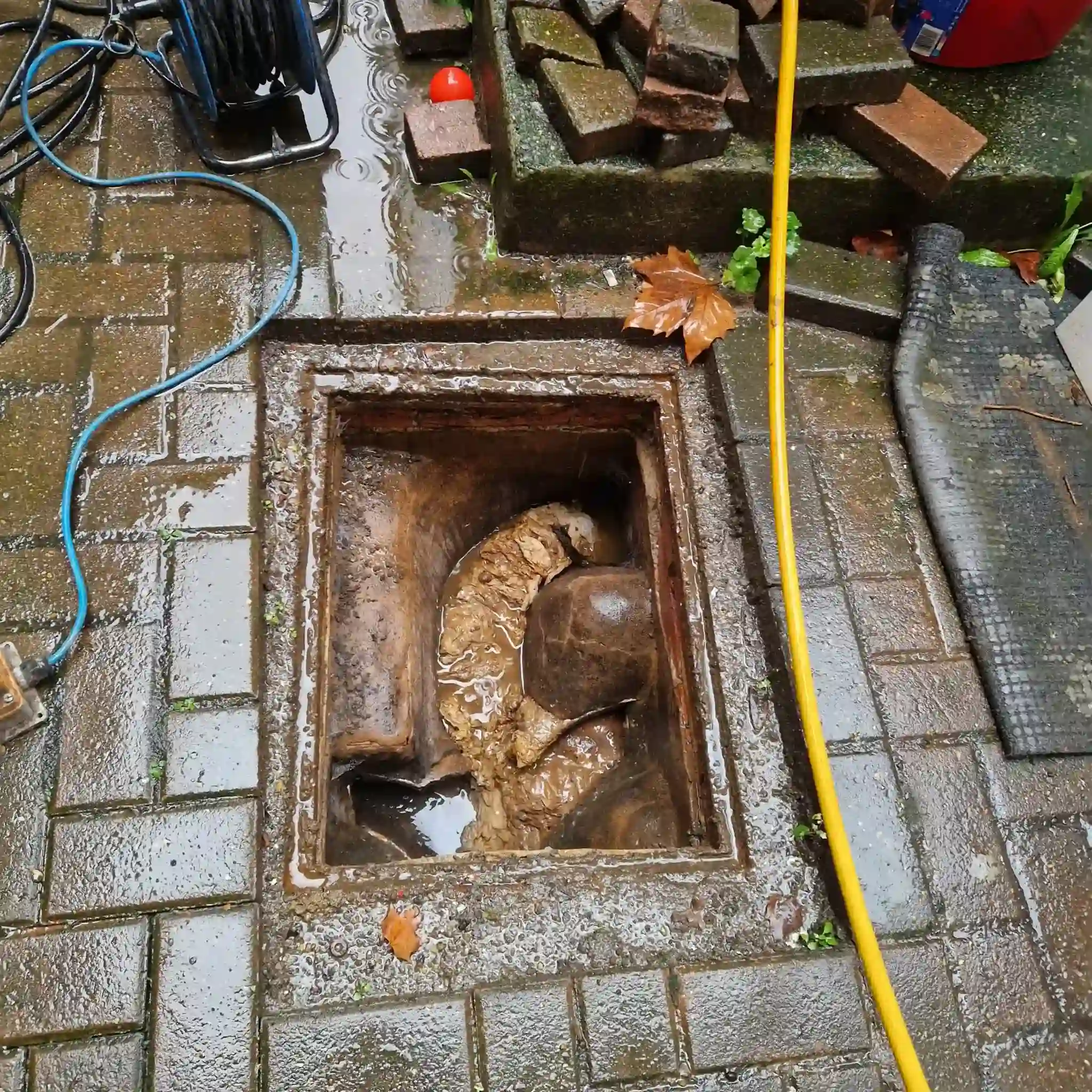
Thames Water is responsible for the public sewer network—the main pipes buried under roads and shared land. You are responsible for the lateral drain: the pipe that runs from your property boundary to the public sewer. A Thames Water blocked drain claim only works if the blockage is in their section.
The problem: you can’t see where the blockage actually is without specialist equipment. A burst or blockage 3 metres into your private lateral drain looks and feels identical to a blockage in the public sewer. Many homeowners call Thames Water, get told it’s a private drain issue, and hang up thinking they’ve been fobbed off. Often they haven’t—the boundary really is that strict.
In the Thames Water region (London and the South East), responsibility splits at the point where your drain meets the public sewerage system. If your property was built before 1937, the boundary may be different—some older properties have a small public sewer section that Thames Water still maintains. If you’re unsure, ask for your drainage certificate (usually held by your solicitor from the house purchase).
How to Report a Thames Water Blocked Drain
Step 1: Confirm you have an actual blockage. Are drains backing up inside the property? Is there flooding on your driveway? Is raw sewage visible outside? If the issue is only inside one room (a toilet or shower), it’s likely a private pipe within the building—call a plumber, not Thames Water.
Step 2: Check where the blockage starts. If multiple drains are affected simultaneously (bathroom, kitchen, toilet all sluggish or overflowing), the problem is likely in the shared lateral drain or public sewer. If only one fixture is blocked, it’s almost certainly a private supply pipe or trap inside your home.
Step 3: Contact Thames Water. Use their online reporting tool or call their customer service line. They will ask for your postcode, address, and a description of the problem. Be precise: say “all drains in the property are backing up” or “there’s raw sewage on the driveway”—this prompts them to treat it as a potential public sewer issue rather than a private lateral drain fault.
Step 4: Expect a response within 24 hours for an emergency (sewage flooding a property) or 5 working days for a standard blockage. Thames Water will either attend to clear the blockage or send you a letter stating the blockage is on the private lateral drain. If they attend and the blockage is in the private section, they’ll leave and you’ll receive an invoice unless you have blocked drain insurance.
What If Thames Water Refuses?
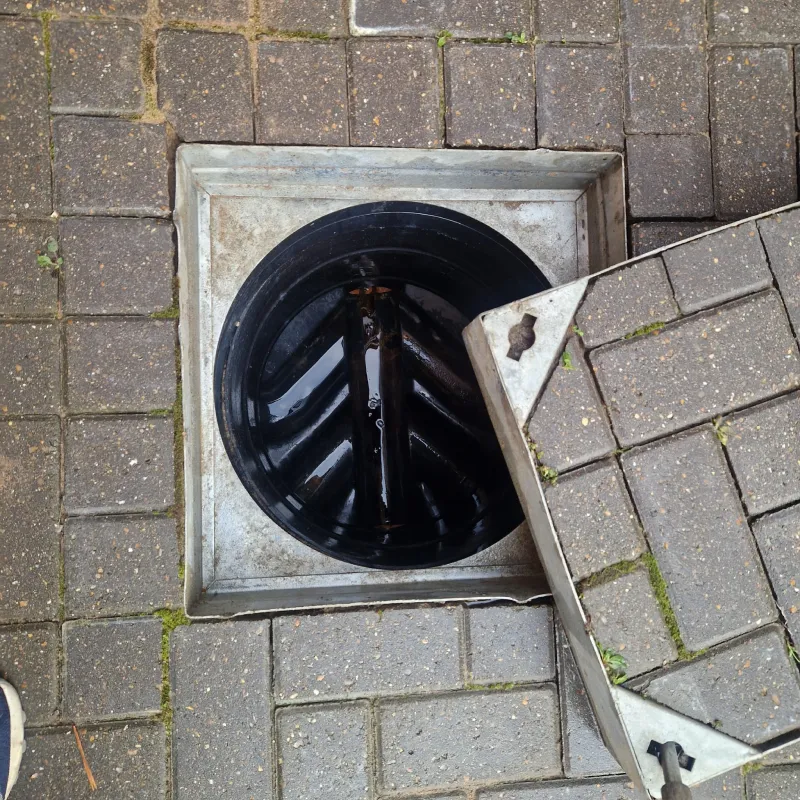
Thames Water will refuse to fix a blockage if they determine it’s on your private lateral drain. They’ll send a letter with a reference number. Do not ignore this letter. It’s your starting point for either accepting the cost or challenging their decision.
You have grounds to challenge if: The blockage is caused by root intrusion into a public sewer (roots from council or public land), the lateral drain was damaged by a council road works or utility company, or the blockage is actually in the public sewer and Thames Water’s initial assessment was wrong.
To prove them wrong, you need evidence. This is where a CCTV drain survey becomes essential. A drainage engineer will push a camera into the lateral drain, film it, and produce a written report showing exactly where the blockage is and what’s causing it. A survey costs £200–£400 in the Thames Water area but is often free if you use the surveying company to fix the blockage afterwards.
Real case example: A South London homeowner called Thames Water about backing-up drains. Thames Water attended, then sent a letter refusing to clear the blockage, claiming it was a private drain issue. The homeowner spent £150 on a CCTV survey, which showed a collapsed section of the lateral drain (structural failure, not a blockage caused by the property owner). This evidence forced Thames Water to reassess—they then cleared the blockage and arranged a repair at no cost to the homeowner. Without the survey, the homeowner would have paid £800–£1,200 for a private contractor to clear and repair the lateral drain.
The Private Drain Option
If Thames Water confirms the blockage is private, or if you decide to skip the back-and-forth and fix it yourself, you’ll hire a private drainage contractor. The cost depends on what’s causing the blockage:
- Simple blockage (roots, grease, debris): £150–£400 to clear using high-pressure jetting.
- Collapsed lateral drain: £1,500–£3,000+ to excavate, replace, or repair using trenchless methods.
- Fractured pipe (not fully collapsed): £800–£1,800 depending on depth and location.
A private contractor can often attend faster than Thames Water. If your drains are backing up into the property, a quick clearance (£250–£350) buys you time to work out the longer-term solution.
Before paying, ask the contractor to explain what they found and why. If they cleared a simple blockage but the problem returns within a month, they should revisit at no extra cost. If they recommend a full lateral drain replacement, get a second opinion—sometimes a CCTV survey followed by targeted jetting solves the problem at a fraction of the cost.
Understanding the Responsibility Boundary
The line between your responsibility and Thames Water’s responsibility is the property boundary—or more precisely, the point where the lateral drain joins the public sewer network. This boundary is usually marked on your drainage plan (the document you got when you bought the house, or from your local authority’s records).
Confusion arises because the boundary isn’t always obvious. Some older properties in South London and outer London have longer private laterals. Some new builds have shorter ones. A who is responsible for blocked drains question can only be answered by checking your specific property’s drainage plan.
If you’ve never seen a drainage plan, request one from the local authority’s building control department (around £50–£100) or ask a drainage engineer to source it. It’s worth having on file not just for blockages, but for any future renovation, insurance claim, or property sale.
What about lateral drain maintenance?
Even if the lateral drain is your responsibility to fix, Thames Water has a duty to keep the public sewer clear. If the public sewer is blocked and sewage backs up into your lateral drain, Thames Water must clear it. The distinction is important: they’re not fixing your drain, they’re maintaining the public asset.
A blockage caused by debris from a nearby road works, or root intrusion from trees on council land, blurs the lines. In these cases, you can argue that Thames Water caused the blockage, so they should clear it. Ofwat’s consumer rights guidance supports this argument—you can escalate a complaint to Ofwat if Thames Water refuses.
Does blocked drain insurance cover Thames Water’s responsibility?
Most domestic drainage insurance policies only cover private lateral drains and private supply pipes—not damage caused by issues Thames Water should have fixed. If Thames Water later agrees they were responsible, your insurer may not pay because Thames Water is the liable party. Always notify Thames Water first; only claim on insurance if they genuinely refuse and you accept the cost.
What if the blockage is in a shared drain (terraced or flat)?
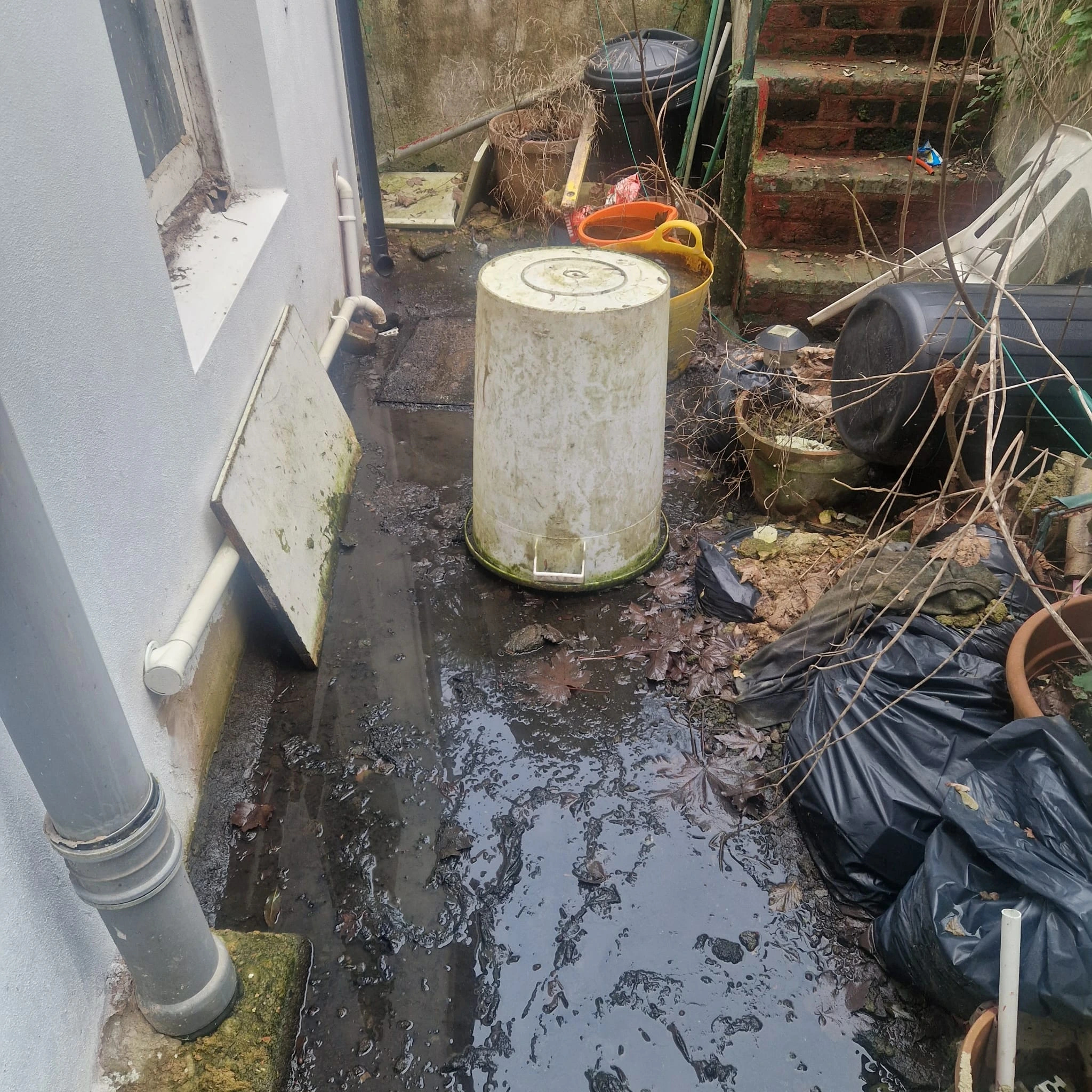
Flats, terraced houses, and semi-detached properties sometimes share a lateral drain with neighbours. If the shared lateral is blocked, Thames Water won’t touch it—it’s a private lateral shared between multiple properties. You and your neighbours have a shared responsibility to fix it. The cost is split according to the lease or property deed; if the deed doesn’t specify, equal split is the default.
Get the decision in writing if Thames Water refuses: a letter stating the drain is shared and private. Then approach your neighbours with a quote. A shared blockage requiring jetting might cost £250–£400 total—split between two or three properties, it’s manageable.
Emergency? What counts as an emergency to Thames Water?
Sewage flooding inside the property, or raw sewage overflowing onto the driveway or street, qualifies as an emergency. Thames Water should respond within 4 hours (in practice, often 2–6 hours depending on workload). Slow drains without visible sewage, or a blockage affecting only one room, are not emergencies—standard response time applies (5 working days).
If you have a genuine emergency (sewage in the house), call Thames Water immediately. If they can’t attend within a reasonable timeframe and the situation is worsening, hire a private contractor and bill Thames Water afterwards if the blockage turns out to be their responsibility. Keep all receipts and reference numbers.
The Bottom Line: What to Do Now
A Thames Water blocked drain that you can prove is in the public sewer will be fixed for free. A blockage in your private lateral drain is your cost, typically £150–£400. The gap between these two outcomes is a CCTV survey (£200–£400), which removes the guesswork and often forces Thames Water to reconsider if the evidence supports your claim.
Next step: Get a professional assessment of your blocked drain. A CCTV survey identifies not just where the blockage is, but why it happened—information that changes everything when dealing with Thames Water. Most contractors include the survey cost in the clearance fee if you proceed, so you’re not paying extra.
Don’t wait for Thames Water’s response if your drains are backed up inside the property—hire a private contractor to clear it immediately. This buys you time to gather evidence and negotiate responsibility. The cost of a quick clearance (£250–£350) is far less than the cost of emergency damage or health hazards from standing sewage.
If you’re in the Thames Water region and want a professional drainage engineer to assess your site and handle the negotiation with Thames Water on your behalf, contact our team for a free initial assessment. We’ve cleared hundreds of blocked drains in South London, handled disputes with Thames Water, and know exactly what evidence they accept.
Common Questions About Thames Water Blocked Drains
How long does Thames Water take to respond to a blockage report?
Standard response is 5 working days. Emergencies (sewage flooding the property) should receive a response within 4 hours, though in practice it’s often longer depending on their call volume. Always get a reference number when you report; you’ll need it if you escalate to Ofwat.
Can I claim back the cost if Thames Water later admits it was their responsibility?
Yes, in theory. In practice, Thames Water rarely reimburses unless you have written proof that they were at fault (a survey, a letter admitting responsibility, etc.). Citizens Advice can help you lodge a complaint if Thames Water refuses to reimburse.
What if Thames Water attended but didn’t fix the blockage?
They should provide a written explanation stating why—usually because it’s a private lateral drain. If they attended and made the blockage worse (for example, broke the pipe while investigating), that’s grounds for a complaint to Ofwat and a claim for damages.
Do I need planning permission to repair my lateral drain?
No. Building regulations apply to new drainage work, but repairs and replacements don’t usually require planning permission unless the repair is extensive and changes the external boundary of the property. Your contractor will confirm whether building control sign-off is needed.
Is there a way to know responsibility before calling Thames Water?
Yes—check your drainage plan (from the solicitor’s papers or the local authority building control department). It shows exactly where the public sewer connection is. Alternatively, ask a drainage engineer to locate the boundary using survey equipment; this costs £100–£200 but gives you certainty.
For further guidance, see the complete guide to drain unblocking in the Thames Water region, or explore lateral drain repair costs to understand what you might face if excavation is needed.
Understanding thames water blocked drain early helps you budget and avoid bigger repair bills later.
No comments yet. Be the first to leave a review.
Comments are closed for this post.