Soakaway vs Septic Tank vs Cesspool: What’s the Difference?
| Feature | Soakaway | Septic Tank | Cesspool |
|---|---|---|---|
| Function | Disperses water into soil | Provides primary treatment of foul water | Holds waste with no treatment |
| Treatment level | Secondary (receives pre-treated water) | Primary | None |
| Emptying required | Rarely (if correctly sized) | Periodically (sludge) | Frequently |
| Environmental risk | Low (if maintained) | Medium | High |
| Typical use | After septic tank or for surface water | Remote properties off mains sewer | Last resort only |
| Building Regs priority | Part of option 3 | Option 3 | Option 4 (last resort) |
What is a soakaway?Most homeowners never think about what happens after they flush — but beneath your floors lies a carefully engineered network of pipes governed by strict rules. If you’ve ever asked what is a soakaway and how it fits into your home’s waste system, you’re in the right place.
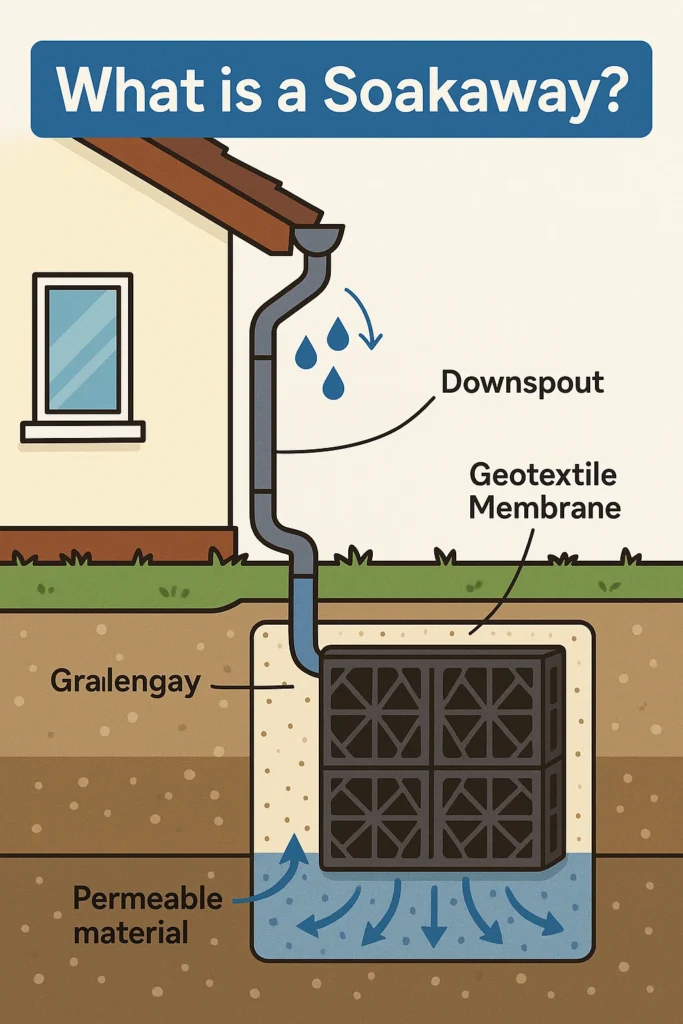
A soakaway is a subsurface drainage structure — typically a pit filled with rubble or a perforated chamber — that allows water to disperse slowly into the surrounding soil. It is one of the key components of a secondary drainage system, particularly when a public sewer connection isn’t available or practical.
Understanding what a soakaway is, how it works, and when it’s legally required is essential knowledge for any homeowner, builder, or developer working within UK Building Regulations — specifically Approved Document H, the technical code that governs every drop of waste leaving your home.
How Does a Soakaway Work?
A soakaway receives treated or surface water and allows it to percolate naturally into the ground. It is commonly used:
- As the secondary treatment stage following a septic tank
- To manage surface water runoff from roofs, driveways, and gardens
- As an alternative drainage outlet where mains sewer connection is not reasonably practicable
The soil around the soakaway acts as a natural filter, further treating the water as it disperses. The size, depth, and design of a soakaway must be calculated based on local soil percolation tests and the volume of water it needs to handle.
How a Soakaway Works: Step by Step

Step 1 — Water Leaves Your Roof and Paving
Every time it rains, water runs off your roof into gutters, then into underground pipes. Those pipes carry it away from the building. Without somewhere to go, that water pools against your foundations or floods the garden.
Step 2 — A Silt Trap Catches Debris
Before reaching the soakaway, water passes through a silt trap or catch pit. This is where leaves, grit, moss, and fine particles are held back. It is a small component, but skipping it is the single biggest reason soakaways fail within five years. We have seen brand-new installations completely silted up within eighteen months because no silt trap was fitted.
Step 3 — Water Fills the Storage Chamber
Filtered water enters the soakaway chamber. Modern systems use interlocking plastic soakaway crates — lightweight, structurally strong, and capable of void ratios above 95%. According to the CIRIA SuDS Manual, crate-based systems consistently outperform traditional rubble-filled pits for both storage capacity and long-term performance.
Step 4 — A Membrane Protects the System
The whole crate structure is wrapped in a geotextile membrane. This fabric lets water pass freely into the surrounding soil but stops fine soil particles from migrating into the crates. Without it, the chamber gradually fills with sediment until it cannot hold water at all.
Step 5 — Percolation Into the Ground
This is the final stage — and the one that varies most by location. Water seeps outward through the chamber walls into the soil. In chalk, it happens within hours. In Wealden clay, it can take a day or more. The key is that the system is sized correctly for the percolation rate of your specific ground.
Why Your Location Changes Everything

We work across Kent, Sussex, and Surrey — and what works brilliantly in one postcode can fail completely three miles away. The soil beneath your garden is not the same as your neighbour’s in the next village.
Wealden Clay (Sussex/Kent border): Clay is the most challenging ground for a soakaway. It holds water tightly and releases it slowly. Soakaways here need to be significantly larger than standard — calculated precisely from a percolation test, not estimated. We regularly see undersized installations from other contractors that were never going to work in this geology.
Chalk (North Downs, Kent, Surrey): Chalk drains fast — sometimes too fast for surface-level systems to reach the permeable layer. These installations often require deeper excavation to make contact with the chalk bedrock, where percolation is reliable.
Sandy and mixed soils: These are the most forgiving. A correctly sized standard installation will work well, but even here, a percolation test is required by BRE Digest 365 — the UK’s official soakaway design standard — before any installation can be signed off.
When Do You Actually Need a Soakaway?

Not every wet garden needs a soakaway, and not every drainage problem is a soakaway problem. But here are the situations where a soakaway is usually the right answer:
- Your garden holds water for more than 24 hours after rain. This usually means the ground cannot cope with natural infiltration alone.
- You are adding a new driveway over 5m². Under current SuDS planning regulations, surface water from new driveways must be managed on-site — a soakaway is the standard solution.
- You are building an extension or outbuilding. Any new roof adds runoff. Without additional drainage, your existing system becomes overloaded.
- You have an older property with a failing system. Many homes built before the 1990s rely on rubble-filled pits that were never designed for current rainfall levels.
- You are off-grid or rural. Properties without surface water sewer connections depend entirely on soakaways for rainwater management.
Gravel vs Modular Crates — Which Type of Soakaway Is Right?

Traditional gravel soakaways are pits filled with clean crushed stone. They are cheap, but they hold far less water per cubic metre and silt up much faster. They also cannot be reliably sized for clay soils because the stone provides inconsistent percolation area.
Modular plastic crate soakaways are now the industry standard — and for good reason. They store more water in less space, can be load-rated for vehicle traffic, and are far easier to size accurately when working with BRE Digest 365 calculations. For any new installation in South East England, crates are the right choice in almost every situation.
We only recommend gravel where ground conditions and budget make crates genuinely impractical — which is rare.
Why Soakaways Fail — and What the Warning Signs Look Like

A well-installed soakaway lasts 20–30 years. Most failures happen in the first five — and in our experience, they are almost never due to age. They are due to shortcuts taken during installation.
The most common causes of soakaway failure we see across South East England:
- No percolation test carried out. The system was sized by guesswork rather than by measurement. In clay soils, the result is predictable: it fills up and stays full.
- Undersized chamber. Even if a test was done, the storage volume calculated was too small for the catchment area it serves.
- Silt trap missing or never maintained. Without it, fine particles gradually clog the geotextile membrane until percolation stops entirely.
- Geotextile membrane omitted. Soil migrates into the crates, reducing void space over time until the system collapses.
- Installed too close to the building. Building Regulations Part H requires a minimum of 5 metres from any structure and 2.5 metres from a boundary.
Warning signs to watch for: water surfacing above the soakaway after rainfall; slow drainage from gutters and downpipes; gurgling from indoor drains during rain; persistently wet patches in the garden that were previously dry.
If you are seeing any of these, the soakaway needs professional assessment before it fails completely. Our drain unblocking team can clear blockages in the pipework leading to the soakaway — and if the soakaway itself has failed, we will tell you clearly and quote for a replacement without unnecessary upselling.
Soakaway Maintenance: The Four Things That Actually Matter

Soakaways are genuinely low-maintenance. But low-maintenance does not mean no-maintenance. These four habits will significantly extend the life of your system:
- Clear your gutters twice a year. Moss, leaves, and grit wash directly into the drainage system during rainfall. A blocked gutter dumps debris into the system in one heavy event.
- Check and empty the silt trap annually. It takes ten minutes. An overflowing silt trap deposits everything it has been holding directly into the soakaway chamber, shortening its lifespan by years.
- Do not park heavy vehicles above the chamber unless it was specifically designed and structurally rated for vehicle loading.
- If drainage slows, act immediately. Slow percolation is an early warning, not a minor inconvenience. A partially silted soakaway can often be recovered with professional drain jetting. A fully failed one cannot.
Frequently Asked Questions

Q: What is a soakaway and is it different from a French drain?
A: A soakaway is a static underground chamber that collects and disperses water vertically into the soil below it. A French drain is a linear trench system that moves water horizontally across a property. Both manage surface water, but they are designed for different situations. We assess which is appropriate for your specific ground conditions and drainage requirements.
Q: Can a soakaway work in clay soil?
A: Yes — but only if it is correctly sized for clay. Clay drains slowly, so the chamber must hold enough water to accommodate a full rainfall event while percolation catches up. We carry out a BRE Digest 365 percolation test before every installation. Without that test, any sizing is guesswork.
Q: How far from the house does a soakaway need to be?
A: Building Regulations Part H specifies a minimum of 5 metres from any building and 2.5 metres from a property boundary.
Q: Do I need planning permission to install a soakaway?
A: Not usually — provided it keeps all water within your own property. However, new driveways over 5 square metres now legally require either permeable paving or a soakaway under SuDS rules. We handle compliance paperwork as part of every installation.
Q: Can you clean a failed soakaway instead of replacing it?
A: We can jet the inlet pipes that lead to the soakaway — and that often restores flow if the blockage is in the pipework rather than the pit itself. If the chamber has structurally failed or is completely silted, jetting will not fix it. It needs to be excavated and replaced. We will always tell you which situation you are in before recommending any work.
Soakaway Installation and Repair Across South East England

What Is a Soakaway? The Complete Guide to Home Drainage, Regulations & Waste Systems
Meta Title: What Is a Soakaway? Complete Guide to Home Drainage Systems (2024) Meta Description: What is a soakaway and how does it fit into UK home drainage regulations? Discover 5 surprising truths about waste systems, building codes, and how your home handles foul water. Target Keyword: What Is a Soakaway Secondary Keywords: soakaway drainage, foul water drainage, home drainage system, Approved Document H, septic tank vs soakaway, UK drainage regulations Slug: what-is-a-soakaway
What Is a Soakaway? Why Home Drainage Matters More Than You Think
Most homeowners never think about what happens after they flush — but beneath your floors lies a carefully engineered network of pipes governed by strict rules. If you’ve ever asked what is a soakaway and how it fits into your home’s waste system, you’re in the right place.
A soakaway is a subsurface drainage structure — typically a pit filled with rubble or a perforated chamber — that allows water to disperse slowly into the surrounding soil. It is one of the key components of a secondary drainage system, particularly when a public sewer connection isn’t available or practical.
Understanding what a soakaway is, how it works, and when it’s legally required is essential knowledge for any homeowner, builder, or developer working within UK Building Regulations — specifically Approved Document H, the technical code that governs every drop of waste leaving your home.
How Does a Soakaway Work?

A soakaway receives treated or surface water and allows it to percolate naturally into the ground. It is commonly used:
- As the secondary treatment stage following a septic tank
- To manage surface water runoff from roofs, driveways, and gardens
- As an alternative drainage outlet where mains sewer connection is not reasonably practicable
The soil around the soakaway acts as a natural filter, further treating the water as it disperses. The size, depth, and design of a soakaway must be calculated based on local soil percolation tests and the volume of water it needs to handle.
The Legal Priority List: Where Does a Soakaway Fit?
When it comes to foul water drainage, UK Building Regulations don’t give homeowners a free choice. Approved Document H, Requirement H1(1) sets out a strict hierarchy that must be followed in order:
- Public sewer — always the first and preferred option
- Private sewer communicating with a public sewer
- Septic tank with appropriate secondary treatment (such as a soakaway) or another wastewater treatment system
- Cesspool — a holding tank with no treatment capacity, used only as a last resort
This is where a soakaway becomes critical. If you’re on option 3 — using a septic tank — a soakaway is typically the secondary treatment system required to safely return treated effluent to the ground. Skipping this step, or designing it incorrectly, is a breach of building regulations.
A cesspool (the final option) is legally the least desirable because it is simply a sealed storage tank. It has no drainage and no treatment capacity, requiring regular emptying and presenting the highest environmental risk if mismanaged.
5 Surprising Truths About Home Drainage You Probably Didn’t Know
1. Your Pipes Are Part of an Anti-Rodent Defence System
Modern drainage design doubles as vermin control. Under Section 1.36 of Approved Document H, sanitary pipework connected to WCs must be non-translucent — light must not be visible through the pipe walls, as light penetration is thought to encourage rodents to gnaw through materials.
Ventilation stacks must be fitted with perforated metallic cages in high-risk areas to prevent rats from exiting the sewer system into buildings. Even a disused drain must be legally sealed to prevent it becoming a rat habitat.
Appendix H1-B, B.10: Disused drains and sewers offer ideal harbourage to rats and frequently provide a route for them to move between sewers and the surface.
2. Eco-Friendly Toilets Can Cause More Blockages
Water-saving toilets sound like a win — but they come with a hidden risk. Any WC with a major flush volume of less than 5 litres carries an increased risk of blockages in the drainage system.
For low-flush models using as little as 4 litres, compliance with the more rigorous design standards in BS EN 12056 is required to ensure waste moves efficiently through the system and reaches the sewer or soakaway without causing problems downstream.
3. The Legal Definition of “Foul Water” Covers Your Kitchen Sink
Many homeowners assume foul water means sewage — but Requirement H1(2) defines it far more broadly. Foul water includes:
- Waste from toilets and sanitary conveniences
- Water used for food preparation and cooking
- Water used for washing
This means the water you drain after boiling pasta or washing dishes is legally classified as foul water. You cannot legally divert it into a simple garden irrigation system. It must follow the same regulated treatment path — whether that leads to a public sewer, septic tank, or soakaway system.
4. Your Drainage Must Pass a Pressure Test Before Use
Before any new drainage system is approved for use, it must pass rigorous pressure tests to confirm that sewer gases cannot enter your home.
- Above-ground pipework must withstand a positive pressure of at least 38mm water gauge for a minimum of three minutes
- Below-ground drains (including connections to soakaways) must hold 110mm water gauge
The U-bends (traps) in your plumbing must maintain a minimum water seal of 25mm at all times, acting as a permanent barrier against foul air rising back into the property.
5. Greywater Recovery Systems Are Exempt from Standard Rules
As sustainability becomes more important in construction, greywater recovery systems are growing in popularity. These systems collect lightly used water — from showers, baths, or sinks — and recycle it for toilet flushing, laundry, or garden irrigation.
Crucially, Requirement H1 does not apply to greywater diverted for re-use, meaning these systems are exempt from the standard foul water disposal requirements. This makes them one of the few legally straightforward ways to reduce the load on your drainage system — including your soakaway — without breaching building regulations.
When Do You Need a Soakaway?
A soakaway may be required in the following situations:
- You have a septic tank — a soakaway (or drainage field) is needed to disperse the treated effluent
- Your property cannot connect to a public sewer — a complete off-mains system including soakaway may be required
- You have surface water drainage needs — rainwater from roofs or driveways is often directed to a soakaway rather than foul sewers
- You are extending your home — additional drainage load may require a new or upgraded soakaway
Always check with your local planning authority and a drainage engineer before installing or modifying a soakaway. Permitted development rights and Environment Agency rules may also apply.
Frequently Asked Questions About Soakaways
What is a soakaway made of? A soakaway can be constructed using rubble-filled pits, plastic crate systems (modular soakaway crates), or perforated pipes set in gravel. Modern plastic crate systems are more efficient and longer-lasting than traditional rubble pits.
How far should a soakaway be from a house? Under UK building regulations and the Environment Agency’s guidance, a soakaway for foul water (drainage field from a septic tank) must be at least 10 metres from any watercourse, 50 metres from any drinking water source, and set back from the property boundary. For surface water soakaways, a minimum of 5 metres from a building is typically recommended.
Do I need planning permission for a soakaway? Installing a soakaway typically falls under permitted development for domestic properties, but you must comply with Building Regulations (Approved Document H) and may need to notify your local authority. Always check if you’re in a flood zone or protected area.
Can a soakaway fail? Yes. Soakaways can fail due to soil saturation, incorrect sizing, tree root intrusion, or silting over time. Signs of failure include slow drainage, waterlogged ground, or foul smells near the soakaway area. Regular inspection is recommended.
What is the difference between a soakaway and a drainage field? These terms are sometimes used interchangeably, but technically a drainage field (also called an irrigation field) specifically refers to a system of perforated pipes used to disperse effluent from a septic tank. A soakaway is a broader term covering any pit or structure designed to allow water to soak into the ground, including surface water applications.
Is a soakaway the same as a French drain? No. A French drain is a trench filled with gravel and a perforated pipe used to redirect surface or groundwater away from an area. A soakaway is a destination point where water is allowed to percolate downward into the soil. The two can be used together.
Key Takeaways
- What is a soakaway? A subsurface structure that allows water to disperse into the ground — commonly used as secondary treatment after a septic tank, or for surface water drainage.
- UK Building Regulations (Approved Document H) set a strict priority order for drainage, with soakaways forming a critical part of off-mains systems.
- Foul water includes kitchen water — not just sewage — and must be managed through regulated systems.
- Greywater recovery systems are legally exempt from standard disposal rules, offering a sustainable alternative.
- Before using any new drainage system — including a soakaway — it must pass formal pressure testing to Building Regulations standards.
This article is for informational purposes. Always consult a qualified drainage engineer and your local planning authority before installing or modifying a soakaway or drainage system.
We install, repair, and replace soakaways across Kent, Sussex, Surrey, and South London — including Crawley, Bromley, Guildford, Maidstone, Tunbridge Wells, Horsham, Croydon, and Redhill.
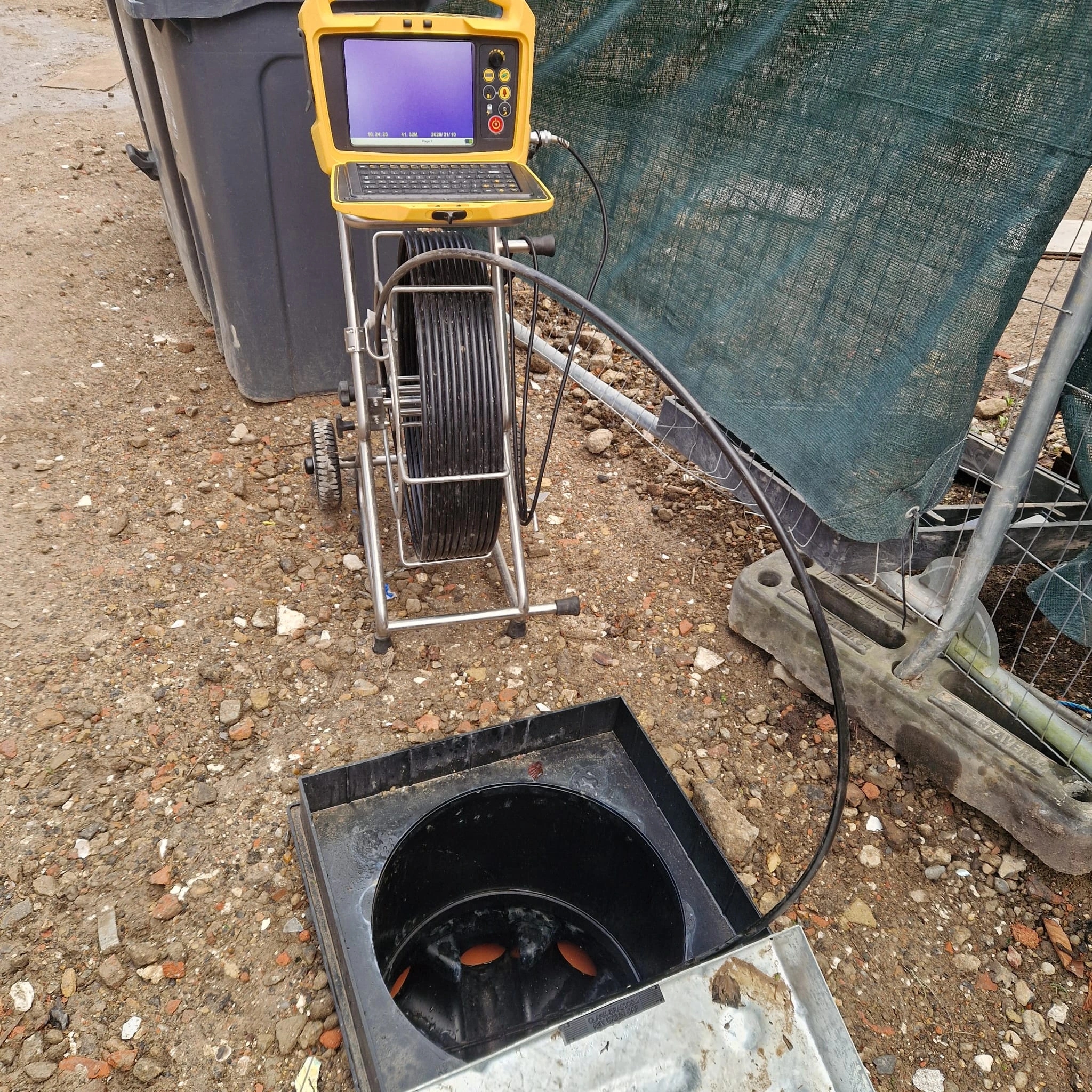
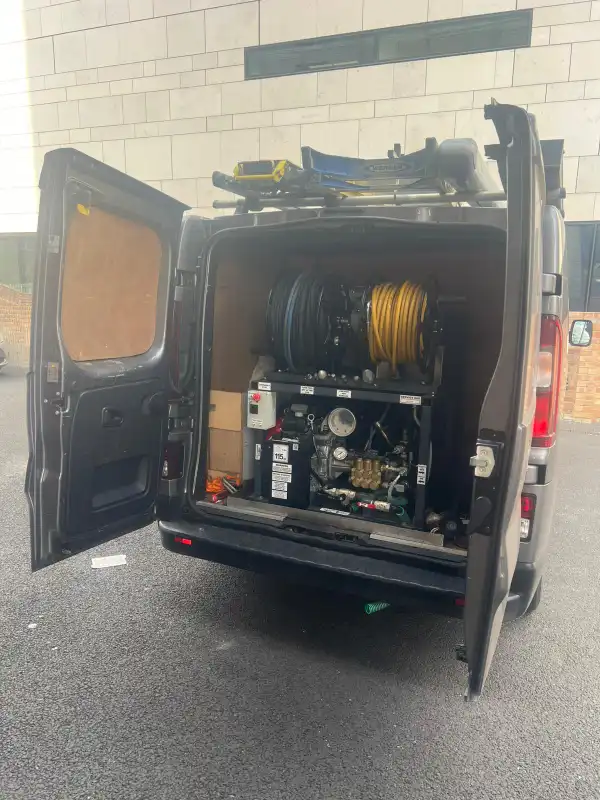
Every job starts with a site visit and percolation test. Every installation is designed to BRE Digest 365 and Building Regulations Part H. We use CCTV surveys to diagnose existing systems before recommending repair or replacement — because digging without knowing what you are dealing with wastes your money.
If your soakaway is backing up, overflowing, or you have water surfacing where it should not be, our local drain engineers are available 24/7. For blocked drains related to surface water issues, see our drain unblocking service. For emergency sewer backups, our emergency team is on call around the clock.
Call us now: 07771200075


No comments yet. Be the first to leave a review.
Comments are closed for this post.