
 Nima Fazli-Pour
What Counts as a Drainage Problem in England? The Question Every Homeowner Asks
Why do drainage problems England-wide seem to strike more often than in other parts of Europe? If you’ve just watched grey water bubble back up through your gulley for the third time this year, you’ve probably asked yourself exactly that. It’s a fair question, and the honest answer is that England’s combination of old pipework, wet weather, and heavy clay soil creates conditions that many neighbouring countries simply don’t face in the same way.
The Problem State: What’s Actually Going Wrong Underground
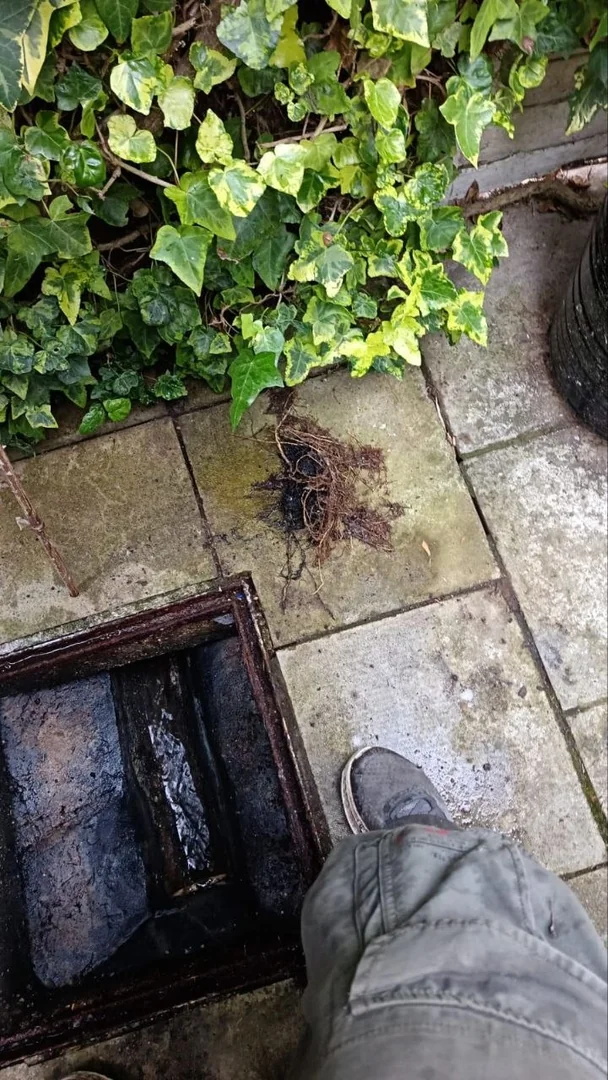
What our engineers actually see on the job: After fifteen years crawling under Victorian terraces and squeezing CCTV cameras down 100mm clay runs, I can tell you the pattern rarely changes — it’s root intrusion at the joints, a saggy section where the ground has settled, or a fatberg forming just past the boundary trap. We get called out most in late autumn when leaf fall and root growth combine with the first heavy rain, and again in high summer when clay soil shrinkage pulls old joints apart. If a customer tells us “it’s never done this before,” nine times out of ten the pipe has actually been failing quietly for years — we’re just seeing the moment it finally gave up.
Across the South East, the housing stock makes this worse than average. Streets of Victorian and Edwardian terraces in Croydon, Sutton, and Coulsdon still run on original clay drainage, sometimes patched decades ago with pitch fibre pipe that’s now brittle and prone to collapse. Combine that with London clay soil, which swells in wet weather and shrinks hard in dry spells, and you get constant, cyclical stress on joints that a newer development on stable ground would never experience.
Before you assume the worst, it’s worth being cautious about self-diagnosis. Gurgling toilets, slow-draining sinks, or a damp patch on the lawn can point to several different causes, and poking around with makeshift rods or shop-bought chemical unblockers can push a soft blockage further down the line or damage a pipe that’s already cracked.
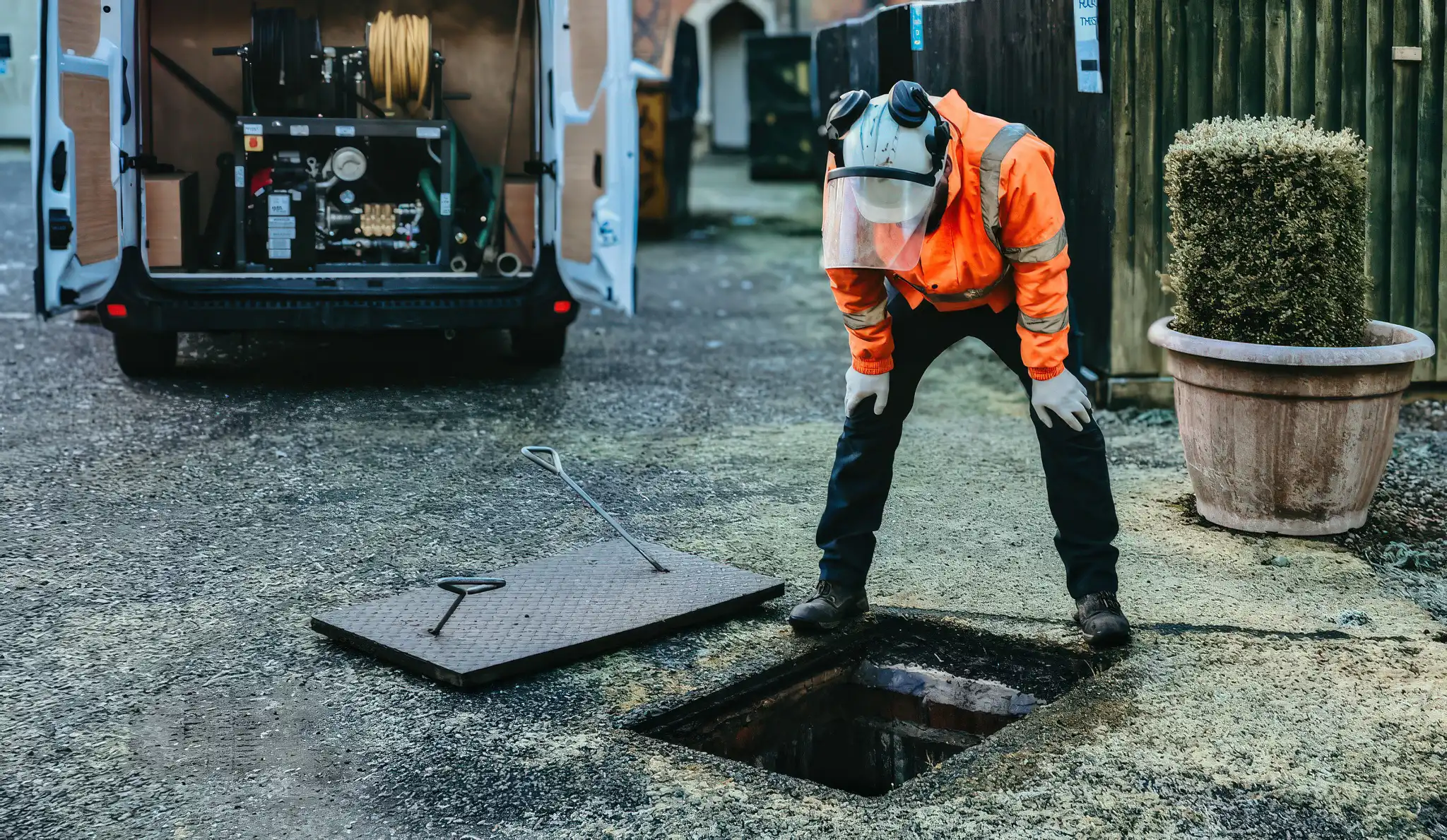
If in doubt, don’t guess — a proper CCTV survey tells you exactly what’s happening below ground before anyone reaches for a jetting hose or a spade.
That caution matters most in older properties, where an aggressive DIY attempt can turn a simple blockage into an expensive excavation.
The common triggers we see across the region include:
- Root infiltration from mature trees in leafy suburbs like Reigate, Caterham, and Banstead
- Combined sewer overload during sudden, heavy rainfall typical of a South East autumn
- Ground movement in clay soil areas causing pipe joints to separate or crack
- Fatbergs building up from grease, wipes, and sanitary products flushed over time
- Collapsed or perished pitch fibre sections in homes built between roughly the 1950s and 1970s
Left unresolved, these issues rarely stay small. A hairline crack lets in roots and silt, which narrows the pipe further, which slows flow, which increases the pressure on the next weak joint. It’s a slow-motion problem that tends to become a genuine emergency at the worst possible time, usually mid-storm.
The Resolved State: How Drainage Problems England-Wide Actually Get Fixed
The good news is that most of what starts as a frightening, messy problem has a fairly predictable, low-drama resolution once a qualified engineer is involved. A CCTV drainage survey is almost always step one — it lets us see the exact location, cause, and severity of a blockage or crack without lifting a single paving slab, which under the guidance in WRAS’s drainage and plumbing standards is the recommended way to diagnose before any invasive work begins.
Once we know what we’re dealing with, high-pressure jetting clears the vast majority of blockages safely, including established root mats and grease build-up, without risking further damage to a fragile older pipe. Where the pipe itself has failed — a collapse, a significant crack, or a section that’s simply reached the end of its life — trenchless relining is usually possible, avoiding a full dig-up in a small Victorian garden or under a driveway. You can read more about how these drain repair services work and when each approach applies.
Prevention matters just as much as the fix. Homeowners in older properties across the region can significantly cut their risk with a few sensible habits, covered in more depth in our guide on how to reduce the risk of drain blockage in older homes. Simple things — not pouring fat down sinks, fitting drain guards, scheduling a periodic jetting service — go a long way when the underlying pipework is decades old.
Seasonal awareness helps too. If you’re in the South East, our piece on what a heatwave does to your drains explains why summer ground movement catches so many homeowners off guard, and why a system that coped fine all winter can suddenly fail in a July dry spell. Anyone weighing up cost against risk should also see our honest breakdown of affordable drain clearance in South London, which sets out real pricing rather than a vague quote.
When to Call a Professional Instead of Waiting It Out
There’s a point where cautious patience stops being sensible. Repeated blockages in the same spot, sewage odour indoors, gurgling from multiple fixtures at once, or visible subsidence near a drain run are all signs the problem has moved beyond a plunger and needs proper investigation. Waiting rarely saves money — it tends to convert a same-day fix into an emergency call-out, as we’ve seen time and again with cases we cover in what happens if you ignore emergency drainage in Croydon.
For residents in Sutton, Wallington, and Banstead, our guide to fast drain unblocking without the panic price is worth a read before you call anyone, so you know what a fair quote looks like. Standards for the design and maintenance of these systems are set out in guidance such as the government’s guidance on sewer obligations and the drainage requirements referenced in the Water Industry Act, which is worth knowing if you’re ever in a dispute with a neighbour or your water company over a shared drain. Working with a local, qualified engineer who understands South East England’s clay soil, tree cover, and Victorian pipe networks means faults get diagnosed correctly the first time, rather than guessed at. That local knowledge, paired with a cautious, survey-first approach, is really what separates a quick, lasting repair from a costly repeat callout.
No comments yet. Be the first to leave a review.
Comments are closed for this post.