
 Admin
Admin 
Reduce drain blockage risk before it turns into a flooded kitchen or a sewage backup through your bathroom floor — that’s the reality for thousands of older South East England homes every year. Most homeowners make this mistake when their drain blocks: they reach for a bottle of supermarket drain cleaner and hope for the best. It rarely works, and on older pipework it can make the underlying problem considerably worse.
Why Older Drains Fail More Often Than New Ones
I’ve spent over fifteen years crawling under floors and down manholes across South East England, and the pattern is always the same: older properties block up far more often than new-builds, and it’s rarely bad luck. The pipework itself is working against you.
Homes built before the 1970s were commonly fitted with cast iron, clay, or in some cases lead drainage runs. Cast iron corrodes internally over decades, leaving a rough, pitted surface that grease, wipes and hair grip onto far more easily than the smooth bore of modern PVC. Clay pipes crack at the joints as ground shifts, and once a joint opens even slightly, it becomes an entry point for silt, roots and groundwater. None of this is visible from your kitchen sink — it’s happening metres below your garden, out of sight until the day your drain simply stops coping.
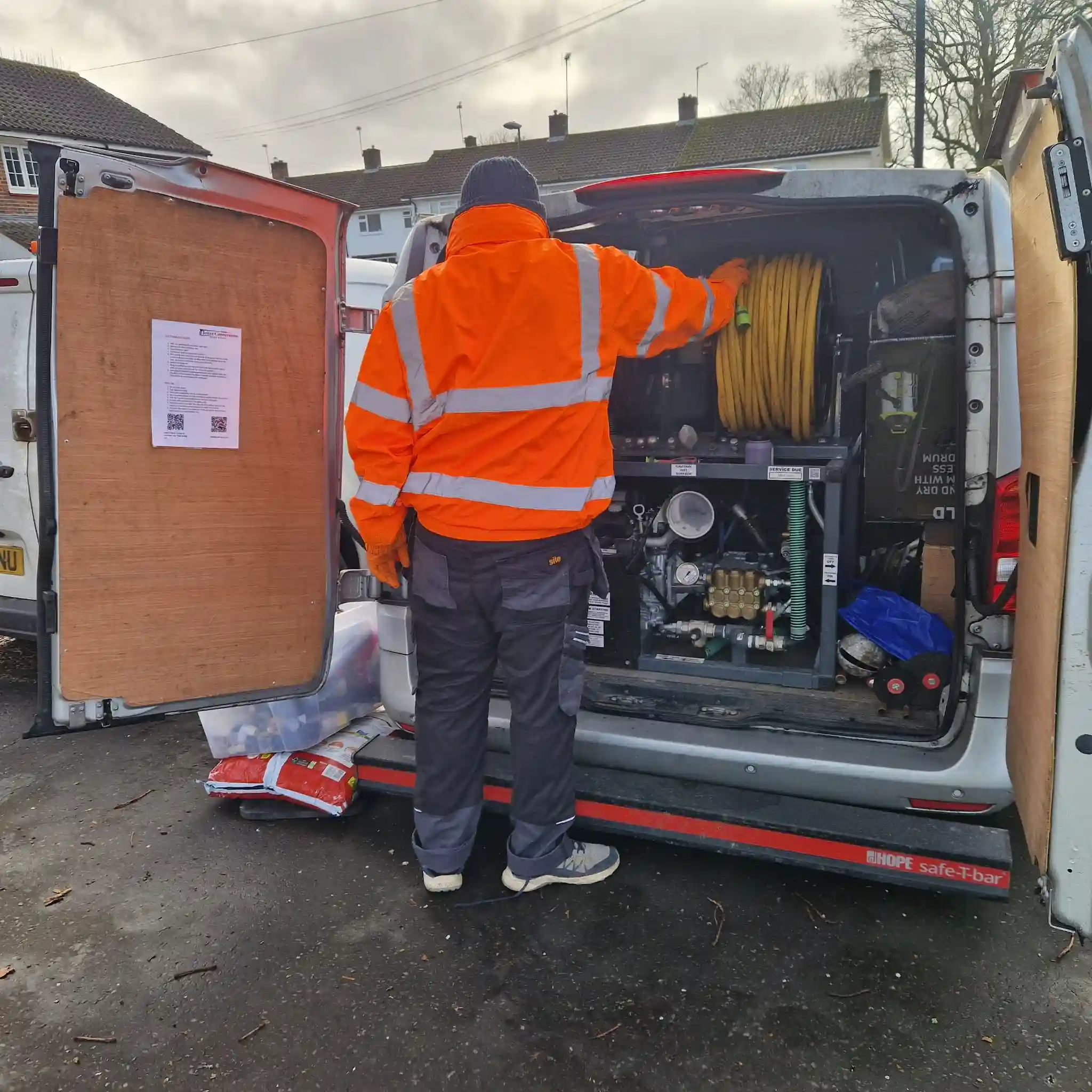
The Everyday Culprits Behind Every Blocked Drain
Ageing pipework is only half the story. Even brand-new drainage will block if you feed it the wrong things, and in older systems these everyday habits accelerate failure dramatically.
Fat, oil and grease are the single biggest cause of kitchen blockages I attend. Poured down warm, it looks harmless — then it cools, solidifies, and bonds to the rough interior of an old pipe like plaster to a wall. Hair and soap scum do the same job in bathrooms, binding together into dense mats that a plunger simply pushes further down the run rather than removing. Wet wipes, cotton buds and sanitary products flushed down the toilet don’t break down in water no matter what the packaging claims, and in a property with an older, narrower or misaligned pipe run, it takes far less material to cause a full stoppage. Add hard water mineral scale, which builds up steadily inside metal pipework, and you’ve got a drain running at a fraction of its original capacity long before anyone notices anything wrong.
Daily Habits That Genuinely Reduce Drain Blockage Risk
In the Kitchen and Bathroom
The single most effective change you can make is where your fat and oil actually goes. Collect it in a jar or old tin once it’s cooled and put it in the general waste bin — never down the sink, however hot the water running after it. Fit a simple mesh strainer over the plughole to catch food scraps, and a hair catcher over the shower or bath drain, then clean both after use rather than once a week. In the toilet, the rule doesn’t change: human waste and paper only, everything else goes in a bin beside it, and that includes wipes marked “flushable.”
A weekly flush of hot (not boiling) water down every drain in the house helps keep minor grease and scum moving before it sets hard, particularly useful in a property with older metal pipework where boiling water can stress joints and seals. For light buildup, a half cup of bicarbonate of soda followed by a half cup of white vinegar, left for twenty minutes then flushed through with hot water, is a genuinely useful preventative step — just don’t expect it to shift a serious blockage.

Outdoor Drains and the Tree Root Problem
Gardens with mature trees are common around older properties in this part of the country, and roots are drawn to the moisture and nutrients inside a drain run the way nothing else in your garden competes with. Once a root finds a hairline crack or a loosened joint, it doesn’t just sit there — it grows inside the pipe, widening the gap and trapping everything else that flows past it. I’ve opened up runs in gardens where a single root mass has reduced a 100mm pipe to a channel you could barely fit a finger through.
Slow-draining toilets, gurgling from an outside gully, or a smell of sewage near a manhole cover after rain are all early signs worth acting on. If you’re dealing with this specifically, our guide on preventing drain root ingress covers barrier options and cutting in more depth. Keep gutters and downpipes clear too — overflow from blocked guttering saturates the ground around foundation drains and adds unnecessary pressure to a system that may already be compromised.
What a Blocked Drain Actually Looks Like on the Ground
A Real Example: A 1930s Semi in Epsom
I was called to a 1930s semi-detached in Epsom last winter where the owners had noticed the downstairs toilet gurgling whenever the washing machine emptied. They’d assumed it was nothing and left it for several weeks. By the time I arrived, a CCTV survey showed a cracked clay junction about four metres from the house, with root fibres and years of wet wipe buildup forming a dense plug. What could have been a straightforward jetting job at the first sign of gurgling had become a dig-and-repair project, because the standing water and root pressure had widened the crack significantly in that time. Gurgling drains are never nothing — they’re trapped air telling you a blockage is already forming somewhere in the run.
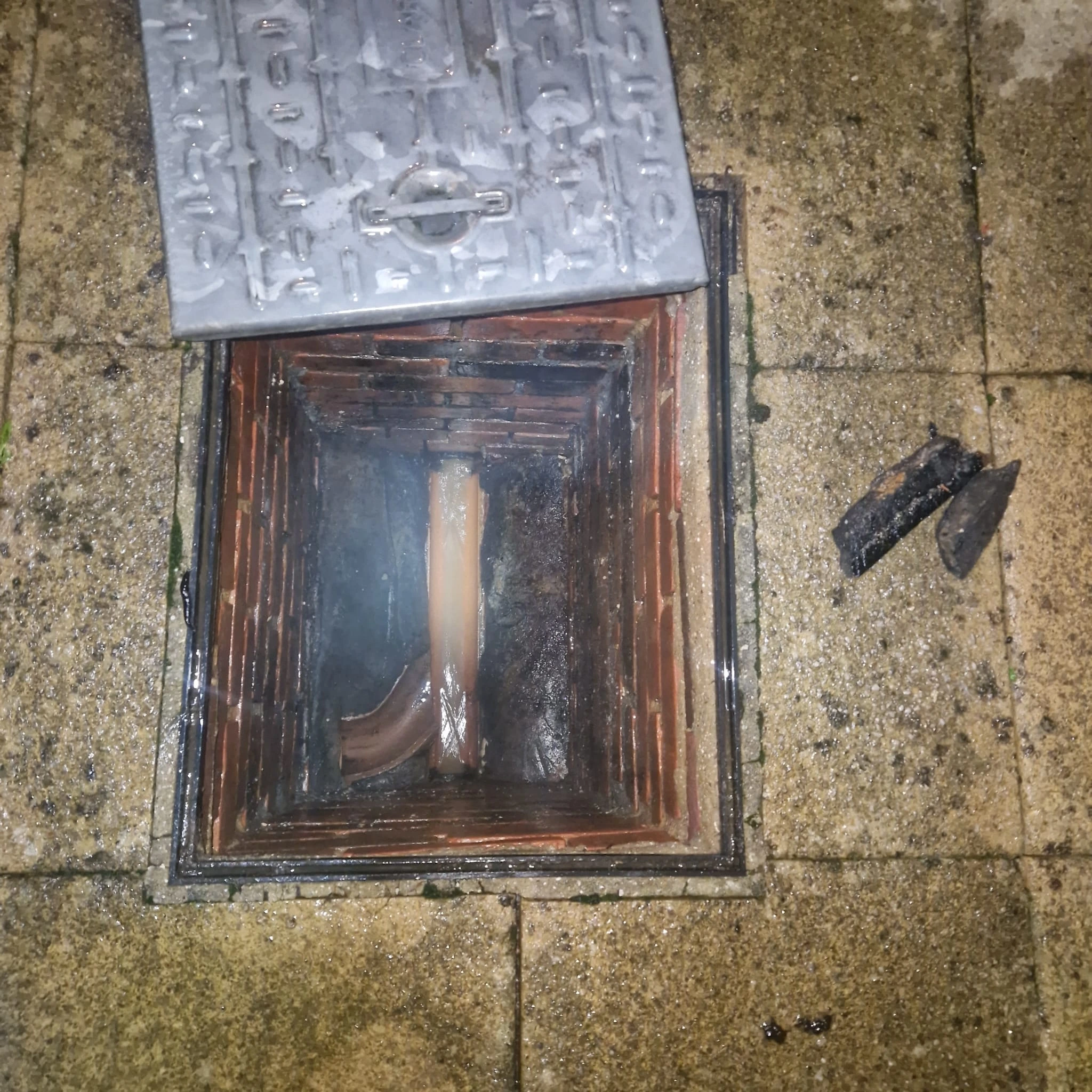
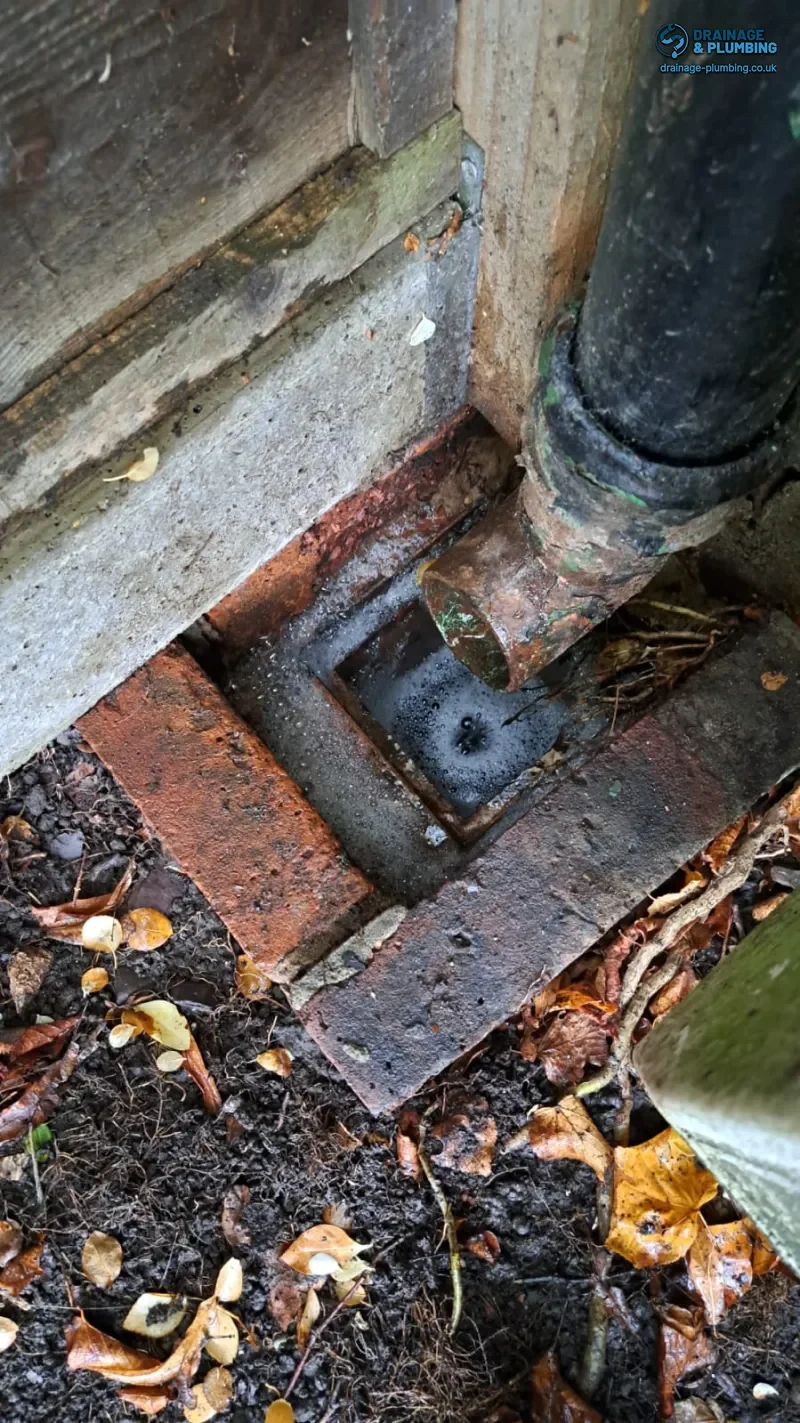
Other warning signs worth acting on immediately include water backing up into a different fixture when you run another one (a bath filling when someone flushes the toilet, for instance), and any foul odour that lingers around a gully or internal drain — that’s usually decomposing organic matter trapped somewhere in the pipe, not a one-off smell that will pass.
When Professional Drain Cleaning Actually Reduces Drain Blockage Risk
DIY methods have a genuine but limited place. A plunger or a hand-fed drain snake can clear a simple hair clog or a soft blockage close to the outlet. Once you’re dealing with a persistent slow drain, multiple affected fixtures, or any suspicion of root intrusion or a cracked pipe, DIY tools stop being useful and can actively delay a proper fix.
This is where high-pressure water jetting earns its reputation. Unlike a snake, which pokes a hole through the blockage and moves on, jetting scours the full internal diameter of the pipe, stripping grease, scale and root fibre back to bare pipe wall. It’s the only method that gets close to a like-new bore in an old, corroded cast iron or clay run, and it’s genuinely one of the few things that meaningfully changes the risk profile of an older drainage system going forward. A proper CCTV survey alongside it tells you exactly what state the pipe is in, so you’re not guessing whether the next blockage is six months away or six years away. For a fuller picture of what this looks like across the region, our page on drain cleaning across South London and Surrey covers the process in more detail.
Standards for drain design and maintenance in the UK are set out in WRAS guidance and the relevant British Standard for drainage systems, BS EN 752, and a competent engineer should be working to those benchmarks, not just clearing the immediate stoppage and leaving. It’s also worth knowing your legal position under the Water Industry Act 1991, which sets out where your responsibility for a drain ends and the water company’s begins — this matters when a blockage sits near the boundary of your property.
Building a Maintenance Routine That Actually Works
The homeowners who genuinely reduce drain blockage risk over the long term aren’t the ones scrubbing pipes weekly — they’re the ones who treat drainage like any other part of home maintenance, with a periodic professional check rather than a reactive emergency call. An annual CCTV survey on an older property, particularly one with mature trees nearby or a history of slow drains, catches developing cracks and root ingress while they’re still a cheap fix rather than an excavation.
It’s also worth understanding what’s covered if things do go wrong: our article on whether blocked drains are covered by home insurance explains where policies typically stand on collapsed or root-damaged pipework, which can shape how urgently you act on early warning signs. And if you’re comparing who to call for that annual check, it’s worth reading our breakdown of national versus local drainage companies before you commit, since local engineers tend to know the pipe materials and ground conditions specific to this part of the country far better than a national call centre operation.
Cost savings compound over time too. A single emergency call-out for a full blockage, particularly one that’s caused backup damage to flooring or plaster, will typically cost several times more than a scheduled jetting and inspection visit. Extending the working life of pipework you’d otherwise need to excavate and replace is the single biggest financial argument for staying ahead of the problem rather than waiting for it to announce itself.

If you’re unsure what any of the terms in this article mean in practice, our drainage and plumbing glossary is a useful reference, and if you’re in Redhill specifically dealing with recurring issues, our dedicated guide to blocked drains in Redhill covers what tends to work in that area’s ground conditions. Ultimately, the goal is the same wherever you are in South East England: understand what makes your drains vulnerable, build habits that keep debris out, and bring in a professional survey before a slow drain becomes a dug-up garden.
No comments yet. Be the first to leave a review.
Comments are closed for this post.