
 Nima Fazli-Pour
Affordable drain clearance South London costs typically range from £80 to £350, depending on how severe the blockage is, how deep it sits in the system, and how long it has been allowed to develop. Here is exactly what determines where you land on that scale — and why acting early almost always keeps you at the lower end.
Why South London Drains Block More Than You Might Expect

Picture a row of Victorian terraces on a quiet residential street in Streatham or Norwood. Beneath those front gardens run clay pipes that were laid over a century ago. The clay has shifted with decades of seasonal ground movement — expanding in the dry summers we increasingly see across South East England, then contracting sharply when autumn rain returns. Joints open fractionally, roots from nearby street trees find their way in, and silt begins to accumulate. The homeowner notices nothing until the kitchen sink starts draining slowly one November morning.
This is not an unusual story in South London. The borough’s housing stock is dominated by pre-1920 terraces and semi-detached properties, many of which still rely on their original clay or pitch fibre drainage systems. These materials were excellent for their era, but they were never designed to handle the volume of waste a modern household produces, nor the freeze-thaw cycles that grip South East England each winter.
The Role of Soil and Seasonal Weather
South London sits on a thick band of London clay, one of the most reactive soil types in the country. During the dry summers that have become more frequent across South East England, this clay shrinks and pulls away from pipe joints, leaving gaps that allow fine debris and root fibres to infiltrate. When the winter rains arrive — and the region has recorded record rainfall in recent years — saturated ground puts lateral pressure on already-compromised pipes, accelerating the collapse of ageing sections. If you live in an older property, this seasonal cycle is working against your drainage every single year. Understanding it is the first step toward protecting your home. For guidance on drainage responsibilities and shared sewer ownership, Thames Water’s drainage information pages are a reliable starting point.
Modern Flats Present Different Challenges
Newer apartment blocks and converted Victorian houses face a separate set of risks. Narrower plastic pipework, combined with water-saving fittings that reduce flush pressure, means everyday waste — fat, soap residue, hair — accumulates faster than residents realise. A single shared stack serving six flats can become partially blocked within months if residents are not careful about what goes down the drain. The symptoms start subtly: a slight gurgle from the bathroom waste, a faint smell near the kitchen plughole. By the time water is backing up, the blockage is already well established.
Affordable Drain Clearance South London: What the Process Actually Involves
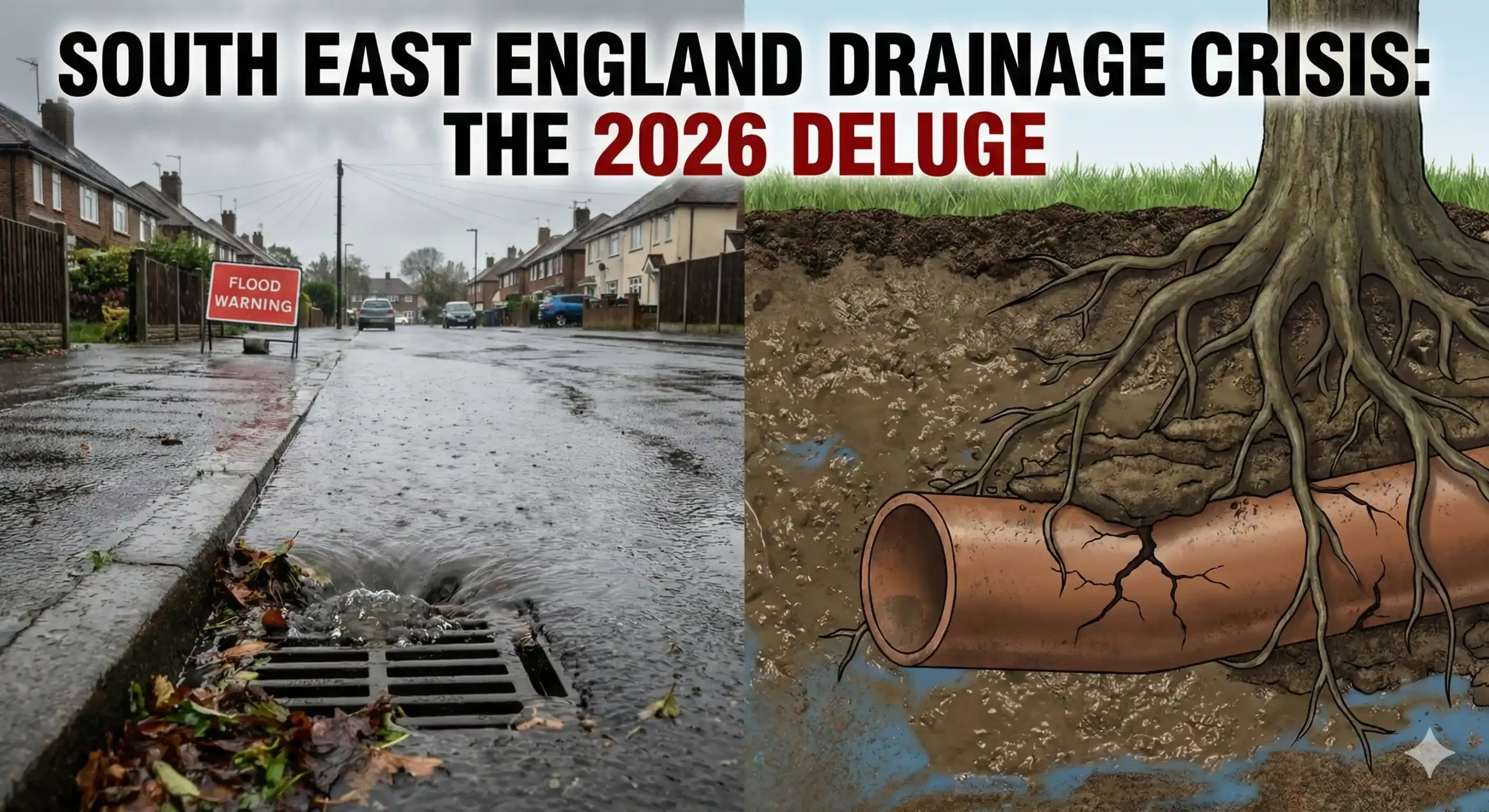
Mini case study: A semi-detached property on a tree-lined close in Mitcham contacted a drainage company after noticing that both the ground-floor toilet and the kitchen sink were draining sluggishly at the same time. A CCTV survey revealed a partial blockage caused by compacted fat and a section of encroaching tree root approximately four metres from the property’s inspection chamber. High-pressure water jetting cleared the fat accumulation in under an hour, and a targeted root-cutting attachment removed the intrusion. Total cost came to just over £200 — a fraction of what a full pipe excavation would have cost had the blockage been left to develop into a collapse.
That case illustrates why affordable drain clearance South London is not simply about finding the cheapest call-out rate. It is about intervening at the right stage of a blockage’s development, using the right method, before the drain system sustains structural damage. Most straightforward blockages are resolved with high-pressure water jetting, a technique that forces a concentrated jet of water through the pipe to break up and flush away accumulated debris. It is safe for clay, cast iron, and modern plastic pipework when operated correctly, and it leaves no chemical residue in the drain system.
CCTV Surveys: When Are They Necessary?
Not every blocked drain requires a camera inspection, and a reputable drainage company will tell you honestly when one is and is not needed. However, if a blockage recurs within a few weeks of being cleared, or if you are buying an older South London property, a CCTV drain survey is genuinely worthwhile. It maps the condition of the pipe, identifies root intrusion, displaced joints, or collapsed sections, and gives you documented evidence of the drain’s state — information that can be invaluable in a property purchase negotiation. The Building Regulations 2010 (Part H) set out the legal framework for drainage systems in England, and understanding your obligations as a homeowner is important before any repair work begins. You can also find useful technical standards in BS EN 752, the British Standard governing drain and sewer systems outside buildings.
Choosing the Right Method for Your Drain
High-pressure jetting is the most common approach for straightforward blockages. For root intrusion, a mechanical cutting head is often added to the jetting equipment. Where a section of pipe has collapsed or displaced — more common in South London’s older clay systems than many homeowners realise — a patch lining or full pipe relining may be recommended as a no-dig repair solution. It is worth being cautious about any company that jumps straight to excavation without first attempting a less invasive method. Dig-free repairs have advanced considerably, and in most cases they are both faster and more cost-effective. For a detailed breakdown of what drain unblocking typically costs across different scenarios, see our guide on how much a drain unblock costs in the UK.
Reducing Future Blockages in Older South London Properties
The best way to keep drain clearance costs genuinely affordable over the long term is to reduce the frequency with which blockages occur in the first place. In South London’s older housing stock, that means understanding the specific vulnerabilities of your property’s drainage system and taking a few consistent precautions.
Avoid pouring fats, oils, or grease down the kitchen sink under any circumstances. Even small amounts harden inside clay pipes, which are rougher on the interior than modern plastic, and accumulate debris far more readily. Fit simple mesh strainers over bathroom and kitchen waste outlets to catch hair and food particles before they enter the system. Run a full kettle of hot water down the kitchen drain once a week to help keep fat deposits mobile. If your property has a shared drain serving multiple households — common in converted Victorian terraces — consider arranging a professional drain clean annually, particularly heading into autumn when falling leaves and increased rainfall put extra pressure on the system. Our article on how to reduce the risk of drain blockage in older homes covers these preventive steps in detail.
It is also worth knowing that chemical drain cleaners, while tempting as a quick fix, carry real risks when used in older clay or pitch fibre pipes. Repeated chemical exposure weakens the pipe wall and can accelerate joint failure — exactly the opposite of what you need in an ageing drainage system. Mechanical and water-based clearance methods are always preferable, both for the pipe’s longevity and for the local environment. The Health and Safety Executive provides guidance on the safe handling and disposal of chemical drain products if you have already used them and need to manage residual product safely.
If you are based further into Surrey and need local drainage support, our team also covers drain unblocking in RH4, with the same response times and transparent pricing that South London customers expect.
The story that opened this article — the Streatham terrace, the shifting clay, the slowly draining sink — ends the same way most drain stories end when action is taken promptly: a jetting visit, a clear pipe, and a homeowner who now knows what to watch for. Affordable drain clearance South London is not a myth. It is the straightforward result of catching problems early, using the right equipment, and working with a drainage team that understands the specific challenges of the borough’s ageing infrastructure. When in doubt, call sooner rather than later. The cost of early intervention is almost always a fraction of what delayed action eventually demands.
No comments yet. Be the first to leave a review.
Comments are closed for this post.