
 Admin
Admin 
You’ve probably heard that a smelly drain just needs a squirt of bleach and it’ll sort itself out. It’s wrong — and it’s why so many drains get worse instead of better. Understanding why do drains smell is the only way to stop treating the symptom while the real fault keeps growing underground.
Why Do Drains Smell? The Myth of the “Quick Fix” Odour
Most homeowners assume a bad drain smell is just bacteria that any supermarket cleaner will kill. That belief is only half true, and acting on it alone is exactly why odours keep returning within days. Bleach and air fresheners deal with surface bacteria on the top few centimetres of pipe — they do nothing for the physical build-up, trapped gases, or structural faults sitting further down the system.
The reality is that drain odours are a warning signal, not a random inconvenience. In the vast majority of cases we attend across Surrey, South London and the wider South East, the smell traces back to one of a handful of causes: a dry P-trap letting sewer gas rise unchecked, a sticky layer of biofilm coating the pipe walls, decomposing food waste trapped in bends, a blocked vent stack disrupting airflow, or — in the more serious cases — a cracked, root-damaged or fully blocked section of the main drain run. Each of these produces a slightly different smell, and that difference matters, because it tells you whether a five-minute fix will work or whether you’re looking at a job for a drainage engineer.
A dry P-trap is the most common cause of a sudden rotten-egg smell, particularly in guest bathrooms, utility sinks and basement floor drains that aren’t used every day. The curved section of pipe under every sink, shower and toilet is designed to hold a small amount of water as a barrier against sewer gas. Leave that fixture unused for a couple of weeks — over a summer holiday, for instance — and the water simply evaporates, opening a direct route for gas to travel back into the room. Running the tap for a minute restores the seal immediately, which is precisely why this fix works for some smells and does nothing at all for others.
Biofilm is a different problem entirely. It’s the sticky film of grease, soap, hair, and organic residue that builds up on pipe walls over months, and the bacteria feeding on it release the sour, musty gases you notice most strongly around the plughole. No amount of tap-running fixes this, because the film itself is physically stuck to the pipe. This is one of the most persistent myths we correct on site — see our breakdown of common drain cleaning myths for more on why chemical cleaners rarely shift established build-up.
Common Misconceptions We Correct Every Week
The first misconception is that a strong smell always means a blockage right at the fixture. In reality, smell can travel a surprising distance through a connected drainage system, so a gurgling toilet or reeking bathroom is often reporting a fault much further down the line, sometimes at the external manhole. We’ve attended jobs where a customer assumed a single sink was the source, only for a full inspection to reveal a chamber packed with grease and debris metres away.
The second misconception is that bleach solves the underlying problem. Bleach kills bacteria on the surface but has no effect on solid grease build-up, trapped food waste, or root ingress, and regular overuse can actually degrade older pipework and seals over time. It masks the smell for a day or two at best.
The third misconception is that if water is still draining away, the pipe must be fine. Slow but functioning drainage frequently coexists with a serious blockage further along the run — waste can back up gradually behind a partial obstruction for weeks before anything visibly overflows. By the time water stops moving altogether, gas has usually been escaping into the property for some time already. This is also why persistent unpleasant smells shouldn’t be treated as a cosmetic issue: the Health and Safety Executive notes that sewer gases including hydrogen sulphide and methane can pose genuine health and safety risks in enclosed spaces, which is exactly why unresolved chamber blockages are not something to leave for another month.
| Approach | What It Actually Fixes | When It Fails |
|---|---|---|
| DIY (hot water, baking soda & vinegar, enzyme cleaner) | Mild biofilm, early-stage grease build-up in accessible pipework | Root intrusion, cracked pipes, full chamber blockages, deep-line obstructions |
| Professional jetting by a drainage engineer | Finds the exact location and cause, then clears grease/roots/debris at full pipe diameter | Rarely fails — but overkill for a single dry P-trap fixed by running a tap |
| Bleach or air freshener | Temporarily masks odour at the surface | Almost always — smell returns within days because nothing physical is removed |
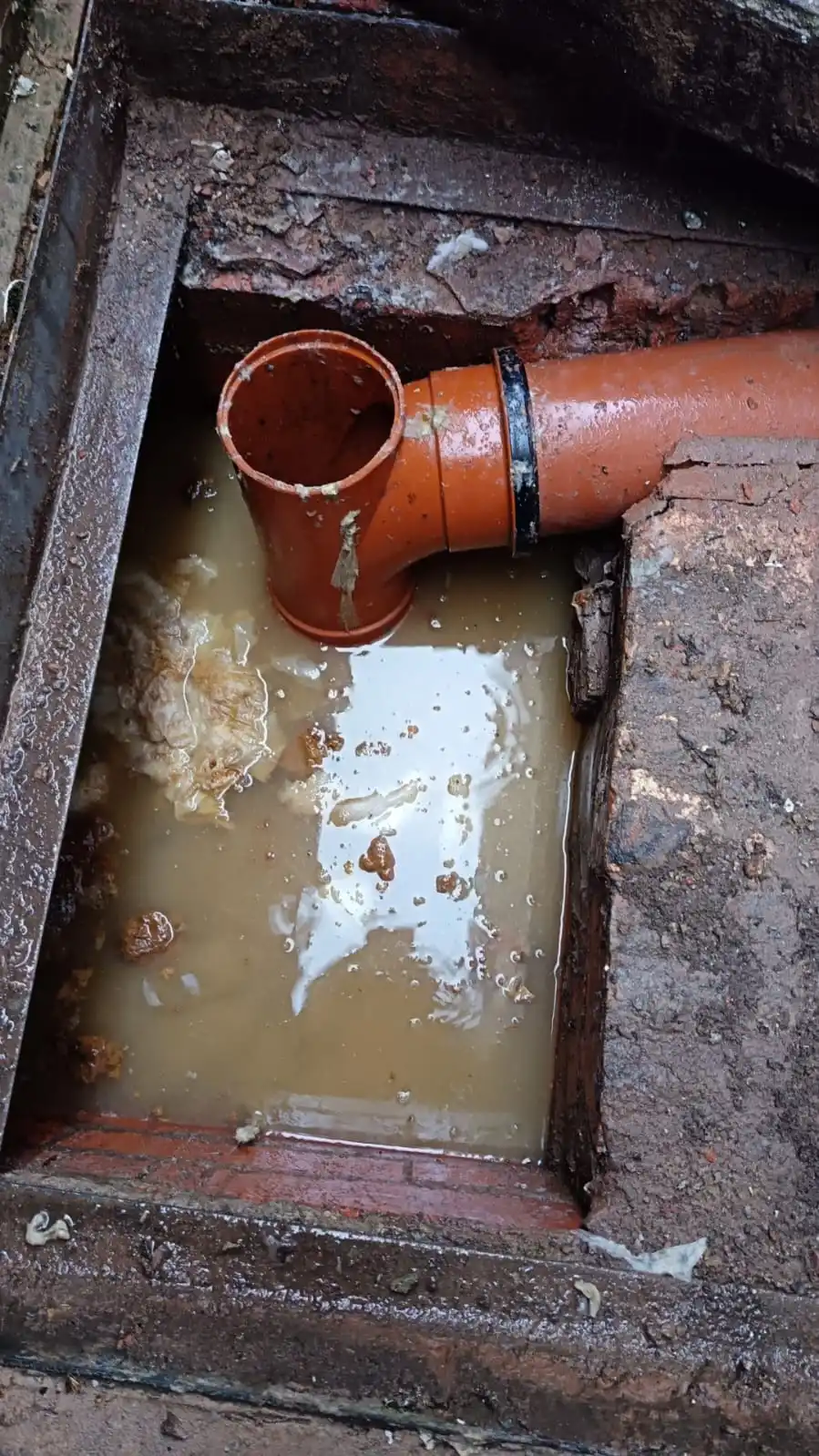
We were called out recently to a ground-floor bathroom and hallway with a persistent sewage smell that the homeowner had already tried to treat with strong chemical cleaners, shop-bought unblockers, and repeated boiling water flushes. Since the sink and toilet were still draining, they’d assumed the pipework was simply old and the smell was something they’d have to live with. Lifting the external manhole cover told a different story: the chamber was completely full, with a heavy build-up of grease and non-flushable material slowly backing waste up underground and pushing gas back through the system into the house. There was no visible flooding yet, but it was close. High-pressure water jetting cleared the blockage and the chamber within the hour, and the smell was gone before we left site.
Why Do Drains Smell Worse After Rain, and When You Actually Need a Professional
A widely repeated myth is that drain smells only get worse in summer, when warm weather is blamed for accelerating bacterial growth. Heat does play a role, but some of the strongest odour complaints we receive follow heavy rainfall, not hot spells. Sudden downpours can overload public sewer capacity, and when that happens, gas and even wastewater can be pushed back through residential connections rather than away from them. If your drain smells worse specifically after rain, that’s a sign the issue sits closer to the shared or main drainage system than to an individual fixture inside your home.

So when does a smell genuinely need a professional rather than another round of baking soda? Watch for smell returning within days despite cleaning, multiple drains smelling at the same time, water draining noticeably slowly, a toilet gurgling when a sink or bath empties nearby, or an outdoor manhole that looks full or is overflowing. Any of these point to a blockage affecting more than one fixture, which almost always means the fault sits in a shared section of pipe rather than somewhere you can reach with a plunger. Our guide to professional blocked drain solutions covers what a full inspection typically involves if you’re weighing up whether to call someone out.
Root intrusion is another cause worth naming specifically, particularly in older properties with clay pipework. Roots seek out moisture and can find their way through even hairline joints, gradually cracking pipe sections and snagging waste until a full blockage forms. This is especially common in mature gardens and tree-lined streets, and we’ve written more on the pattern in our piece on tree root drain blockages across South London. The only reliable way to confirm root damage before choosing between a spot repair and a full relining or replacement is to have an engineer work the run, and doing that avoids the cost of digging up a garden unnecessarily. Getting this diagnosis right matters for budgeting too — our breakdown of real drain unblocking costs in the UK shows how much the price varies between a straightforward jetting job and a repair involving excavation.
Vent pipes, sometimes called soil stacks, are the part of the system most people forget exists. They allow sewer gas to vent safely above roof level, and if they become blocked by leaves, debris, or even a bird’s nest, the resulting pressure imbalance can actually siphon water straight out of nearby P-traps. That’s why a single blocked vent can cause several rooms to smell of sewage at once, even though nothing appears wrong with any individual sink or toilet. Persistent damp alongside a bad smell is also worth investigating separately, since it can point to a hidden pipe leak rather than a blocked drain — worth checking before assuming the drainage system itself is at fault, and relevant if you’re also dealing with pooling water outside; our guide to waterlogged garden solutions covers surface drainage issues that sometimes get mistaken for a smelly drain fault.
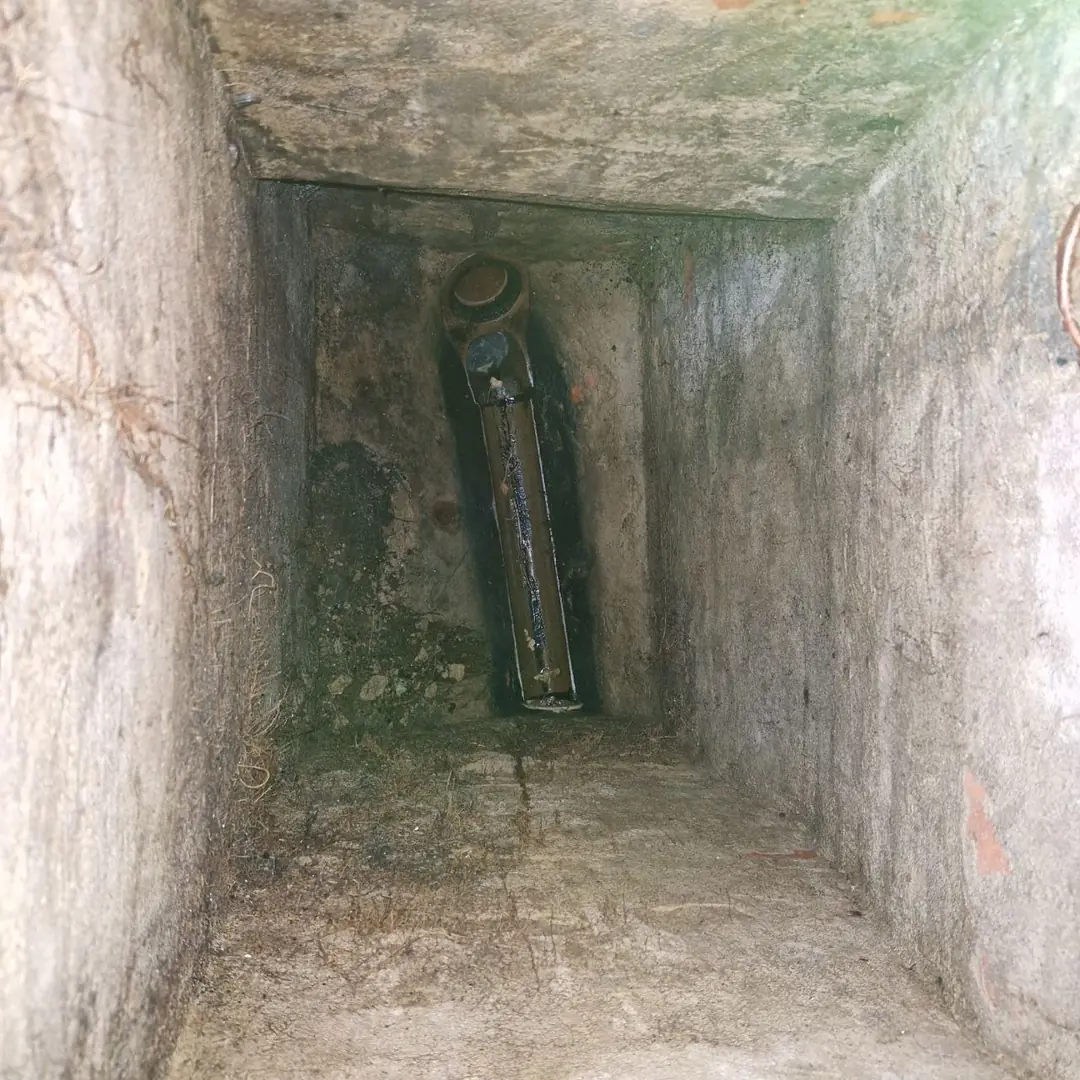
Any drainage work connected to a shared or public sewer should also meet the standards set out for wastewater systems under British Standard BS EN 752, and where a property sits near a watercourse or shared drainage network, the rules enforced by the Environment Agency can also apply to how blockages and overflows are managed. This isn’t red tape for its own sake — it’s the reason a proper diagnosis and a correctly sized jetting job matter more than a bottle of drain cleaner once a fault sits below ground.
If you’re still asking why do drains smell after trying the obvious fixes, the honest answer is that the cause is almost certainly out of reach without proper equipment. Persistent, worsening or multi-fixture odours are not something to keep masking — they’re a sign that waste is backing up somewhere you can’t see, and every week that continues increases the risk of a genuine flood or a much larger repair bill. We cover Croydon, Sutton, Wallington, Coulsdon, Banstead, Bromley, Mitcham, Epsom, Reigate, Redhill, Leatherhead, Kingston upon Thames, Wimbledon, Richmond, Caterham, Guildford, Crawley and Haywards Heath, with high-pressure jetting and manhole clearance available as emergency call-outs. If your drains smell and the usual tricks haven’t worked, get it looked at properly before it becomes a flood.
No comments yet. Be the first to leave a review.
Comments are closed for this post.