
 Admin
Admin 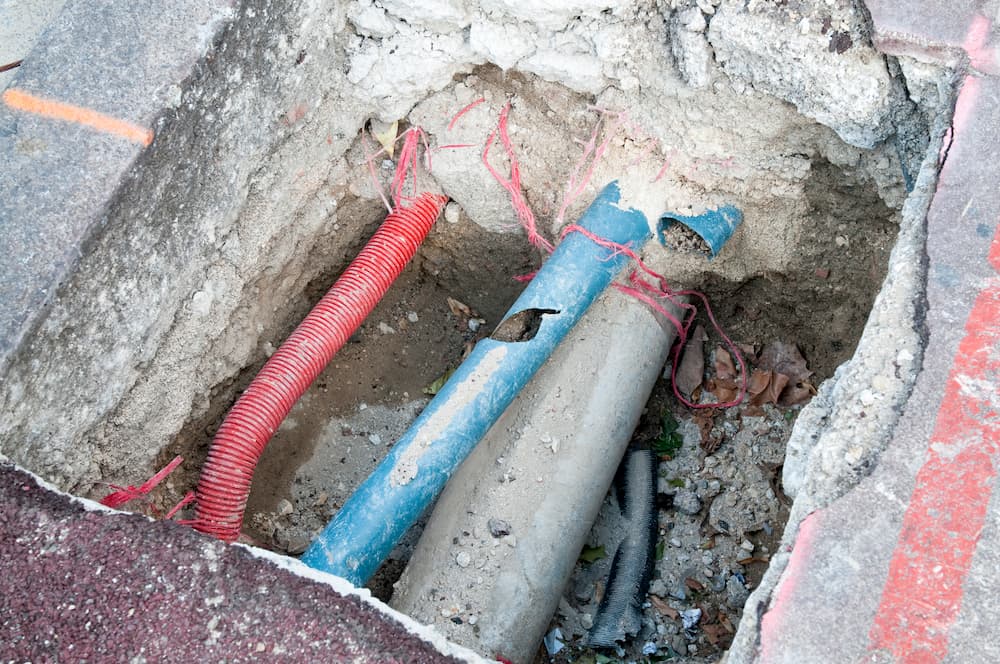
“Is my drain actually collapsed, or is this just another stubborn blockage?” That’s the exact question that ran through Mrs Okafor’s mind one wet October morning in her 1930s semi in Purley, staring at a soggy patch of lawn that hadn’t dried out in a week. She’d plunged the downstairs toilet twice, poured a bottle of drain cleaner down the outside gully, and nothing had changed. By the time she called us, the smell had started drifting through the kitchen window every time it rained. Her story is a common one across South East England, and it’s worth following through to the end, because how it played out tells you almost everything you need to know about spotting collapsed drain symptoms before they turn into a much bigger bill.
What Actually Causes a Drain to Collapse
A collapsed drain isn’t usually a single dramatic event. It’s the end point of a slow process, a pipe that’s been fracturing, deforming, or corroding for months or years before it finally gives way and blocks the flow of wastewater completely. Understanding why it happens is the first step to recognising collapsed drain symptoms early, and it matters enormously here because of what’s actually in the ground.
Much of Surrey, Croydon, and the wider South East sits on London Clay, a soil type that shrinks in dry summers and swells again once fresh autumn rain arrives. That constant movement puts real stress on rigid old pipework, especially the pitch fibre drainage widely installed in the 1950s to 1970s, which is notorious for delaminating and collapsing under exactly this kind of seasonal flexing. Add in the mature street trees common to Victorian and Edwardian terraces, whose roots chase moisture straight into pipe joints during autumn root growth, and you’ve got a landscape that’s genuinely hard on drains.
Ground Movement and Clay Soil
Clay soil expansion and contraction is one of the single biggest contributors to drain collapse in this region. As the ground shifts beneath a property, sections of pipe can be pulled apart at the joints or crushed under uneven pressure, particularly on older runs that were never designed to flex.
Root Intrusion and Ageing Pipework
Tree roots exploit the tiniest gap in a joint and, once inside, expand relentlessly, cracking the pipe from within. Combine that with corrosion in old clay or pitch fibre pipework, plus the odd poorly executed repair from decades past, and you have the classic recipe for a collapse waiting to happen.
Recognising Collapsed Drain Symptoms Early
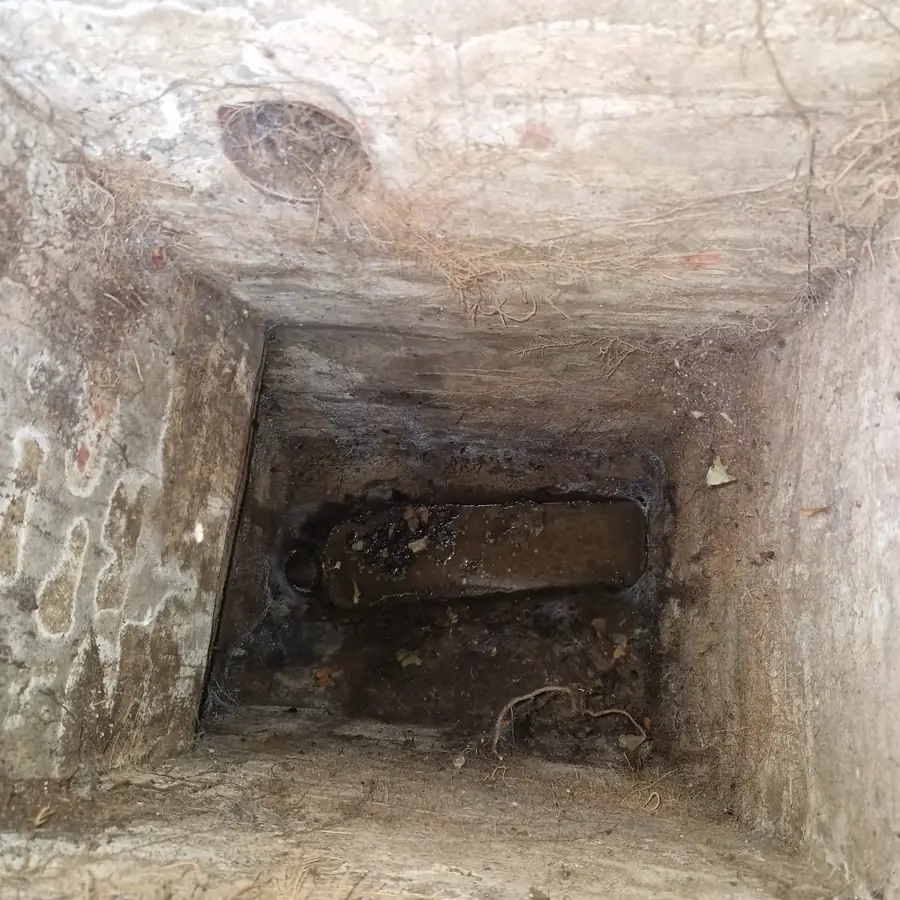
What our engineers actually see on the job: after more than fifteen years crawling through inspection chambers across Croydon, Sutton, and Reigate, the pattern I see most often is a homeowner who’s already tried three different drain unblockers before calling us, convinced it’s “just a bad clog.” Nine times out of ten, once we get properly into the run, we find a section of pitch fibre pipe that’s ovalled out or a clay joint that’s sheared where a root has forced its way through. By the time the smell and the soggy patch appear together, the collapse has usually been developing quietly for a good while, which is exactly why acting on early collapsed drain symptoms saves so much disruption later.
The tricky part is that many of these signs look like an ordinary blockage at first glance. That’s what catches people out, and it’s why we always urge caution rather than assumption when a drain problem doesn’t clear the way it normally would.
Persistent Blockages That Won’t Clear
If your sinks, toilets, or showers keep backing up no matter how many times you plunge or use a drain rod, that’s one of the clearest collapsed drain symptoms. A genuine collapse creates a physical obstruction that no amount of DIY effort will shift, unlike a simple fat or hair clog that usually responds to basic clearing.
Foul Odours and Soggy Ground
A persistent sewage smell, especially one that gets worse after rain, often means wastewater is escaping into the surrounding soil rather than flowing away. Look out for unexplained puddles, lush green patches, or ground that never seems to dry out along the line of your drain run, particularly telling on the clay-heavy gardens typical of this region.
What to Do If You Spot Collapsed Drain Symptoms
If any of this sounds familiar, please resist the urge to reach for stronger chemicals or attempt to dig down and inspect the pipe yourself. A suspected collapse sits well outside the territory of safe DIY, and getting it wrong can genuinely put you at risk as well as make the repair more expensive.
Why DIY Fixes Are Risky Here
Excavating near a collapsed drain without proper support can cause further ground movement or trench collapse, a real hazard the Health and Safety Executive takes seriously for exactly this reason. Harsh chemical cleaners, meanwhile, do nothing for a structural collapse and can corrode the pipe further while posing a risk to you and the local watercourse. When in doubt, always call a professional rather than guessing.
Getting a Proper Diagnosis
The safest and most reliable next step is to have an engineer establish precisely where the collapse is and how bad it is, before anyone digs anything. Depending on what we find, the fix might be a resin liner inserted into the damaged section, or, for more extensive collapses, a targeted excavation and pipe replacement. Either approach should follow the design principles set out in BS EN 752 for drainage and sewerage systems, and any works connecting to or near a public sewer should also respect the requirements under the Water Industry Act. We always talk you through the options and costs before any work starts, because a collapsed drain is stressful enough without surprises on top.
Back in Purley, the cause at Mrs Okafor’s was a cracked pitch fibre joint about four metres from the house, right where an old silver birch’s roots had pushed in over several dry summers followed by a wet autumn. We relined the damaged section without needing to touch her patio, and within a day the smell was gone and the garden started drying out properly for the first time in weeks. It’s the outcome we aim for on every job like this: caught in time, diagnosed properly, and fixed with the least disruption possible.
If you’re seeing any combination of these warning signs, don’t wait for the situation to worsen. Our team covers Beckenham and the wider South East, and we’re used to working around the clay soil, root growth, and ageing pipework that make this region particularly prone to drain collapses. Getting it looked at now is almost always cheaper and less disruptive than waiting until standing water or structural damage forces the issue. If you’re unsure whether what you’re dealing with is a simple clog or something more serious, it’s also worth reading up on the wider signs of a developing drainage issue, and if pests have started appearing around damaged pipework, our guide to rats in drains explains why that’s often connected. Persistent problems near bathroom drains are also worth checking against our piece on drain flies in bathrooms, another symptom that can point back to underlying pipe damage.
No comments yet. Be the first to leave a review.
Comments are closed for this post.