
 Nima Fazli-Pour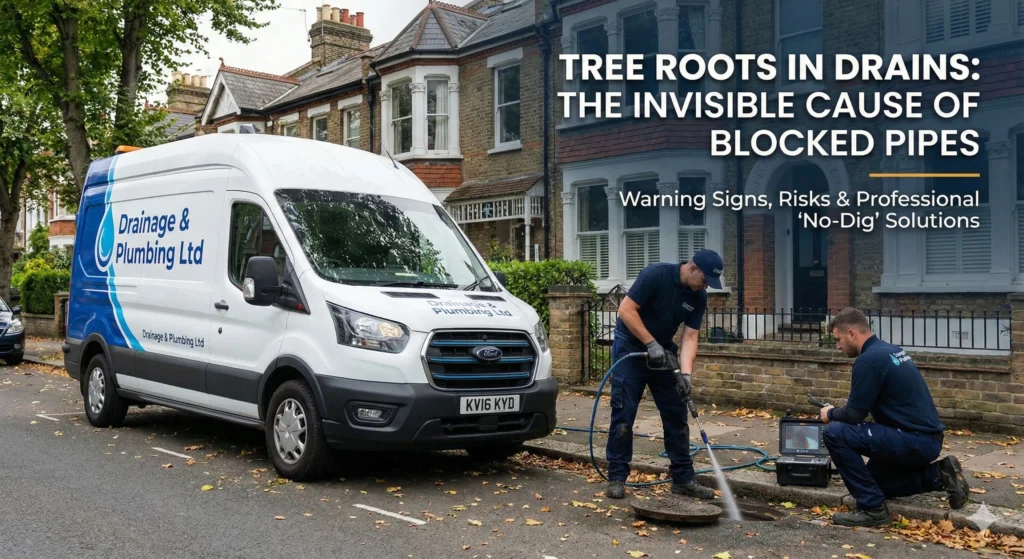
1. Spot Tree Root Drain Damage Before It Spreads
In the next 24 hours, a blocked drain can go from a minor inconvenience to a £3,000 structural problem. Tree root drain damage is one of the most common culprits we see across Croydon, Bromley, Epsom and Reigate, and it rarely announces itself until the pipe is already compromised. If your drains have been gurgling or backing up on a loop, don’t reach for another bottle of drain cleaner just yet — read this first.
Why South East England Gardens Are Especially at Risk
Many streets around here — think the Victorian terraces off Croydon Road or the Edwardian estates near Reigate — still run on original clay pipework. Clay pipes are laid in short sections with jointed connections, and over decades our clay-heavy local soil shifts and shrinks, especially through hot, dry summers. That movement opens hairline cracks at the joints, and a thirsty tree root will find them within a single growing season.
The Checklist: 5 Warning Signs to Watch For
Work through this list room by room. If you tick more than one box, tree root drain damage is a likely cause, not just a one-off blockage.
- Gurgling toilets or sinks — air trapped behind a root mass makes a distinct glug-glug sound.
- Blockages that return within days — you’re clearing debris, but the root “net” catching it stays in place.
- Slow drainage in multiple fixtures at once — a single slow sink is a trap issue; several slow fixtures point to the main line.
- Foul smells near external drains — trapped waste rotting inside a root ball.
- A soggy or unusually lush patch of lawn — a sign water is leaking from a cracked pipe underground.
2. Understand Why Chemicals and Rodding Won’t Fix Tree Root Drain Damage
We regularly meet homeowners in Sussex and Surrey who’ve already spent money on heavy-duty drain cleaners before calling us. It’s an understandable first move, but it won’t touch the real problem.
Tree roots are tough, fibrous, and biologically driven to keep growing toward moisture and nutrients — exactly what your wastewater provides. No off-the-shelf chemical is strong enough to dissolve a root mass without also damaging the pipe and surrounding soil. Drain rods can punch a temporary hole through the roots, restoring flow for a week or two, but the roots heal and regrow, often thicker than before.
If your “fixed” drain blocks again within a fortnight, that’s not bad luck — it’s almost always tree root drain damage regrowing through the same crack.
Left unchecked through an autumn root-growth season, this cycle accelerates. Roots don’t just block the pipe; they expand and put pressure on the clay from the inside, which is how a manageable crack turns into a full collapse.
3. Follow the No-Dig Repair Process Step by Step
Here’s exactly what we do when we’re called out to suspected tree root drain damage, so you know what to expect before we arrive.
- CCTV drain survey. We feed a camera through the line to see precisely where roots are entering, how thick the mass is, and whether the pipe wall is still structurally sound. You can watch the footage with us on-site.
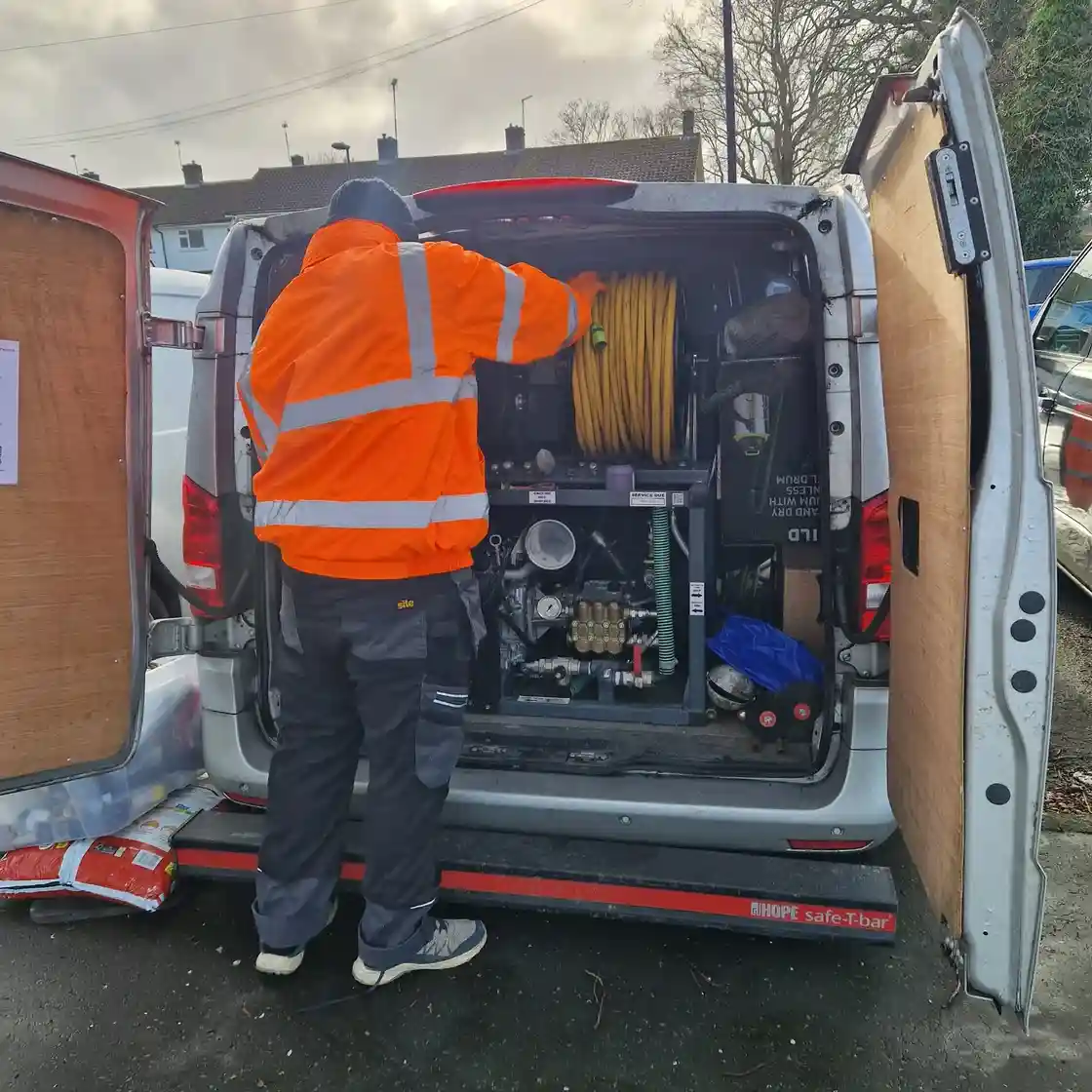
- High-pressure root cutting. A specialist jetting head spins at speed, slicing through the root mass and flushing debris clear, restoring the pipe’s full diameter without excavation.
- Structural relining. A resin-impregnated liner is inserted and inflated against the pipe wall, then cured to form a new, jointless pipe inside the old one — sealing the cracks roots used to get in.
Done in that order, this resolves tree root drain damage permanently in the vast majority of cases, with no digging up your driveway or garden. A straightforward root cut can take under an hour; a full reline is usually a half-day job.
4. Know When to Call In a Local Specialist
Waiting is the costliest mistake we see. Once a root-damaged pipe collapses rather than just cracking, relining is no longer an option — excavation to physically replace the pipe is the only route left, and that’s a far bigger job and bill.
If you’re dealing with sudden dips in the lawn or suspect the pipe itself may already be compromised rather than just blocked, it’s worth reading our guide on how to tell if you have a collapsed drain issue before deciding on next steps. For households outside our immediate patch, check the areas we cover to see if a local team is nearby.
Willows, poplars and oaks tend to be the worst offenders in our experience across Surrey and Sussex gardens, though even a Buddleia planted too close to a drain run can cause trouble. Home insurance policies often cover accidental damage to underground services, including root intrusion — a CCTV survey report from us gives you the evidence needed to support a claim. For background on shared sewer responsibilities and drainage standards, the Water Regulations Advisory Scheme and guidance aligned with the Water Industry Act are useful references, alongside the design principles set out in Thames Water’s own network guidance for the region.
If you’re tired of unblocking the same drain every month, the smart move is a proper CCTV assessment rather than another bottle of cleaner. Call or WhatsApp 07771 200075, email support@drainage-plumbing.co.uk, or book online for an honest, local assessment of your drains.
No comments yet. Be the first to leave a review.
Comments are closed for this post.