
 Nima Fazli-Pour
When drainage solutions South East England homeowners actually need are in short supply, the consequences hit fast. It’s 6am, water’s backing up through the shower tray, and the smell reaches you before you even see the problem. Here’s what you need to know — and what it’ll cost you to ignore it.
Why Do South East England Drains Fail So Often?
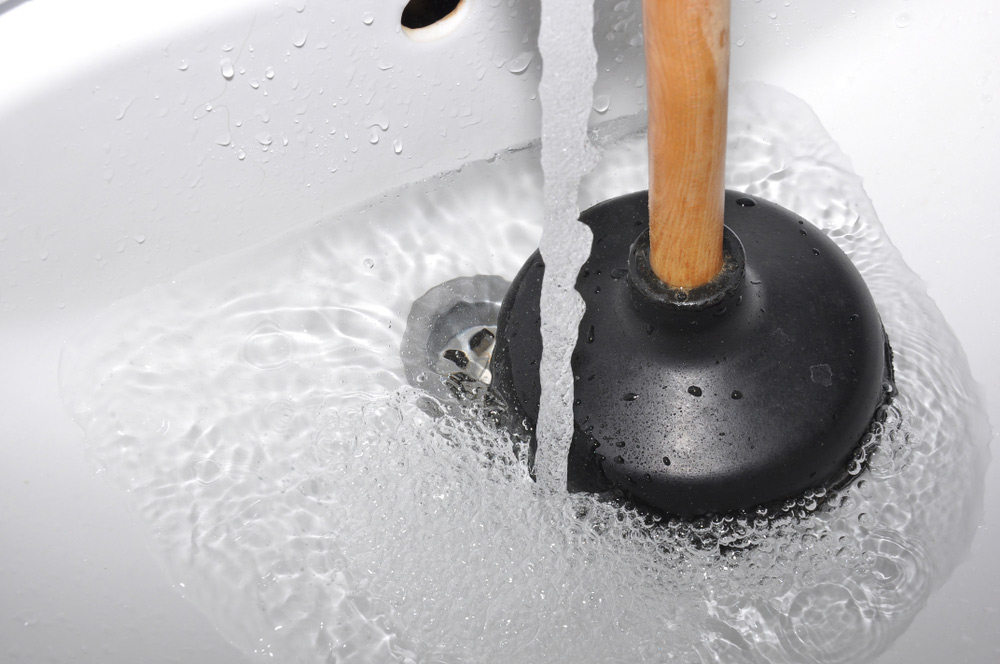
The South East has a serious pipe age problem. Victorian-era clay pipes are still in the ground under millions of homes across Surrey, Kent, and Sussex. Clay is brittle. It cracks under root pressure and ground movement. Homes built between the 1950s and 1970s often have pitch fibre pipes — a material that absorbs moisture, deforms into an oval shape, and eventually collapses entirely. PVC only became standard post-1980, and even that degrades without maintenance.
Old pipe materials plus heavy clay soil equals drain failures that happen quietly — until they don’t. A slow drain today is a collapsed pipe next year. A collapsed pipe means excavation, and excavation means costs starting at £1,500 and rising fast. Check the Flood and Water Management Act 2010 regulations to understand your legal responsibilities as a homeowner when it comes to private drains.
Don’t wait for the collapse. If your drains are running slow, get them looked at now.
What Drainage Solutions South East England Properties Actually Need
Not every blocked drain needs the same fix. Here’s a ranked list of the most common drainage interventions, from least to most invasive — and what each one typically costs:
- High-pressure drain jetting — clears grease, silt, and soft blockages. Typically £80–£200 depending on access and severity.
- Mechanical rodding — used where jetting alone won’t shift a compacted blockage. Often combined with jetting for best results.
- CCTV drain survey — a camera is fed into the drain to identify cracks, root intrusion, or collapsed sections. Usually £150–£300. Essential before any repair decision.
- Drain relining (no-dig repair) — a resin liner is cured inside the existing pipe, sealing cracks without excavation. Typically £500–£1,500 depending on pipe length.
- Pitch fibre pipe remediation — deformed pitch fibre pipes can sometimes be relined; severely collapsed sections need replacement. Costs vary widely.
- Full drain excavation and replacement — last resort. Costs from £1,500 upwards, depending on depth and access. See our full collapsed drain repair cost guide for a detailed breakdown.
- Soakaway and surface water drainage — French drains, soakaways, and land drainage systems installed to redirect excess water and prevent flooding.
The right solution depends on what’s actually wrong. That’s why a CCTV survey is almost always the smartest first move. Skipping it and guessing costs more in the long run.
Is DIY Drain Clearing Worth It — Or a False Economy?
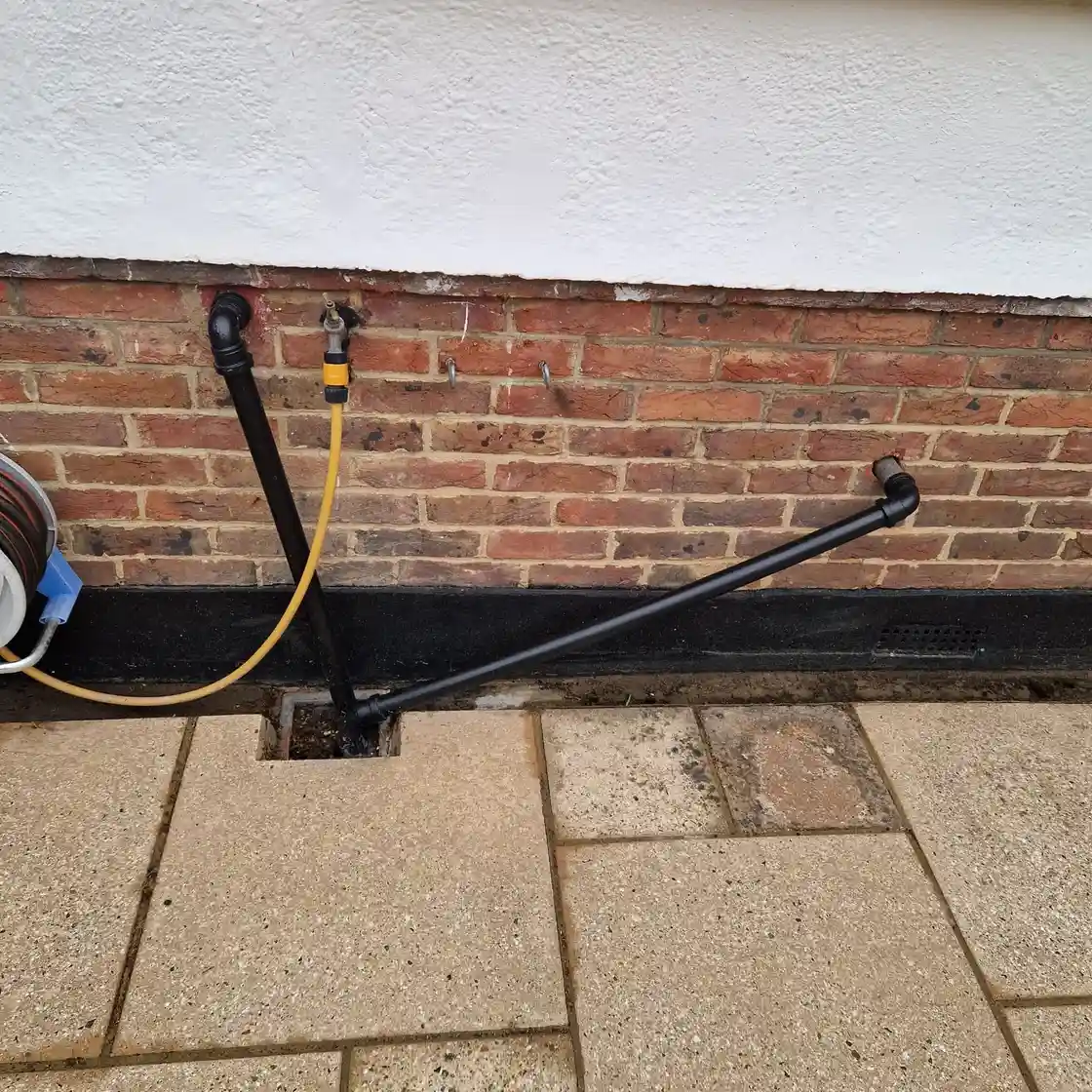
Chemical drain cleaners and plungers have their place — but only for minor, surface-level blockages. If the blockage is more than a metre into the pipe, or if it’s recurring, DIY is a sticking plaster on a structural problem. You’ll spend £20 on chemicals, feel like you’ve fixed it, and then call us three weeks later when it’s backed up again — but worse.
✅ Pros of DIY Drain Clearing
- Low upfront cost (£5–£30 for chemicals or a plunger)
- Instant access — no waiting for an engineer
- Fine for very minor, surface blockages in sinks or basins
❌ Cons of DIY Drain Clearing
- Chemical cleaners corrode older clay and pitch fibre pipes
- Doesn’t address root cause — blockages return quickly
- Masks symptoms of a collapsed or cracked pipe until damage worsens
If the same drain blocks twice in a year, stop treating the symptom. Book a CCTV survey and find out what’s actually happening underground. It’s the only way to make a cost-effective decision. And if you’re getting bad smells from your drains alongside slow drainage, that’s a red flag — don’t ignore it.
When Should You Call an Emergency Drainage Engineer?
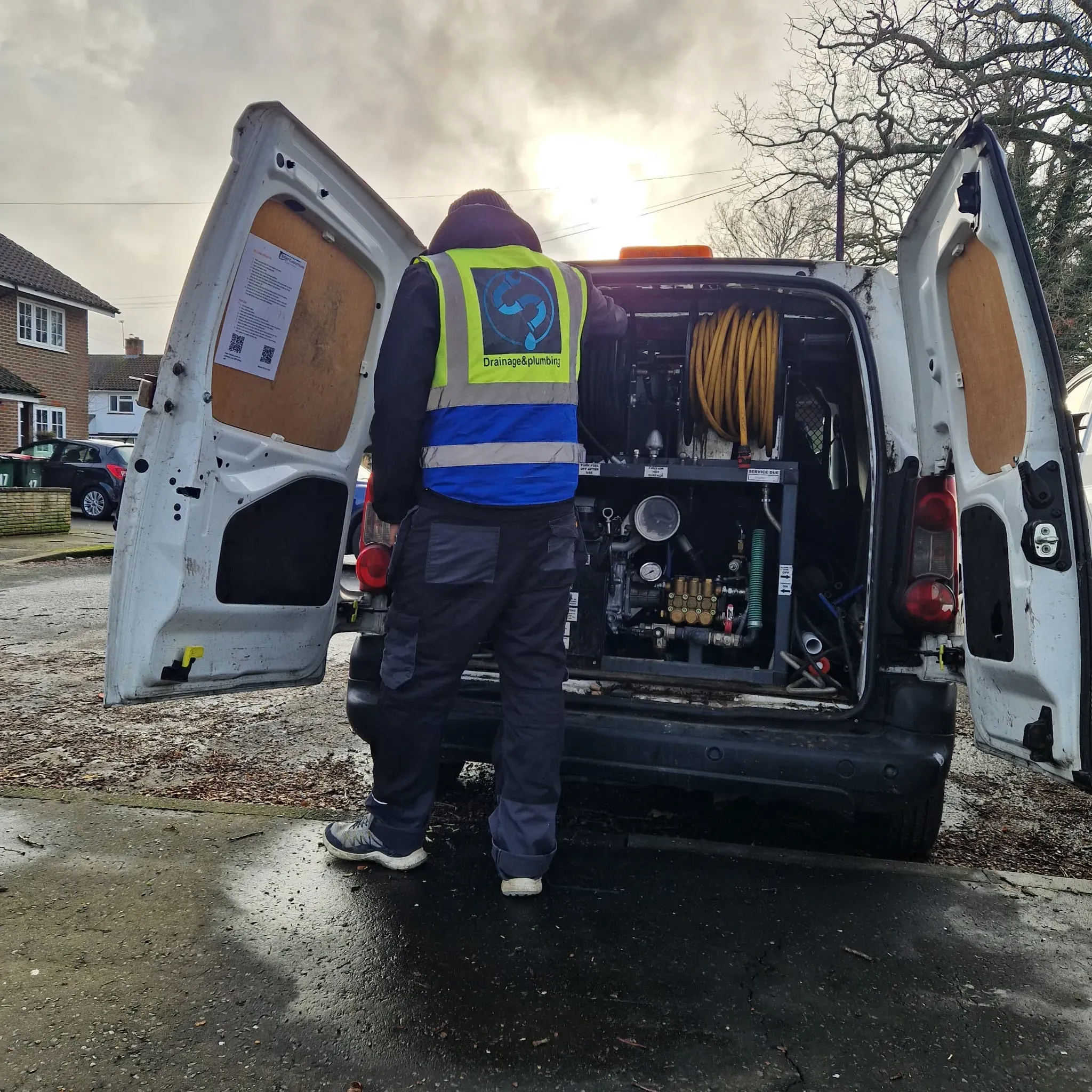
Some situations can’t wait until Monday morning. Raw sewage backing up into your home is a health hazard — the Health and Safety Executive classifies sewage as a biological hazard, and prolonged exposure causes serious illness. If you’re seeing sewage at ground level, multiple fixtures backing up simultaneously, or water coming up through floor drains, call an emergency engineer now.
Our 24-hour emergency drain unblocking service covers Croydon, Purley, Sutton, Bromley, Caterham, Redhill, Reigate, Guildford, Sevenoaks, Tunbridge Wells, and surrounding areas across Surrey, Sussex, and Kent. Engineers are dispatched fast — typically within the hour for genuine emergencies.
Don’t wait to see if it clears itself. Sewage doesn’t clear itself. It gets worse, and the damage to your property compounds every hour you leave it.
How Do You Protect Your Drains Long-Term — And Save Real Money?
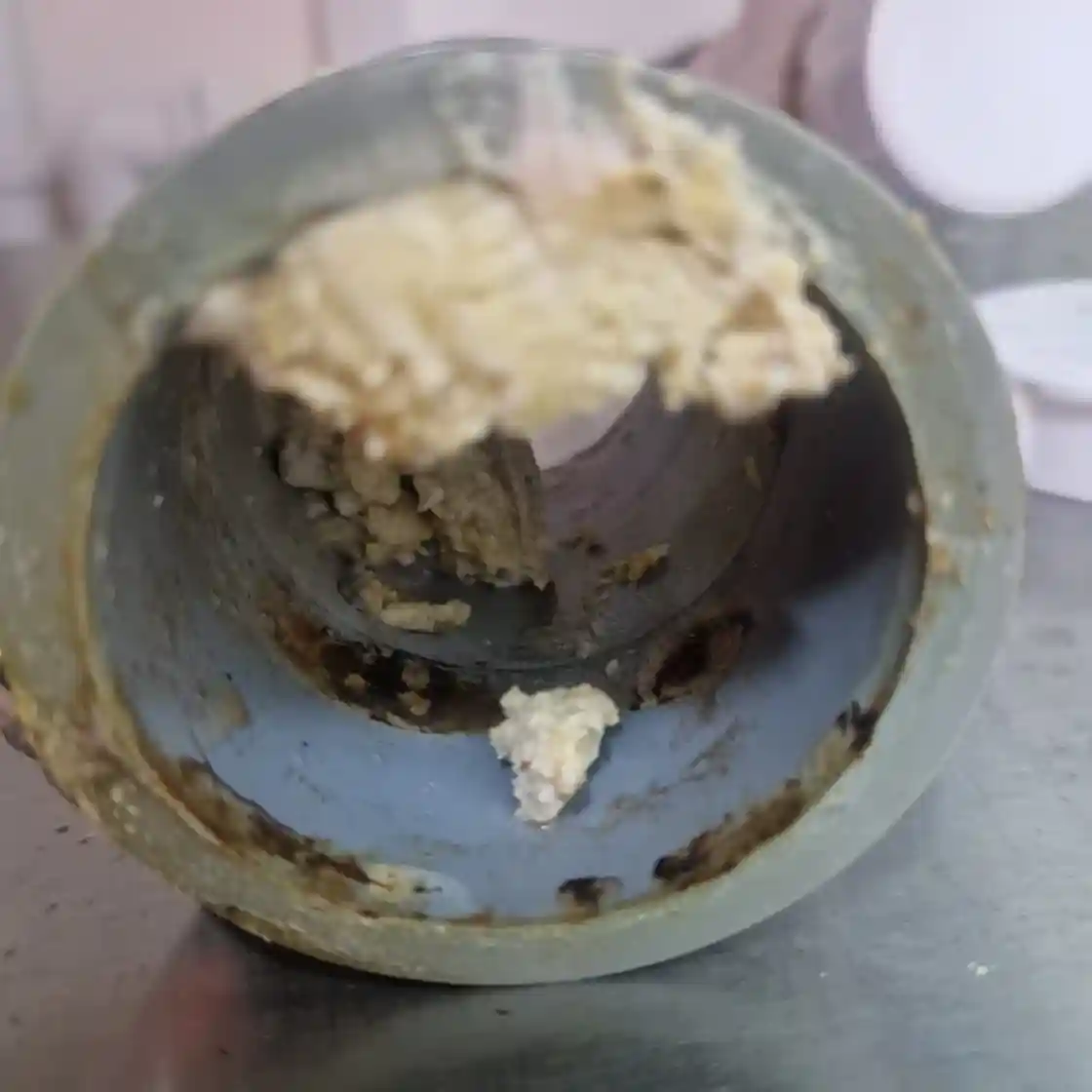
Reactive drainage is always more expensive than preventive drainage. A £150 CCTV survey catches a crack before it becomes a £3,000 collapsed pipe repair. A £120 annual jetting service keeps grease and silt from building up into a blockage that floods your kitchen. The maths is simple.
For South East England homes specifically, the combination of clay soils, tree-lined streets, and ageing Victorian pipe infrastructure means drainage problems are a when, not an if. Knowing your pipe material and condition puts you in control. If your home was built before 1970, there’s a real chance you still have clay or pitch fibre underground — and you should know their condition before they fail.
Winter makes everything worse. Saturated ground, leaf debris, and temperature changes all stress drainage systems. Read our winter drain preparation guide before the cold sets in — it covers exactly what to check and when. Homeowners who do this avoid the majority of emergency call-outs between November and February.
You can also check guidance from GOV.UK on sustainable drainage systems if you’re considering soakaway or surface water drainage improvements — particularly relevant if your garden floods regularly after heavy rain.
The bottom line: drainage solutions South East England properties need aren’t complicated — but they do need to be right for your pipe age, soil type, and property layout. Get a proper diagnosis, act on it early, and you’ll spend a fraction of what reactive repairs cost. That’s the only advice worth taking.
No comments yet. Be the first to leave a review.
Comments are closed for this post.