
 Nima Fazli-Pour
Most homeowners make this mistake when their drain blocks: they reach for the strongest chemical unblocker they can find and pour it down the pipe, again and again, hoping it will eventually work. It rarely does — and it can make the underlying problem worse. If you’re searching for reliable drainage services Biggin Hill residents can actually trust, this guide walks through what you can safely handle yourself and exactly when it’s time to pick up the phone.
What’s Really Happening When Your Drain Blocks
Think of your drainage system like the plumbing equivalent of a motorway network. Wastewater needs a clear, sloped route to travel from your property to the main sewer, and anything that narrows that route — fat, wipes, tree roots, silt — creates a bottleneck. A slow-draining sink or a gurgling toilet is usually the first warning sign, not the final straw. Catching it early is the difference between a 20-minute jetting job and a dug-up garden.
Homeowners across Biggin Hill and the wider South East contact us for exactly this reason: local properties range from older housing with narrow clay pipework to newer builds with modern plastic systems, and each reacts differently to blockages. Understanding which one you have shapes whether a plunger will help or whether you need professional drain cleaning services to shift it properly.
Cost: What Should You Actually Expect to Pay?
This is where a lot of confusion creeps in. A single blocked sink is not the same job as a collapsed drain run, yet homeowners often assume one flat price covers everything. In reality, cost depends on three things: how accessible the blockage is, what’s causing it, and whether any pipework needs repair once it’s cleared.
| Job Type | Typical Approach |
|---|---|
| Slow-draining sink or bath | Manual rodding or a domestic jetting pass |
| Recurring toilet or drain blockage | High-pressure jetting plus CCTV inspection |
| Unknown cause / underground run | CCTV drain survey to diagnose before quoting |
| Root ingress or cracked pipe | Excavation or no-dig repair, quoted after survey |
Honest pricing means an engineer tells you upfront which category your problem falls into rather than quoting a single number before they’ve even looked. For a broader breakdown of how call-out and hourly costs are calculated, our guide on drainage engineer hourly rates is worth reading before you book anyone.
Timing and Risk: When a DIY Fix Is Fine, and When It Isn’t
Here’s the boundary we always draw for customers. If you’ve got one slow sink and a plunger clears it within a few attempts, you don’t need us — that’s a genuinely safe DIY job. But there are clear signals that mean stop, and call a professional instead of persisting.
Signs You Should Stop and Call a Professional
Watch for these: water backing up in a different fixture when you flush the toilet (a sign the blockage is further down the shared system), a foul smell that keeps returning after clearing, gurgling from multiple drains at once, or any sewage surfacing in the garden or near a manhole. These point to a blockage in the main run or a structural issue, not a simple surface clog, and attempting to clear it yourself risks pushing waste back into the property. Standing sewage is also a genuine health hazard — the Health and Safety Executive flags contact with foul water as a risk for exposure to harmful bacteria, so this isn’t a job to improvise.
Recurring blockages in the same spot are another red flag. If a drain keeps clogging every few months despite regular clearing, something structural is usually to blame — root ingress, a pipe with a slight collapse, or a badly graded section. Our article on why drain problems keep coming back covers this pattern in more depth, and it applies just as much to Biggin Hill’s older housing stock as it does elsewhere in the South East.
Materials, Methods and Why Professional Equipment Matters
Even a confident DIYer is limited by their tools. A domestic plunger or a cheap drain snake can shift a soft blockage near the surface, but most residential drains run several metres before reaching the main sewer connection, well beyond what a household tool can reach or clear safely.
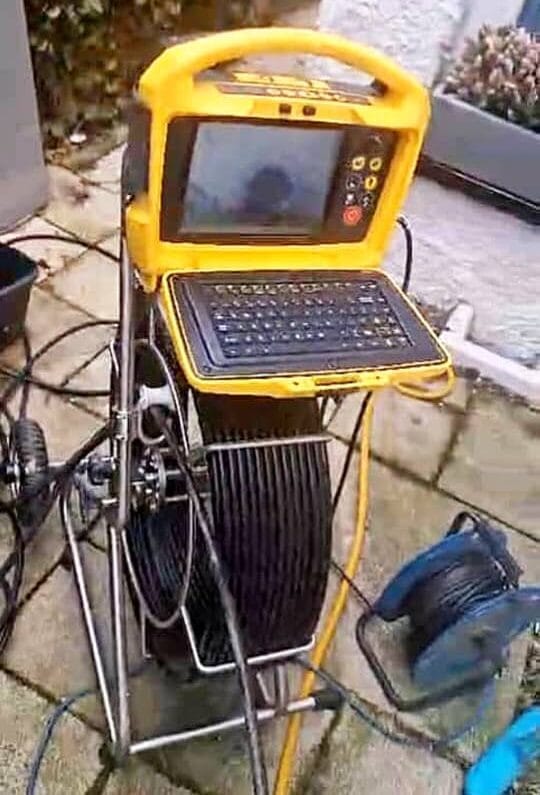
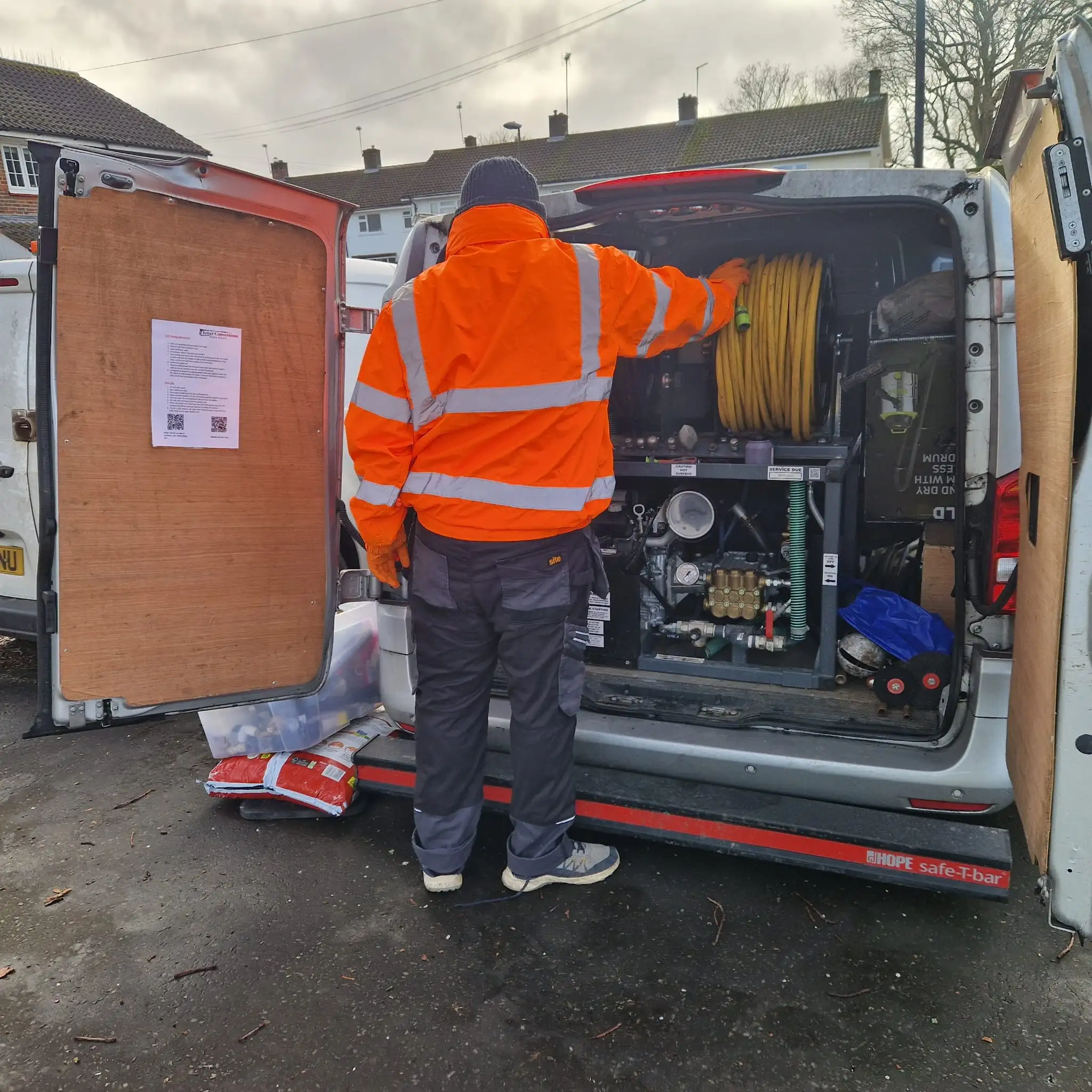
Professional drainage services Biggin Hill households rely on use two main tools for this: high-pressure water jetting, which blasts fat, silt and root intrusion off the pipe walls rather than just punching a hole through the blockage, and CCTV drain surveys, which send a camera through the pipe to identify exactly what’s wrong before any work starts. This matters because guessing at a fix — digging in the wrong spot, or jetting a pipe that’s actually cracked — wastes time and money. Pipework design and adequate drainage capacity for UK properties is also set out in guidance referenced by British Standard BS EN 752, which is why professional surveys check not just for blockages but whether the system was ever installed correctly.
Common Misconceptions We Correct Every Week
A few myths come up on almost every job we attend in Biggin Hill and the surrounding area, so it’s worth clearing them up properly.
The Three Myths We Hear Most Often
“Flushable wipes are fine to flush.” Even wipes labelled flushable don’t break down like toilet paper and are one of the most common causes of blockages we clear. The water industry’s public guidance is consistent on this: only pee, poo and paper should go down the toilet.
“If water is draining at all, there’s no real problem.” A slow drain is an early-stage blockage, not a non-issue. Left alone, grease and debris continue to build on the pipe walls until the flow stops completely, usually at the least convenient moment.
“Pouring boiling water down the drain will sort it.” This can help with very minor fat build-up in a kitchen sink, but it does nothing for a blockage further down the system and can actually soften certain older pipe joints. It’s not a substitute for proper drain cleaning services when a blockage is established.
Location Matters: Why Local Drainage Knowledge Helps
Biggin Hill’s mix of established housing and newer development means local engineers see the same patterns repeat: older clay pipework prone to root ingress, and modern estates where misconnected or undersized drainage occasionally causes recurring surface flooding. Knowing which is which before you dig saves time and money, which is exactly why a proper diagnosis always precedes a repair quote rather than following it.
We cover Biggin Hill as part of a wider South East England service area, including Croydon, Sutton, Wallington, Coulsdon, Banstead, Bromley, Mitcham, Epsom, Reigate, Redhill, Leatherhead, Kingston upon Thames, Wimbledon, Richmond, Caterham, Guildford, Crawley and Haywards Heath. That regional spread means our engineers see a wide range of drainage layouts and blockage causes every week, not just the handful typical of one postcode — useful experience when your problem doesn’t match the textbook case. If blocked drains have been a recurring headache, our guide to avoiding blocked drain disasters explains why quick fixes so often fail to solve the real cause.
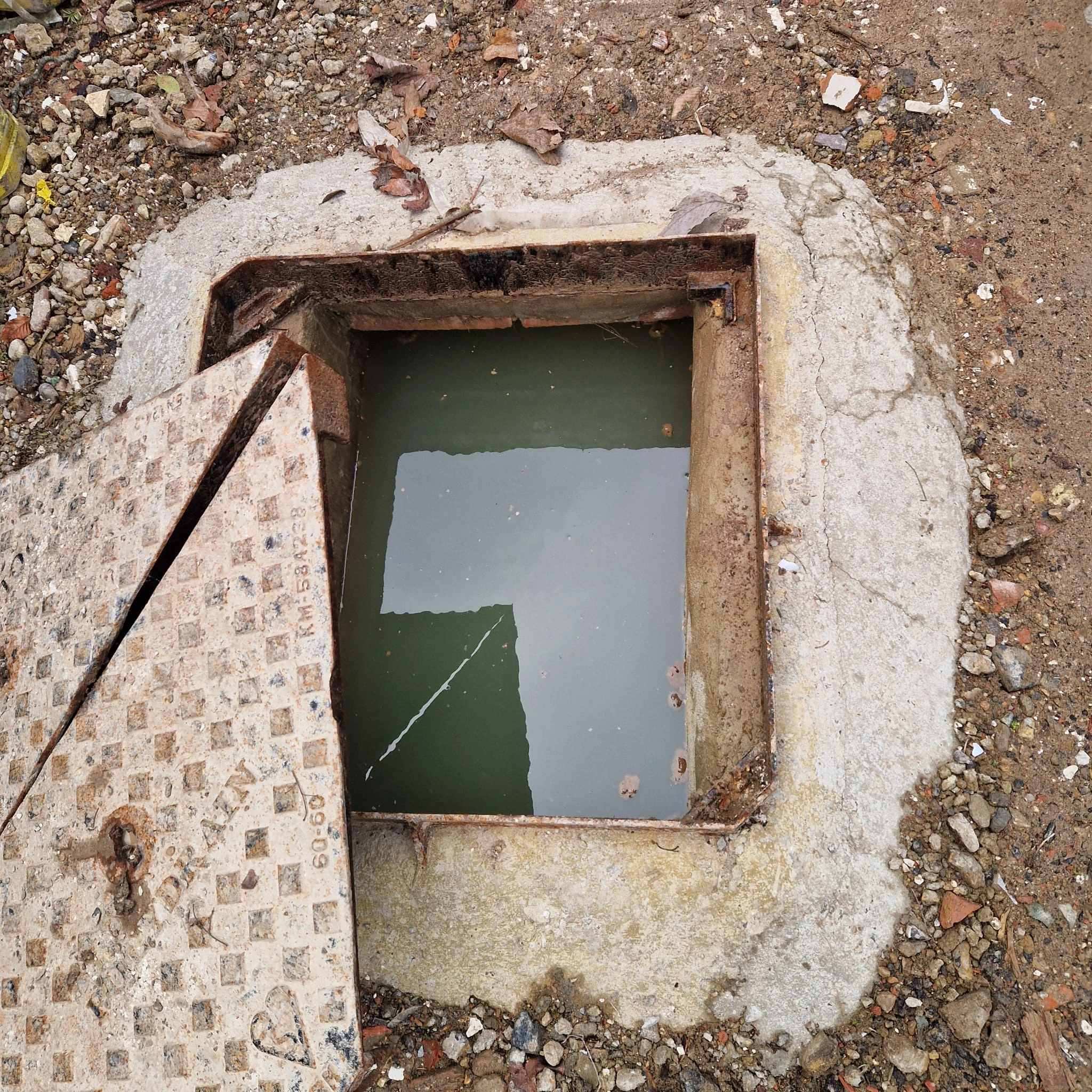
So, back to that motorway analogy: a slow drain is roadworks, not a road closure — and it’s fixable in minutes if you act on it early. But once you’re seeing backups in multiple fixtures, recurring blockages in the same spot, or any sign of sewage surfacing, that’s a closed road that needs a professional diagnosis, not another bottle of chemical cleaner. Knowing which situation you’re in is the single most useful thing a homeowner can learn about their own drainage system. If you’re ever unsure which camp your problem falls into, a quick call for advice costs nothing and could save you a much larger repair bill later.
No comments yet. Be the first to leave a review.
Comments are closed for this post.