
 Admin
Admin 
You’ve probably heard that drain rodding vs jetting is just two names for the same job. It’s wrong — and it’s why so many South East England drains get worse instead of better after a quick fix.
Drain Rodding vs Jetting: The Fact That Costs People Money
Here’s the bit most people miss: rodding punches a hole through a blockage. Jetting removes it. If your drain is blocked by a single object, rodding is fine and cheap. If it’s blocked by grease, scale, silt or tree roots — which is most call-outs we get across Croydon, Sutton, Reigate, Redhill and Bromley — rodding just buys you a few weeks before it clogs again. Every repeat call-out is money you didn’t need to spend.
Drain rodding uses rigid rod sections screwed together, with a plunger, corkscrew or cutter head on the end, pushed by hand until it breaks through the obstruction. It’s quick, it’s low-cost, and for a straightforward hairball in a shower trap or a single blockage in a toilet, it does the job. What it can’t do is clean the pipe wall. Whatever grease or scale is stuck to the sides stays there, ready to catch the next lot of debris and block again within weeks.
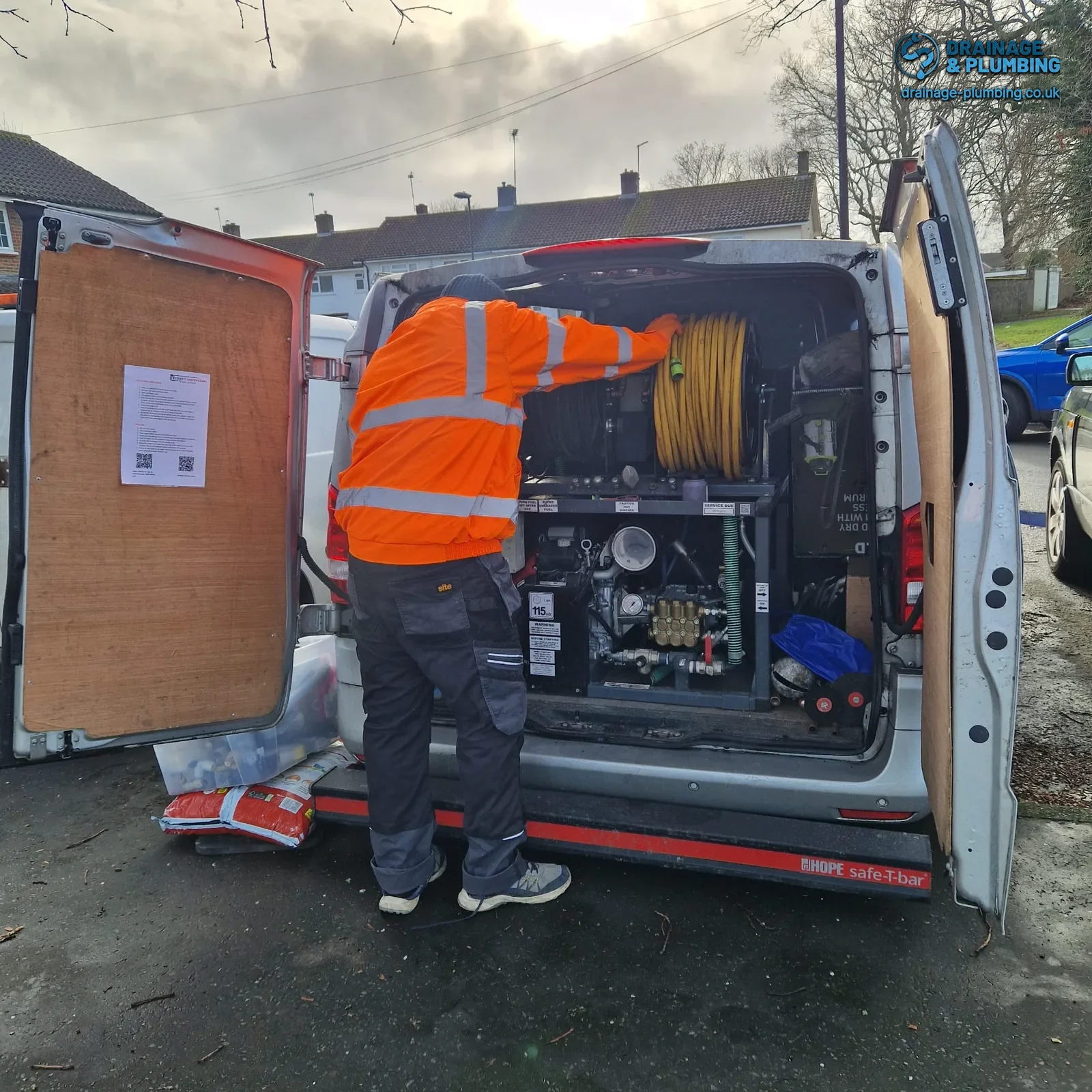
Jetting is a different tool for a different job. A hose fitted with a multi-directional nozzle is fed into the pipe, firing water at pressures typically between 3,000 and 4,000 PSI. The forward jet cuts through the blockage; the rear-facing jets pull the hose along and scour the full circumference of the pipe as they go. That’s the real difference in the drain rodding vs jetting debate — one clears a path, the other cleans the pipe. If you’re dealing with a recurring blockage rather than a one-off, that distinction is the whole answer.
What Waiting Costs You: Pipe Age, Root Ingress and Repeat Call-Outs
South East England has a lot of housing stock built before modern plastic pipework was standard, and that matters when you’re choosing between rodding and jetting. Victorian-era terraces often still run on clay drainage pipes, which are prone to root ingress at the joints — roots find the smallest gap and grow into it, and a rod will only ever punch a temporary channel through them. Properties built between the 1950s and 1970s frequently used pitch fibre pipe, which can deform and blister over time; aggressive rodding on a weakened pitch fibre run can make the damage worse, not better. Anything installed from the 1980s onwards is more likely to be uPVC, which generally tolerates jetting well, but even then a professional should check the pipe run first if it’s old, cracked, or has a history of collapse. Get this wrong and you’re not looking at a blocked drain anymore — you’re looking at an excavation.
Ignoring a recurring blockage doesn’t just cost you in repeat call-out fees. A drain that’s slowly narrowing with grease and scale eventually backs up under load — heavy rain, a full washing machine cycle, a house full of guests — and that’s when it turns into a flooded kitchen or a stinking garden instead of a five-minute fix. Root ingress left unaddressed keeps growing; what starts as a slow drain becomes a fractured pipe needing full excavation and replacement. That’s the real cost-versus-cost equation: a jetting visit now, or a much bigger bill in six months.
| Factor | Drain Rodding | Drain Jetting |
|---|---|---|
| Best for | Single, localised clog (hair, one object) | Grease, scale, silt, tree roots, recurring blockages |
| Pipe wall cleaning | None — punches through only | Full circumference scoured clean |
| Typical cost pattern | Cheaper per visit, higher risk of repeat call-outs | Higher per visit, fewer repeat visits over time |
Our engineers always assess pipe material and condition before recommending either method — that’s standard practice under the guidance set out in WRAS and the drainage design principles in BS EN 752. It’s a five-minute check that avoids turning a routine job into an insurance claim. If you want the fuller picture on why UK drains block in the first place, our guide to the most common causes of blocked drains in UK homes covers it in more depth.
Making the Call: When Rodding Is Fine and When Jetting Is the Only Real Fix
If you’ve had one blockage, once, and it’s a simple household clog, rodding is a sensible first move and there’s no need to spend more than you have to. But if the same drain has blocked more than once in the past year, if you’re getting gurgling, slow drainage, or bad smells that come and go, or if you know there are trees near your drain run, you’re past the point where rodding solves anything. That’s a jetting job, and the sooner it’s done the less it costs — both in repeat visits and in the risk of a cracked pipe turning into a dig-up.
Foreign objects lodged deep in a pipe sometimes need a combination approach — a grabber or rod to shift the object initially, followed by a jet to clear any residual debris and clean the run properly. Frequency is the best signal you have: a drain that blocks once a year is probably fine with rodding; a drain that blocks every few months has a build-up problem that only jetting will actually fix. Trying to solve a build-up problem with repeated rodding just delays the proper fix while you keep paying for call-outs.
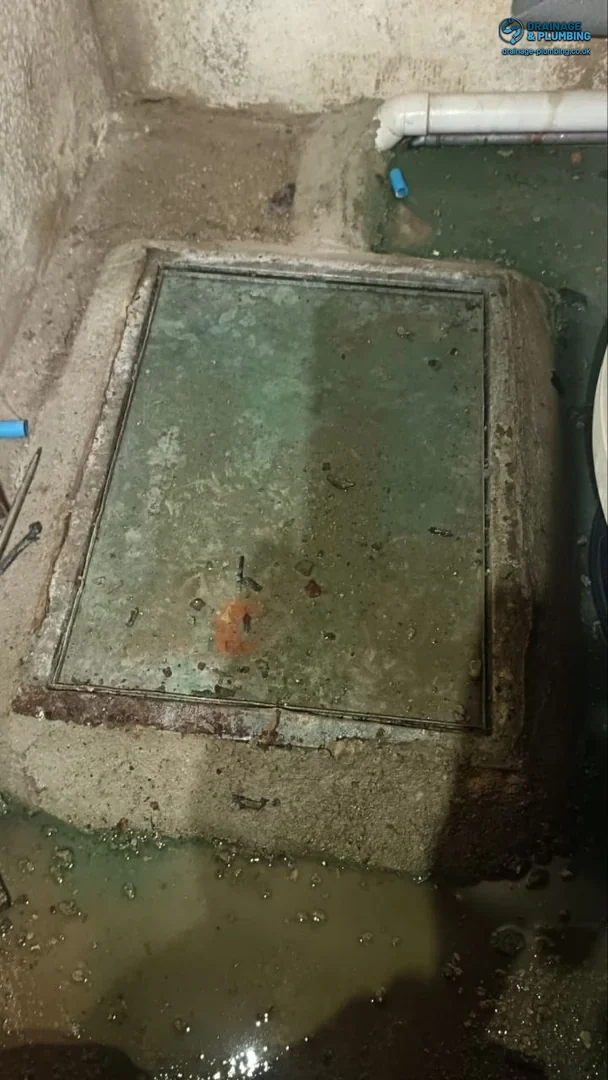
CCTV drain surveys take the guesswork out of this decision entirely. A camera run through the pipe shows exactly what you’re dealing with — root ingress, a cracked joint, a genuine one-off blockage — before any pressure goes anywhere near the pipe. It’s a sensible step on older clay or pitch fibre runs where jetting without knowing the pipe’s condition first could turn a £150 job into a full pipe replacement. If you’re in Redhill and want a local breakdown of what’s actually driving blockages in that area’s older housing stock, see our 2026 guide to blocked drains in Redhill. For anyone weighing up standards and responsibilities around drainage on their property, the government’s guidance at gov.uk on drainage rights and flooding is worth a read, alongside the Health and Safety Executive guidance if you’re ever tempted to tackle a deep blockage yourself. Book a CCTV survey and a jetting visit together when a drain’s blocked more than once — it costs less than two separate call-outs and tells you if there’s a bigger problem waiting.
No comments yet. Be the first to leave a review.
Comments are closed for this post.