
 Admin
Admin 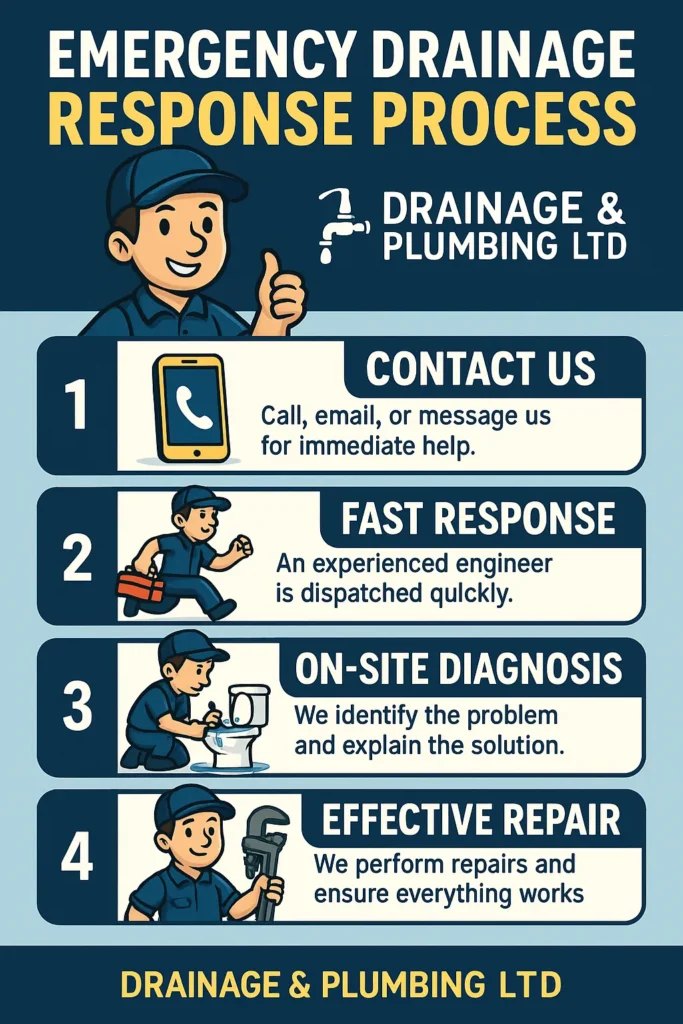
Water pooling around your feet as you flush the toilet, or a foul smell creeping up from the gulley outside your Victorian terrace — is this something that can wait until Monday, or do you need an emergency drainage response right now? If you’re asking that question at 11pm with water already spreading across the kitchen floor, the honest answer is usually: don’t wait. This guide walks through exactly how to tell, and what happens once you call for help.
1. Signs That Mean You Need an Emergency Drainage Response Today
Not every blockage is an emergency. A slow-draining bathroom sink can often wait a day or two. But certain signs mean water, sewage, or structural damage is actively getting worse, and calling for an emergency drainage response is the safer choice. We’d rather you call and it turn out to be minor than leave sewage sitting against a Victorian brick foundation overnight.
When Water Is Backing Up Into the Property
If wastewater is coming back up through a sink, shower tray, or downstairs toilet rather than draining away, this usually points to a blockage somewhere in the main run, not just the fixture itself. Because this water can carry sewage, it’s a contamination risk as well as a flood risk. Avoid running more water or flushing again — this only adds pressure to an already blocked system. Switch off any appliances feeding into that line and call for help.
When There’s a Strong Smell of Sewage Outside
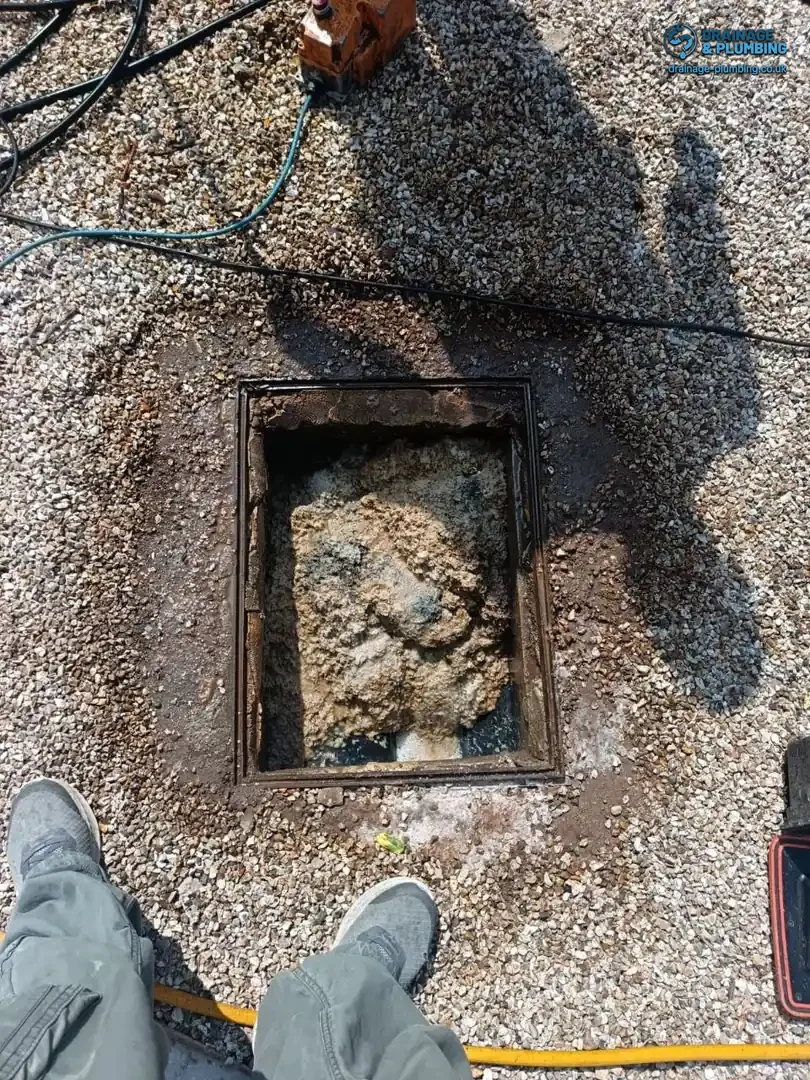
A persistent sewage smell near a manhole cover or gulley, especially after heavy rain, often signals a collapsed or badly cracked pipe rather than a simple clog. This is common in areas with older clay drainage runs, where decades of ground movement have opened joints or cracked sections. If in doubt, don’t lift the manhole cover yourself — confined drainage chambers can hold hazardous gases, and this is exactly the kind of job where a CCTV survey and a trained engineer matter.
Across boroughs like Croydon, Sutton, Coulsdon, and Reigate, much of the housing stock still runs on drainage systems installed well before modern standards, and many gardens still have short lengths of pitch fibre pipe from mid-century extensions. These materials degrade over time and are far more prone to sudden collapse than modern uPVC, which is part of why what looks like a routine blockage can escalate quickly. If you’re in the Redhill area specifically, our page on drain unblocking in RH3 covers local pipe conditions in more detail.
2. What Actually Happens During an Emergency Callout
What our engineers actually see on the job: After more than fifteen years clearing drains across the South East, the pattern that comes up again and again is root ingress in autumn, when tree roots chase moisture into ageing clay joints, followed by a spike in collapsed pitch fibre pipes every spring as the ground settles after winter. We also see a lot of panic calls that turn out to be a single blocked gulley outside — genuinely urgent, but rarely as catastrophic as the homeowner fears once we’re on site with a camera and a jetter.
Once you call, the first job is triage: understanding whether water is actively entering the property, whether it’s contaminated wastewater, and how quickly it’s rising. Because every minute matters once water is inside a building, we prioritise calls where flooding is active over calls where a drain is simply slow. An engineer is dispatched with jetting equipment and a CCTV camera already loaded, since guessing at the cause on a genuine emergency wastes time you don’t have.
On arrival, the engineer runs a visual inspection first, then usually a CCTV drain survey if the blockage isn’t immediately obvious or if repeat blockages suggest a structural fault rather than debris. High-pressure water jetting clears the vast majority of blockages — grease, wipes, root intrusion, silt — without any need to dig. However, if the camera shows a cracked, collapsed, or offset pipe, jetting alone won’t fix it, and you’ll be given a clear explanation of what repair options exist before any excavation work starts. For a closer look at what a proper repair job involves, see our guide to professional drain repair services.
If your drain has backed up more than once in the last few months, treat it as a warning, not a coincidence — repeat blockages in the same spot almost always mean a physical defect in the pipe, not bad luck.
3. Why South East England’s Ground and Weather Make This Worse
Local geography plays a bigger role in drainage emergencies than most homeowners realise. The clay-heavy soils common across Surrey and much of the South East expand significantly in wet weather and shrink hard during dry summer spells. That seasonal movement puts real stress on old jointed pipework, particularly the salt-glazed clay drains still found under many Victorian and Edwardian terraces in Croydon, Sutton, and Wallington.
Come autumn, tree roots actively seek out the moisture and nutrients inside slightly leaking pipe joints, and root ingress is one of the most common causes of sudden, severe blockages we’re called out for between September and November. Winter brings a different risk: freeze-thaw cycles can crack pipework that was already weakened, and a sharp cold snap after a mild spell is a classic trigger for emergency callouts across Reigate, Redhill, and Caterham. If you’re noticing drainage trouble creeping up gradually rather than suddenly, it’s worth reading about what happens if you ignore a slow drain before it becomes an emergency.
Drainage design and adoption standards for these systems are set out in guidance such as the government’s binding rules on small sewage discharges, and much of the underlying engineering standard for drain and sewer systems in the UK follows BS EN 752. Homeowners connecting new work to the public network should also be aware of the requirements set out by the Water Regulations Advisory Scheme, since non-compliant work can itself create future emergencies.
4. How to Get a Fast, Safe Emergency Drainage Response
If you’re facing an active blockage or flooding, a genuine emergency drainage response should start within minutes of your call, not hours. Have the postcode ready, be clear about whether water is currently entering the building, and mention if this is a repeat problem — that context helps the engineer arrive with the right equipment the first time.
While you wait, avoid pouring anything down the affected drain, including chemical unblockers, which can react unpredictably with standing sewage and make on-site diagnosis harder. If the water is near any electrical sockets or fuse boards, treat that as the priority and, if safe to do so, switch off power to the affected area at the consumer unit. If you smell gas at any point, this is not a drainage issue — leave the property and contact the National Grid emergency line immediately, since gas escapes are outside the scope of any drainage callout.
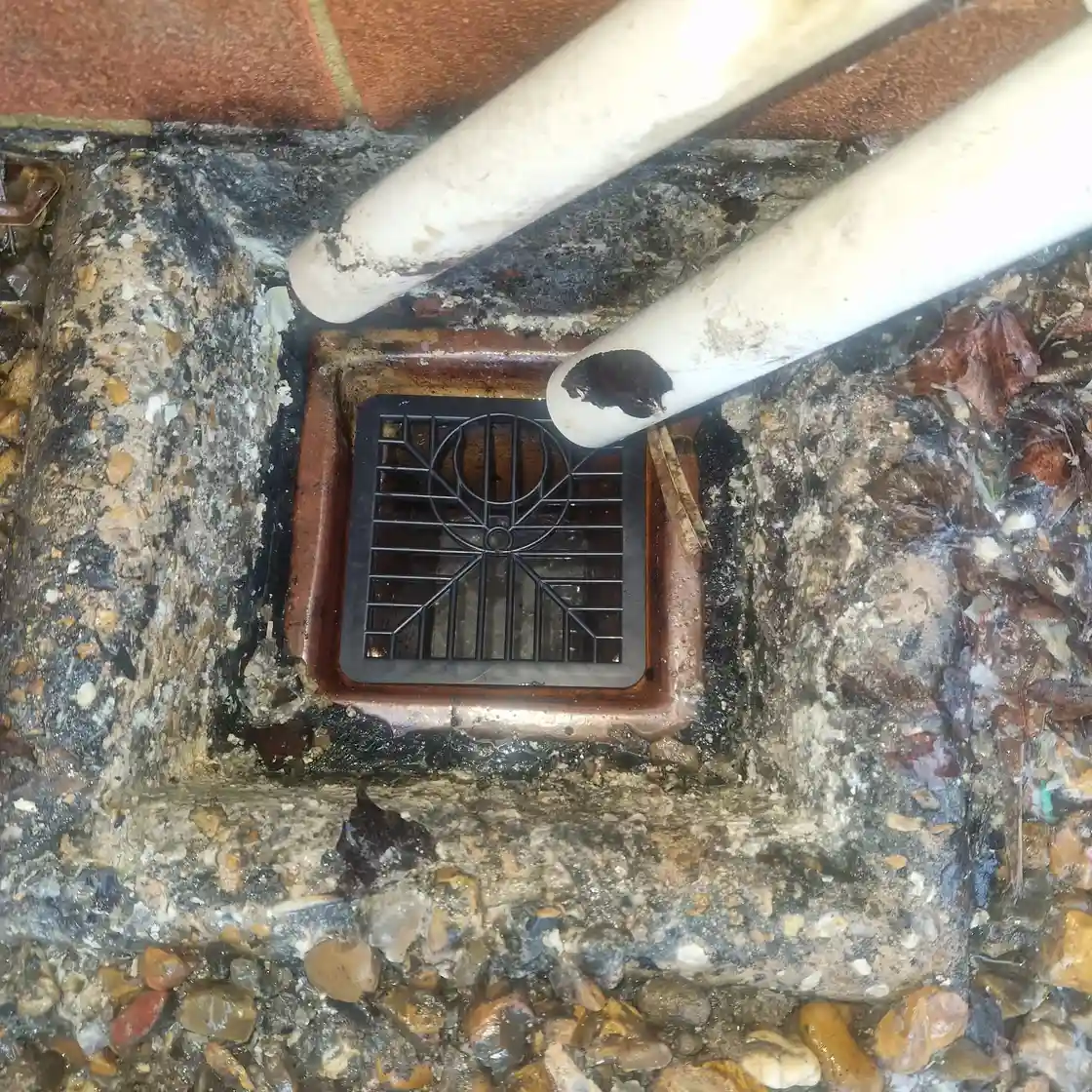
Once the immediate blockage is cleared, ask your engineer whether the cause was one-off debris or a sign of a bigger structural problem. Persistent overflowing gulleys or drains that block again within weeks are rarely coincidence — our guide to the top causes of overflowing drain pipes explains what a recurring pattern usually means. Homeowners in Purley dealing with ongoing trouble may also find it useful to check the signs of a drainage problem worth acting on fast, and anyone budgeting for jetting work in Coulsdon can see realistic figures in our piece on drain jetting costs and fixed pricing.
Genuine emergencies are the exception, not the rule, but knowing the difference — and knowing who to call the moment water starts backing up — is what protects your property and your health of the people using it. Keep our number saved, and if you’re ever unsure whether a drainage problem counts as urgent, treat “when in doubt, call” as the safer default. Acting on the early signs, understanding your local ground conditions, and choosing a fast emergency drainage response over a wait-and-see approach is consistently what separates a minor inconvenience from a costly repair bill.
No comments yet. Be the first to leave a review.
Comments are closed for this post.