
 Admin
Admin 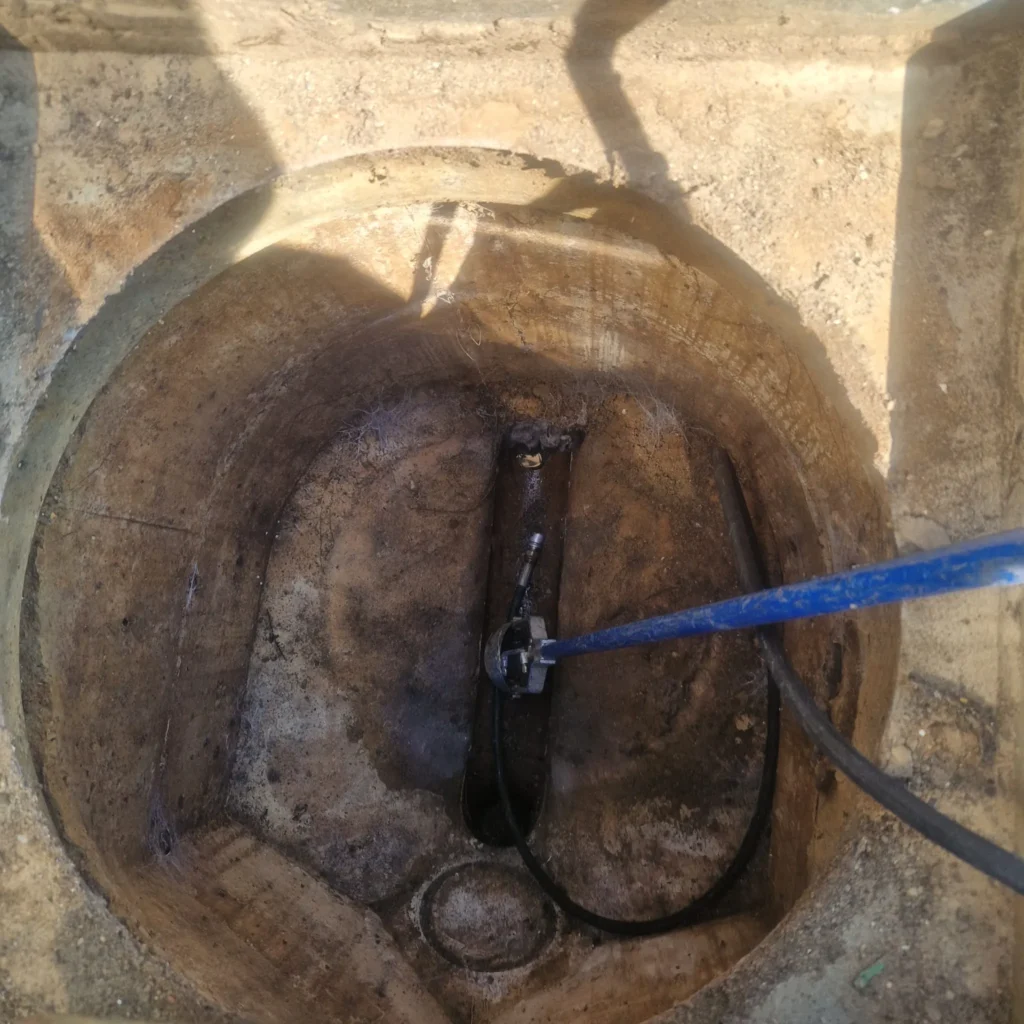
Nearly one in four UK homes sits on shrinkable clay soil, and every dry summer that clay contracts, pulls, and cracks whatever pipework runs through it — meaning ground movement drain damage is far more common than most homeowners realise until wastewater starts backing up in the garden. This isn’t a rare structural fluke; it’s a routine call-out across South East England, and knowing how to spot it early is the difference between a same-day repair and a rebuilt drainage run.
What Causes Ground Movement Drain Damage in the First Place?
Ground movement is the shifting, settling, or heaving of soil beneath a property, and it’s rarely a single dramatic event. In my 15 years working on drains across Surrey and Kent, the same triggers come up again and again:
- Clay soil drying and shrinking during hot, dry spells
- Heavy rainfall causing rapid soil saturation and expansion
- Nearby construction, extensions, or excavation work
- Tree and shrub roots seeking out moisture near pipe joints
- Natural subsidence, heave, or landslip on sloped ground
Underground drainage pipes are rigid but the ground around them isn’t. When soil contracts or swells unevenly, it applies lateral and vertical pressure on pipe runs that were never designed to flex. Joints separate a millimetre at a time, pipe sections drop out of alignment, and eventually a hairline crack becomes a full fracture. The British Standard for below-ground drainage, BS EN 752, exists precisely because ground conditions like these are so predictable a risk that design guidance has to account for them.

DIY Patch-Up vs Professional Repair: The Real Comparison
When a drain starts gurgling or backing up, it’s tempting to reach for a bottle of drain cleaner or a set of rods and call it done. But ground movement damage behaves differently to a standard grease blockage, and treating it like one usually just delays the real problem. Here’s how the two approaches actually compare.
| Factor | DIY Approach | Professional Drainage Repair |
|---|---|---|
| Diagnosis | Guesswork based on visible symptoms | The run is traced end to end and the exact crack or joint failure located |
| Tools | Rods, plungers, shop-bought chemicals | High-pressure jetting, root-cutting, patch lining, excavation if needed |
| Root cause | Usually untouched — soil pressure remains | Addressed directly, including pipe realignment or relining |
| Longevity | Days to weeks before blockage returns | Years, with a workmanship guarantee |
| Risk | Can push debris further into a cracked joint, worsening the split | Minimises further damage, protects surrounding soil and foundations |
Rods and chemical cleaners can clear a symptom, but they can’t realign a pipe that ground movement has pushed off its original fall. Worse, forcing rods through a compromised joint can widen the gap and accelerate root ingress. If you’re dealing with a stubborn blockage locally, our team handling drain unblocking in RH7 sees this exact pattern regularly — what looks like a simple clog is often ground movement drain damage in disguise.
Warning Signs You Shouldn’t Ignore
Many drainage problems look minor at first but are early indicators of ground movement drain damage underway beneath the surface. Watch for the following, in roughly the order engineers see them appear:
- Slow-draining sinks, baths, or toilets with an intermittent gurgle
- Blockages that return within days of clearing, even after professional rodding
- Visible cracks, dips, or small sinkholes near manhole covers or drain runs
- Sewage odours around external gullies or inside the property near stack pipes
- Pooling water or persistently soft, wet ground close to the foundations
- Damp patches or mould on internal walls with no obvious external leak
- An unexplained jump in water usage, suggesting a hidden underground leak
I once attended a Victorian semi in Caterham where the owner had booked us for what she described as “just a slow toilet.” The drain run under the patio had dropped nearly 40mm at a joint where a silver birch root had exploited a hairline crack — classic ground movement drain damage from a dry summer two years prior, quietly worsening ever since. Left alone, that joint would eventually have collapsed entirely.
How We Diagnose and Repair Ground Movement Damage
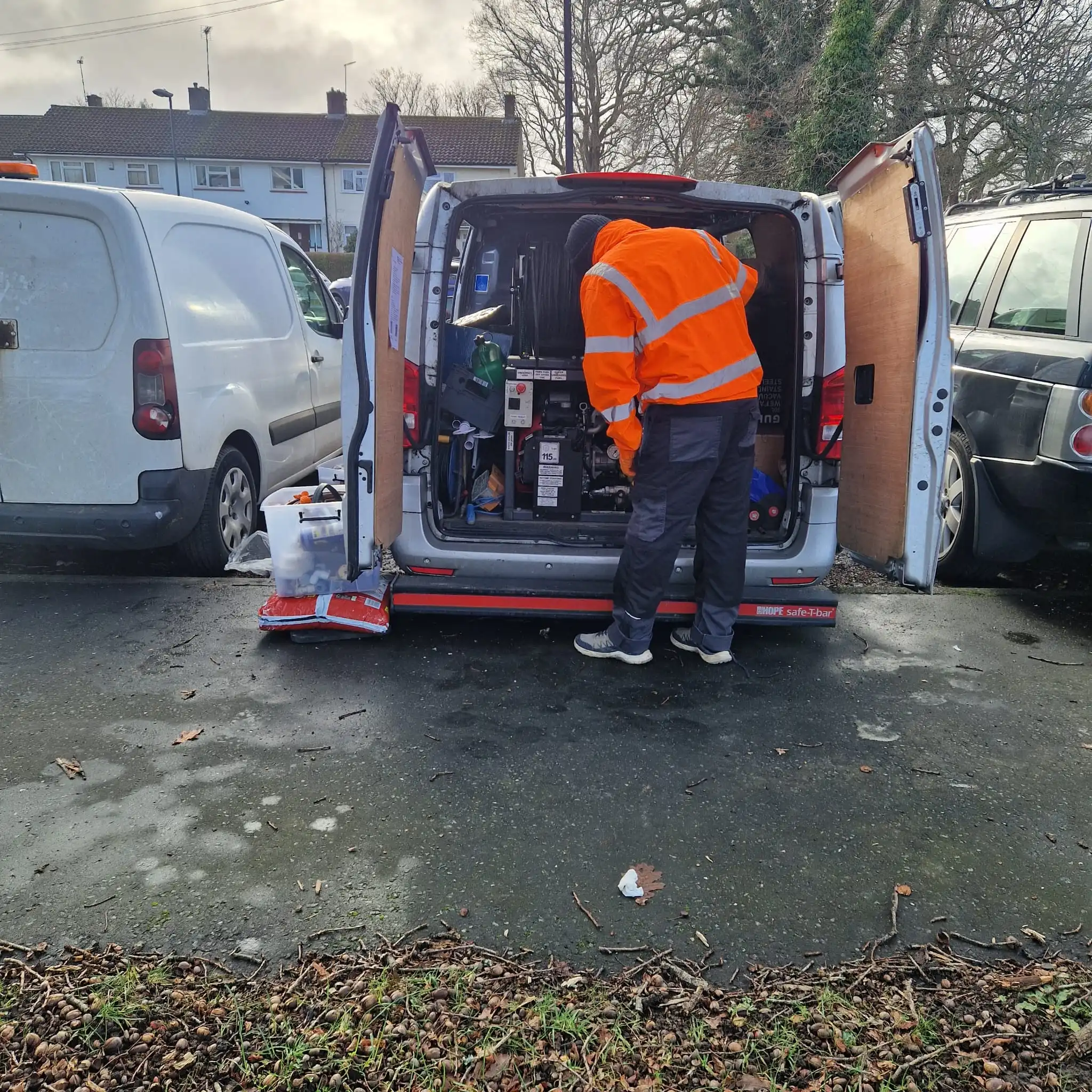
Fixing this properly starts with seeing the problem, not guessing at it. Our approach on every suspected ground movement case follows the same sequence:
- A full trace of the run to map it out and pinpoint cracks, offsets, or joint separation
- High-pressure jetting to clear debris and root intrusion without stressing weakened pipework
- Patch lining or localised excavation to realign or replace the affected pipe section
- Root management to stop regrowth back into repaired joints
- A final pass over the repaired section to confirm fall, flow, and joint integrity before backfilling
Non-invasive diagnostics matter here. Digging blind on a hunch means unnecessary disruption to a driveway or garden that may not even be where the fault sits — a mistake that’s easy to make when blockages and channel drains are involved, as we cover in our piece on blocked channel drains and how to prevent them. Getting the diagnosis right the first time also avoids the wasted cost of digging in the wrong spot. It’s also worth knowing that much of what passes for common drainage knowledge is outdated or simply wrong — our guide to drain cleaning myths covers several assumptions that can make ground movement damage worse if you act on them.
Preventing Ground Movement Drain Damage Before It Starts
You can’t stop soil from expanding and contracting with the seasons, but you can reduce how much of that movement reaches your pipework. A few practical habits go a long way:
- Have the drain runs checked every 2-3 years, or sooner in known clay soil areas
- Keep large trees and shrubs well away from drain runs — root distance guidance is available through the Health and Safety Executive for excavation near services
- Repair even small leaks immediately, since escaping water accelerates soil erosion around pipes
- Maintain proper surface drainage so rainwater doesn’t pool and saturate soil near foundations
- Get the pipework looked at before and after any nearby construction, extension, or heavy machinery work
Prolonged dry spells are a particular risk period, and it’s worth understanding why — our article on how heat affects the drainage system explains the soil mechanics in more depth. Regular maintenance genuinely extends the working life of a drainage system that’s constantly under this kind of low-level pressure.
Frequently Asked Questions About Ground Movement Drain Damage
How do I know if my blocked drain is caused by ground movement?
Repeated blockages at the same point, especially once an engineer has found a joint offset or crack there, are the clearest sign. A one-off blockage from grease or wipes is unrelated; a blockage that returns within a week usually isn’t.
Can ground movement drain damage be repaired without digging up my garden or driveway?
Often, yes. Patch lining and localised relining can repair cracked sections through existing access points. Full excavation is only needed where a pipe has collapsed or shifted too far to realign.
Does home insurance cover drain damage caused by ground movement?
Many policies cover subsidence-related drain damage, but claims usually require an engineer’s report confirming ground movement as the cause. Check your policy wording and keep a copy of the engineer’s written findings as evidence.
How much does it cost to fix a drain damaged by ground movement?
Costs vary depending on whether the fix is a patch liner or a full excavation and pipe replacement. Pinning down the actual fault first gives you an accurate quote rather than a rough estimate based on guesswork.
Get Ground Movement Drain Damage Fixed Properly, First Time
Ground movement isn’t something you can stop, but you can stop it from wrecking your drainage system if you catch the warning signs early and get the cause properly diagnosed rather than settling for a temporary rod-and-hope fix. We’ve spent 15 years diagnosing exactly this kind of damage across Croydon, Sutton, Bromley, Reigate, Redhill, and the wider South East England region, and the pattern is always the same: early diagnosis saves thousands compared to a collapsed drain repair.
If you’re seeing slow drains, recurring blockages, or damp patches with no obvious cause, don’t wait for it to become an emergency. Call our team, get the cause identified, and we’ll give you an honest, guaranteed repair quote — same-day response available across the region.
No comments yet. Be the first to leave a review.
Comments are closed for this post.