
 Admin
Admin 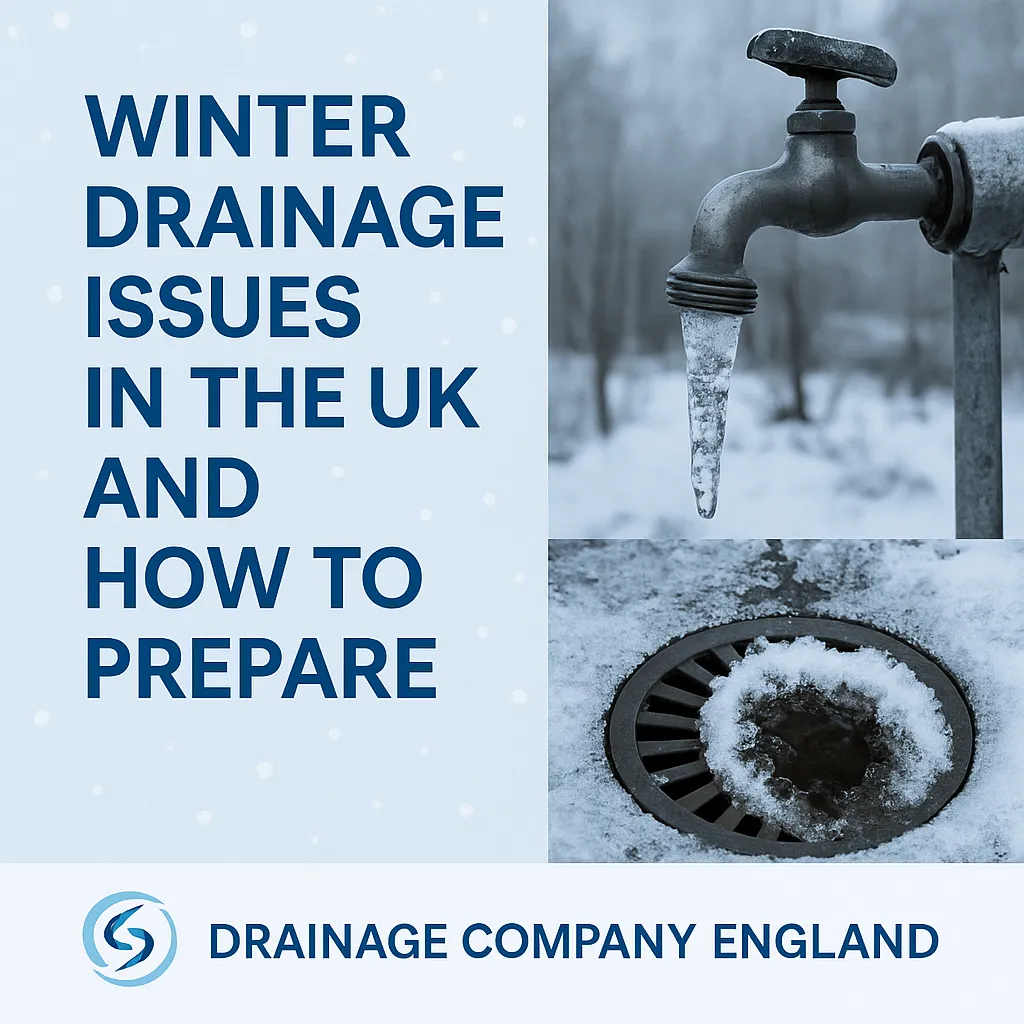
Most drainage advice tells you to wrap your pipes and hope for the best. That’s backwards. The engineers who actually attend winter call-outs will tell you insulation is damage control, not prevention — the real fixes happen in autumn, underground, and out of sight. Winter drain problems UK homeowners face every year aren’t random bad luck; they’re the predictable result of ground movement, grease habits, and blocked gullies that were forming since October. This guide reads like a consultation: symptoms first, causes second, treatment ranked by how serious it actually is.
Symptoms: How Winter Drain Problems UK-Wide Actually Present Themselves
Before diagnosing a cause, read the symptoms correctly — this is where most homeowners go wrong. A slow-draining sink in July is a nuisance; the same symptom in January, after a hard frost, is usually a different and more urgent condition entirely.
Gurgling or bubbling from a toilet or sink. This is air displacement, not imagination. It means water is struggling to pass a restriction further down the line, often where cooling temperatures have thickened grease deposits that flowed fine in summer.
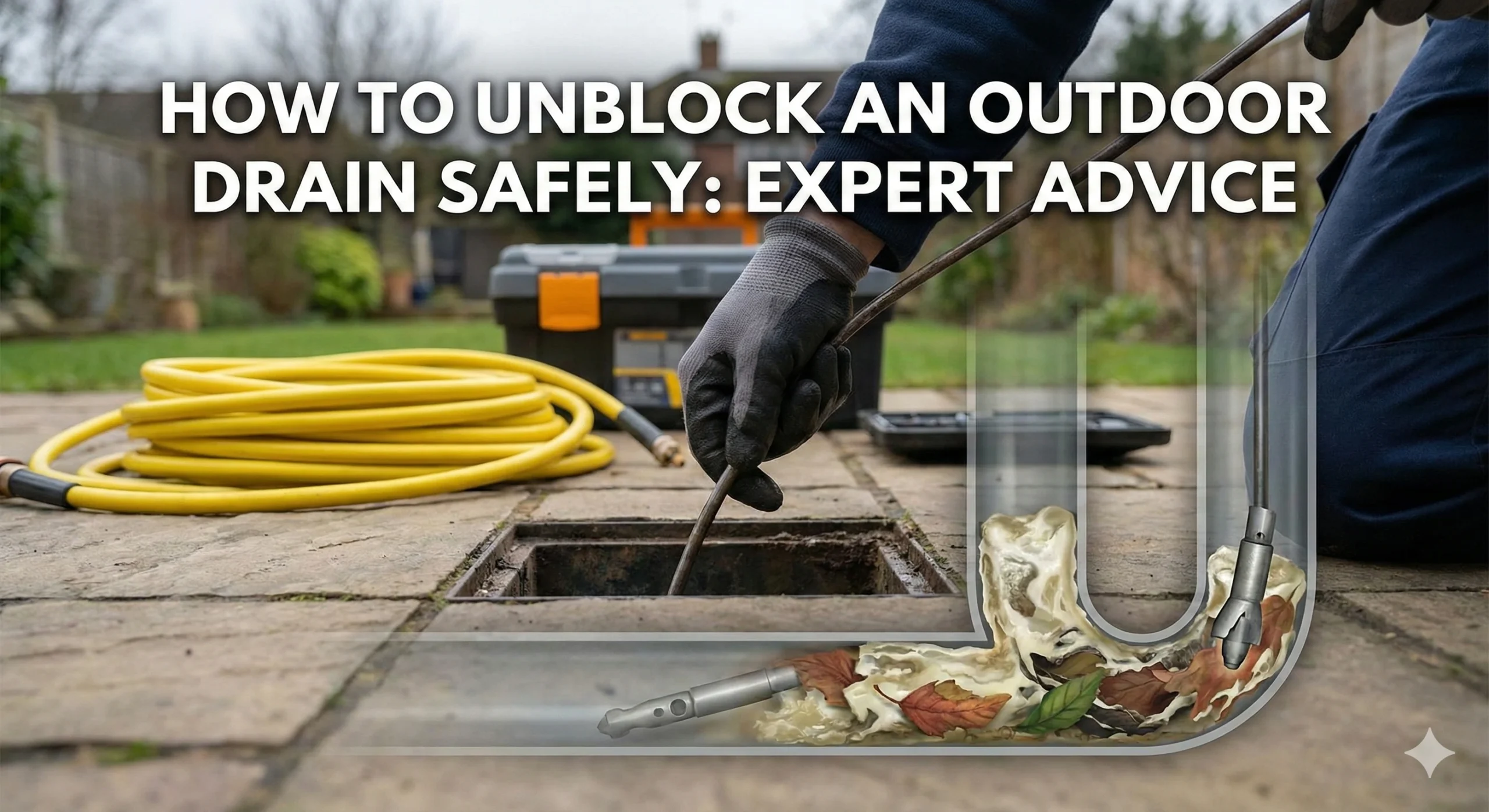
Standing water around an outdoor gully or manhole cover. Frost heave can lift or crack gully surrounds, and fallen leaves compacted by rain form a dense mat that rainwater simply cannot get past. If water is pooling on the surface rather than draining away, the blockage is at or near that gully, not deep in the system.
A sudden smell that wasn’t there in summer. Cold air is denser and windows stay shut, so sewer gas that would normally dissipate now lingers. This is often the first sign of a partial blockage rather than a new fault — the problem was building for weeks.
Recurring blockages no amount of plunging clears. This is the symptom that separates a DIY job from a professional one. Persistent, repeat blockages at the same point, especially alongside damp patches or a dip in the lawn, point toward a structural issue rather than everyday debris.
Causes: Why Winter Drain Problems UK Properties Suffer Are Rarely About the Cold Itself
It’s tempting to blame the frost, but temperature is rarely the root cause — it’s the trigger that exposes a weakness that was already there.
Fats, oils and grease solidify faster in cold pipework. What flows as liquid at summer temperatures sets almost immediately in a pipe that’s several degrees colder, and once it clings to the pipe wall it traps everything that follows.
Leaves and storm debris overwhelm gullies before anyone notices. Autumn leaf fall combined with the season’s first heavy rain is the single biggest predictor of a January blockage — the drain was compromised months before the symptom appeared.
Freeze-thaw cycling stresses pipe joints and materials. Older clay or poorly bedded pipework expands and contracts repeatedly through a British winter, and every cycle slightly widens existing cracks until root ingress or collapse follows.
Frozen or waterlogged ground reduces natural drainage capacity. When the ground itself can’t absorb water, more of it is forced through gullies and pipework that were never sized for the extra load, which is why a properly installed French drain can make a measurable difference on waterlogged plots. Guidance from the Health and Safety Executive also notes standing water around a property as a slip and contamination hazard worth acting on quickly.
Treatment: A Step-by-Step Checklist Ranked by Severity
If the symptom is mild and isolated, start with the checklist below. If you’ve already ticked through it and the blockage returns, or you’re seeing signs of a collapsed drain, that’s your decision point for calling a professional rather than persisting with DIY.
- Pour boiled (not scalding) water slowly down the affected drain to soften early-stage grease build-up.
- Clear visible leaf litter and debris from all outdoor gullies and manhole covers before the first frost.
- Fit a drain guard or gully grid to stop future debris re-entering the system.
- Check indoor drain screens in showers and sinks weekly through the coldest months.
- Stop pouring fats, oils and grease down any drain — cool and bin them instead.
- Book a CCTV drain survey if a blockage recurs more than once in the same spot.
- Call a professional drainage engineer immediately if you see a sinkhole, sustained bad smell, or sewage backing up indoors.
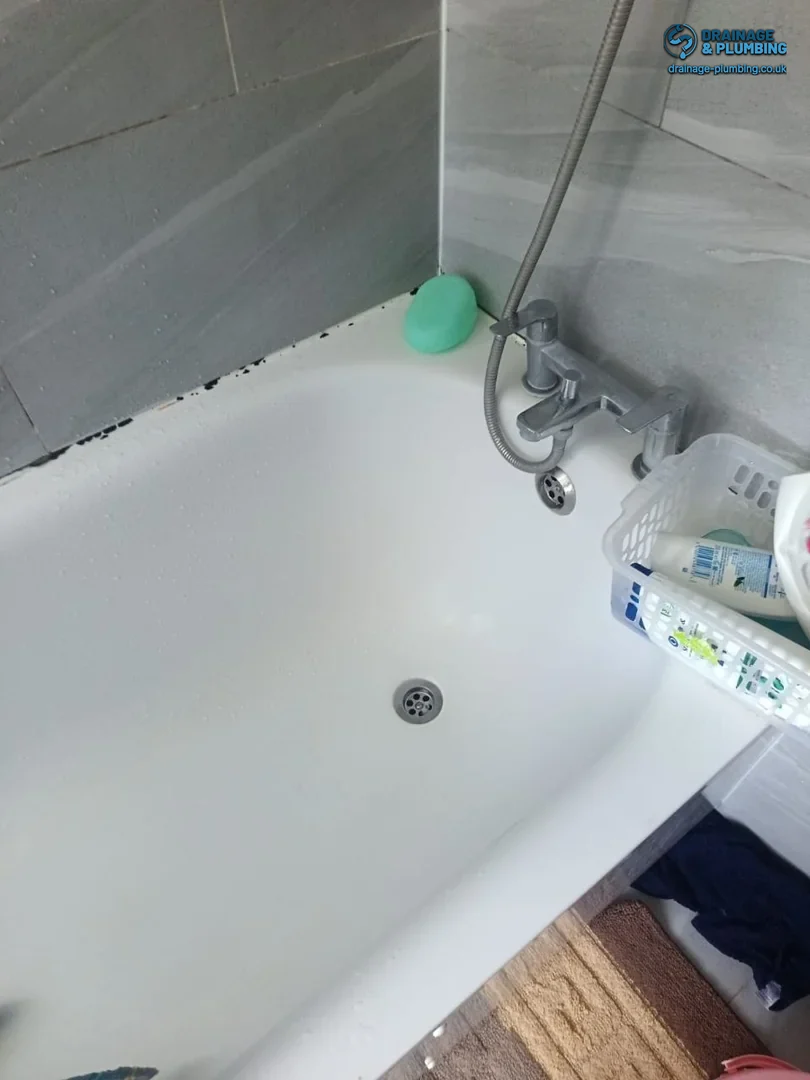
A shop-bought one-shot cleaner, shown above, can shift a fresh, minor grease film, but it does nothing for root ingress, a cracked pipe, or a shared line further down the run — for those, high-pressure jetting or a camera survey is the only real diagnostic. If you’re dealing with a blockage that seems to be shared with a neighbouring property, our breakdown on why drains block and how to fix them covers how shared systems complicate diagnosis. Anyone specifying or replacing sections of pipe over winter should also check our guide to the different types of drainage pipes, since material choice affects how well a run copes with freeze-thaw stress — standards for this are set out in the Water Regulations Advisory Scheme and BS EN 752 for drain and sewer design.
What Our Engineers Actually See on the Job This Time of Year
Strip away the marketing language and here’s the honest pattern from winter call-outs across the South East. It isn’t dramatic burst pipes that fill the diary in December and January — it’s the unglamorous stuff that homeowners assumed was fine because nothing had gone wrong yet.
The blockage was always going to happen — the frost just picked the date
Engineers routinely pull years of compacted grease and wet wipes out of a run that the homeowner swears was “never a problem before.” The cold didn’t create the blockage; it finished the job that started with what went down the sink every week since summer.
Outdoor gullies are the most neglected point in the whole system
Indoor drains get attention because they’re visible. The gully outside the back door, half-covered by a shed or bin store, gets checked maybe once a year — usually after it’s already overflowed onto a patio or into an airbrick.
Toilets take the brunt of the panic calls
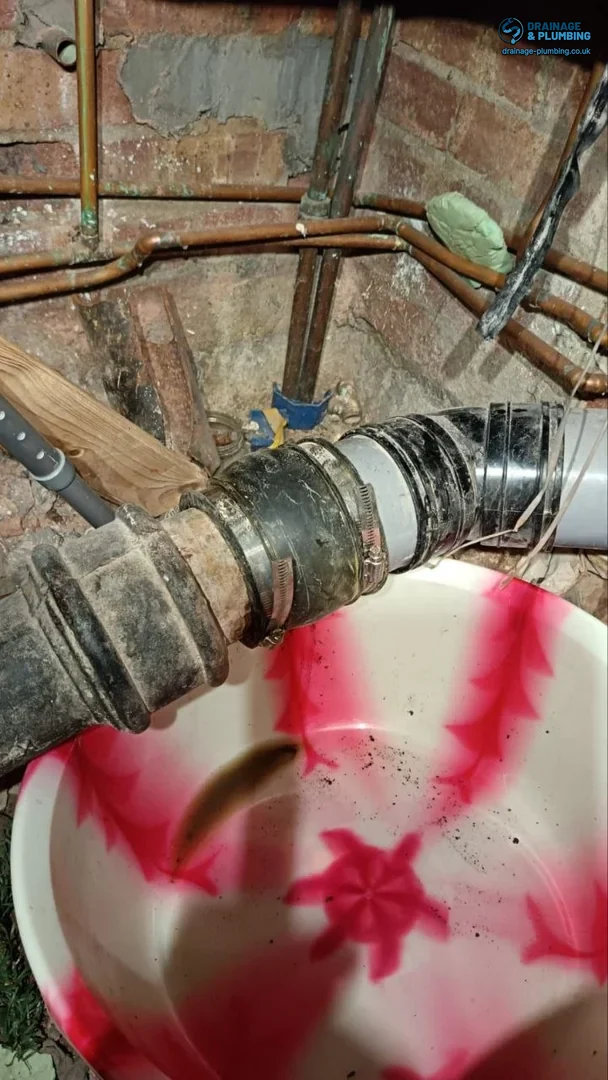
A blocked toilet on a cold weekend, shown below mid-diagnosis, generates more emergency calls than any other single fixture, largely because sanitary items and wipes that flow reluctantly in summer stop moving almost entirely once the pipe temperature drops.

The pattern holds across every property type we attend, from Victorian terraces on clay soil to newer builds with combined drainage. If you’re in Crawley or the surrounding RH postcodes and want a same-day look before a symptom becomes an emergency, our drain unblocking service in RH10 is built for exactly this seasonal spike.
No comments yet. Be the first to leave a review.
Comments are closed for this post.