
 Admin
Admin 
Is your blocked drain London problem getting worse by the day, and you’re not sure why it keeps coming back? You’re not alone — and the answer is almost always hiding somewhere you haven’t looked yet. Understanding what’s really causing the blockage is the first step to fixing it for good.
Why London Drains Block More Often Than You’d Think
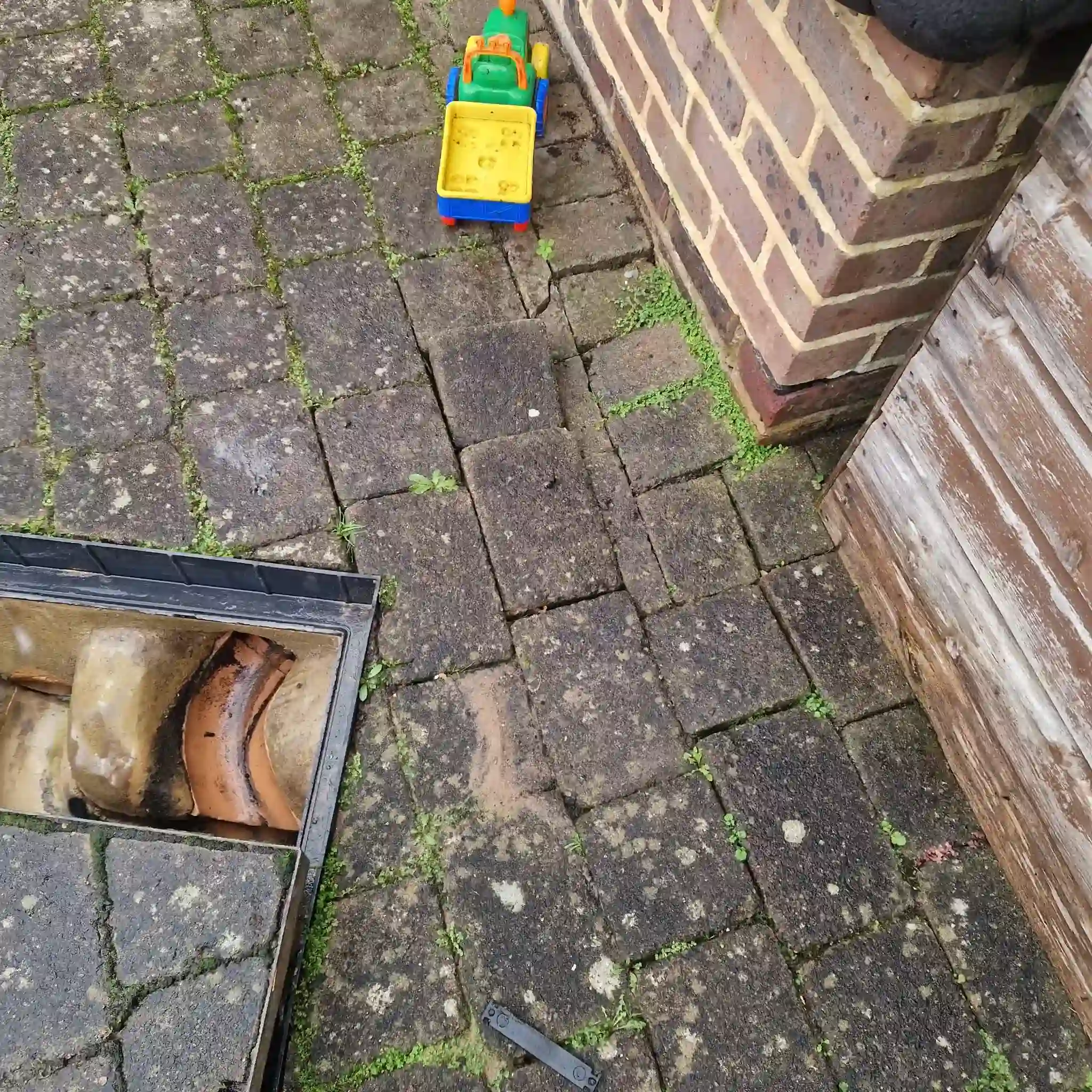
London is one of the oldest cities in the world, and its drainage infrastructure reflects that. Vast stretches of the capital still rely on Victorian-era clay pipes that were never designed for modern household volumes. Add in London’s heavy clay soil — which shifts and compresses over time — and you have the perfect recipe for cracked, misaligned, or partially collapsed pipework that traps debris at every turn.
Under the Water Industry Act 1991, homeowners are responsible for the drains within their property boundary, while Thames Water and other water companies manage the public sewer network beyond it. Many Londoners don’t realise this until a problem escalates — and by then, a simple jetting job has become an expensive repair.
Prevention starts with knowing what you’re dealing with. If you want a deeper dive into the root causes, our guide on what causes drain blockages and how to prevent them covers each one in detail.
What Our Engineers Actually See on the Job
The 5 Most Common Causes We Find
After more than 17 years attending blocked drain call-outs across London and Surrey, I’ve seen the same culprits come up time and time again. The number one offender is fat and grease — homeowners pour it down the sink thinking hot water will wash it away, but it cools, solidifies, and coats the pipe walls until nothing gets through. Tree roots are a close second, especially in older London streets lined with mature plane trees and sycamores whose roots seek out any hairline crack in a pipe. I’ve pulled root masses the size of a football from drains that looked perfectly normal from the outside. Wet wipes — even those labelled “flushable” — are a constant problem, and misconnected pipes in older terraced properties cause issues that can go undetected for years.
Here are the five causes our engineers find most frequently when attending a blocked drain in London:
- Fatberg build-up — cooking fat, grease, and oil that solidifies inside the pipe over time
- Wet wipes and non-flushable items — these do not break down and create dense, stubborn blockages
- Tree root intrusion — roots exploit cracks in ageing clay or concrete pipes, growing rapidly inside
- Collapsed or misaligned pipes — ground movement in London’s clay-heavy soil causes pipe joints to shift and sag
- Leaf litter and silt — outdoor gullies and channel drains fill up quickly, especially after autumn storms
Each of these requires a different approach. High-pressure drain jetting works brilliantly for fat and silt, but a root intrusion or collapsed pipe needs the exact point of failure located before any clearing work begins. Under BS EN 752, the British and European standard for drain and sewer systems outside buildings, drainage should be designed and maintained to prevent surcharging and public health risk — a standard that informs how professional engineers assess and repair faults.
How a Blocked Drain London Engineer Clears the Problem

When a drainage engineer arrives at your property, the first job is diagnosis — not guesswork. A visual inspection of accessible manholes often tells a lot, but for recurring or underground blockages the engineer works along the run to pinpoint the exact cause and location. That avoids unnecessary excavation and saves you money.
Once the cause is confirmed, the clearing method is chosen accordingly. High-pressure water jetting — operating at up to 4,000 PSI — is the industry standard for clearing fat, silt, and debris. It’s fast, effective, and safe for most pipe materials. For tree root intrusion, specialist root-cutting attachments are used alongside jetting. Where a pipe has collapsed or cracked, drain lining (no-dig repair) can restore the pipe from the inside without digging up your garden or driveway.
Worried about what the repair might cost? Our drainage engineer hourly rate guide gives you honest, transparent pricing so there are no surprises.
5 Smart Ways to Prevent a Blocked Drain in London

The good news is that most blocked drain London call-outs are entirely preventable. A few simple habits and one annual check can save you hundreds of pounds and a great deal of stress. Here’s what drainage professionals recommend:
- Never pour fat, oil, or grease down the sink — let it cool, then bin it.
- Fit hair-trap guards in shower and bath drains and clean them weekly.
- Only flush toilet paper — wet wipes, cotton wool, and sanitary products belong in the bin.
- Clear outdoor gullies and channel drains after heavy rain or leaf fall.
- Have the drains cleared and checked every one to two years — especially if your property is older than 40 years or has large trees nearby.
Proactive maintenance is far cheaper than emergency call-outs. Thames Water’s guidance on blockages echoes this, noting that the vast majority of sewer blockages are caused by items that should never enter the drainage system in the first place. If you’re in South London or Surrey and want fast local help, our team also covers blocked drains in Sutton with a 60-minute response.
No comments yet. Be the first to leave a review.
Comments are closed for this post.