
 Admin
Admin 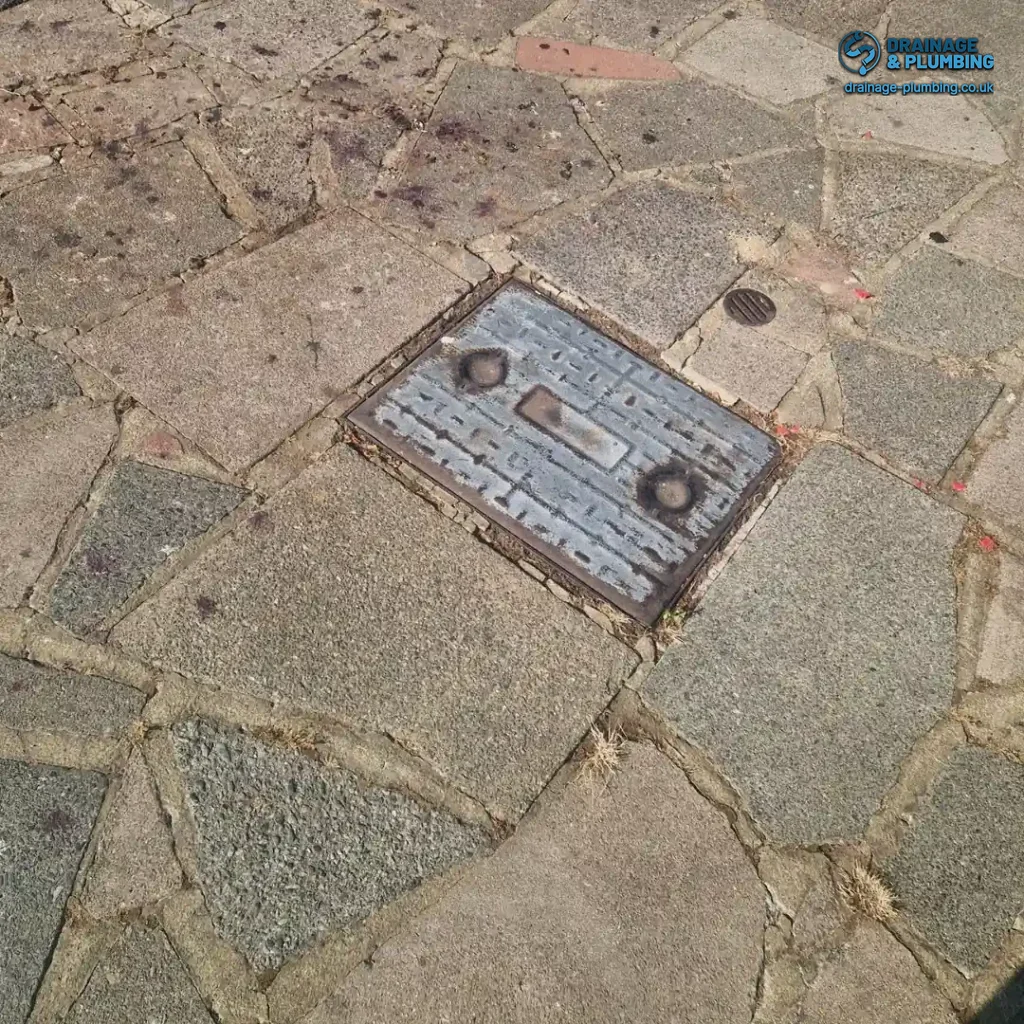
Yes — drains almost always smell worse in hot weather, and it is not your imagination. Heat does three things at once: it dries out the water seals that normally block sewer gas, it speeds up the bacteria breaking down fat and waste inside the pipe, and it removes the rainfall that usually rinses the system through. Put together, a drain that was perfectly fine in March can be noticeable from the back door in July.
This guide explains what is actually happening in your drainage system during a hot spell, which smells are harmless and which are warning you about a real blockage, and what you can do about it before it becomes a callout.
The main reason: your gully trap has dried out
Every outside drain on a UK property has a trap — a U-bend holding a small amount of standing water. That water is the only thing separating your garden and kitchen from the sewer. It is a seal, not a filter.
In a hot, dry spell two things happen to that seal. It evaporates from above, and with no rain and less household water going down the outside gully, nothing tops it back up. Once the water level drops below the bend, the seal breaks and sewer gas comes straight up into the open air.
The quick test: pour a bucket of water down the outside gully. If the smell disappears within a few minutes and stays gone for a day or two, it was a dried-out trap and nothing more. That is the single most common cause of a smelly outside drain in summer, and it costs you nothing to fix.
The same applies indoors to anything you do not use often — a spare bathroom, a utility sink, a shower in a holiday let. Run the taps for thirty seconds every couple of weeks in summer and the problem never starts.
Why heat makes the gas itself stronger
The smell people describe as “drains” or “eggy” is mostly hydrogen sulphide, produced by bacteria feeding on the organic film that coats the inside of every waste pipe. Those bacteria are temperature-driven. Warm the pipe up and they work faster, so more gas is produced from the same amount of muck.
Fat is the worst offender. Cooking fat that has been washed down a kitchen sink over the winter sets hard against the pipe wall, and in summer that layer becomes an actively rotting deposit rather than an inert one. If your smell is concentrated around the kitchen waste or the gully directly outside it, fat is the likely source — and it is also the thing most likely to turn into a full blockage later in the year. Our guide on fat build-up in drains covers how to deal with it properly.
No rain means no flush
A drainage system is designed around flow. Normal UK rainfall gives surface water drains a regular rinse, and that flow carries away the light debris and silt that would otherwise sit in the bottom of the pipe.
Take the rain away for three or four weeks and that material stays put and starts to decompose. This is why smells often appear during a dry spell but the actual blockage announces itself in the first heavy downpour afterwards — the rain arrives, hits a partly silted pipe, and cannot get through. If you notice a smell in August, that is a useful early warning to act on before autumn.
Which summer smells are actually a problem
Not every hot-weather smell needs an engineer. Here is how we sort them on the phone:
- Smell only, drains running normally, clears when you pour water down — dried trap. Nothing else needed.
- Smell that comes back within a day of topping up the trap — the seal is not holding. Often a cracked gully or a trap that has been bypassed. Worth looking at.
- Smell plus slow draining anywhere in the house — this is a partial blockage, and the heat is just making it obvious. It will not clear itself.
- Smell plus gurgling from a toilet or sink when another appliance drains — air being forced back through the system. Usually means the blockage is further down, past the point where your pipes join.
- Damp patch, sunken ground or unusually green grass near the drain run — possible cracked or collapsed pipe leaking into the soil. This one does not wait.
The last three are worth a proper look. A smell on its own is usually a trap; a smell with a drainage symptom is a blockage telling you where it is.
What actually works — and what does not
Worth doing: top up every trap, indoors and out. Lift the gully grid and clear out leaves, silt and any fat crust by hand. Flush the kitchen waste through with a kettle of hot — not boiling — water and washing-up liquid, which lifts soft fat without softening plastic pipe joints. Keep doing it weekly through the summer.
Not worth doing: pouring caustic drain cleaner down a drain that smells but is not blocked. It does nothing to a dried trap, it does not remove hardened fat properly, and it makes the drain genuinely hazardous for whoever opens it next — including us. Bleach is the same story: it masks the smell for an afternoon and kills the bacteria you actually want in a septic system.
If the smell is coming from a manhole rather than a gully, do not lift the cover and pour anything in. That chamber is shared drainage in many cases, and what happens in it is not necessarily your responsibility to fix — see our guide on who is responsible for a blocked drain.
When to call someone out
Call if the smell survives a proper trap top-up, if anything in the house has started draining slowly, or if you are getting gurgling. At that point the smell is a symptom and the blockage is the thing that needs clearing — usually with high pressure jetting, which strips the pipe wall back to clean rather than just punching a hole through the middle of the blockage.
Smelly drain that will not shift in Surrey or South London? We have been clearing drains across Croydon, Sutton, Bromley, Purley and the surrounding area for 17 years. Call 07771 200075 or see our drain unblocking service. If you are not sure whether it is worth a callout, send us a photo on WhatsApp and we will tell you straight.
Stopping it happening next summer
Almost every hot-weather smell we get called to traces back to something that built up quietly over the previous twelve months — fat, silt, leaf litter, or a trap nobody had topped up in years. Clearing the gullies each spring and keeping fat out of the kitchen sink deals with the large majority of it. Our seasonal drain maintenance guide sets out what is worth doing and when.
No comments yet. Be the first to leave a review.
Comments are closed for this post.