
 Admin
Admin 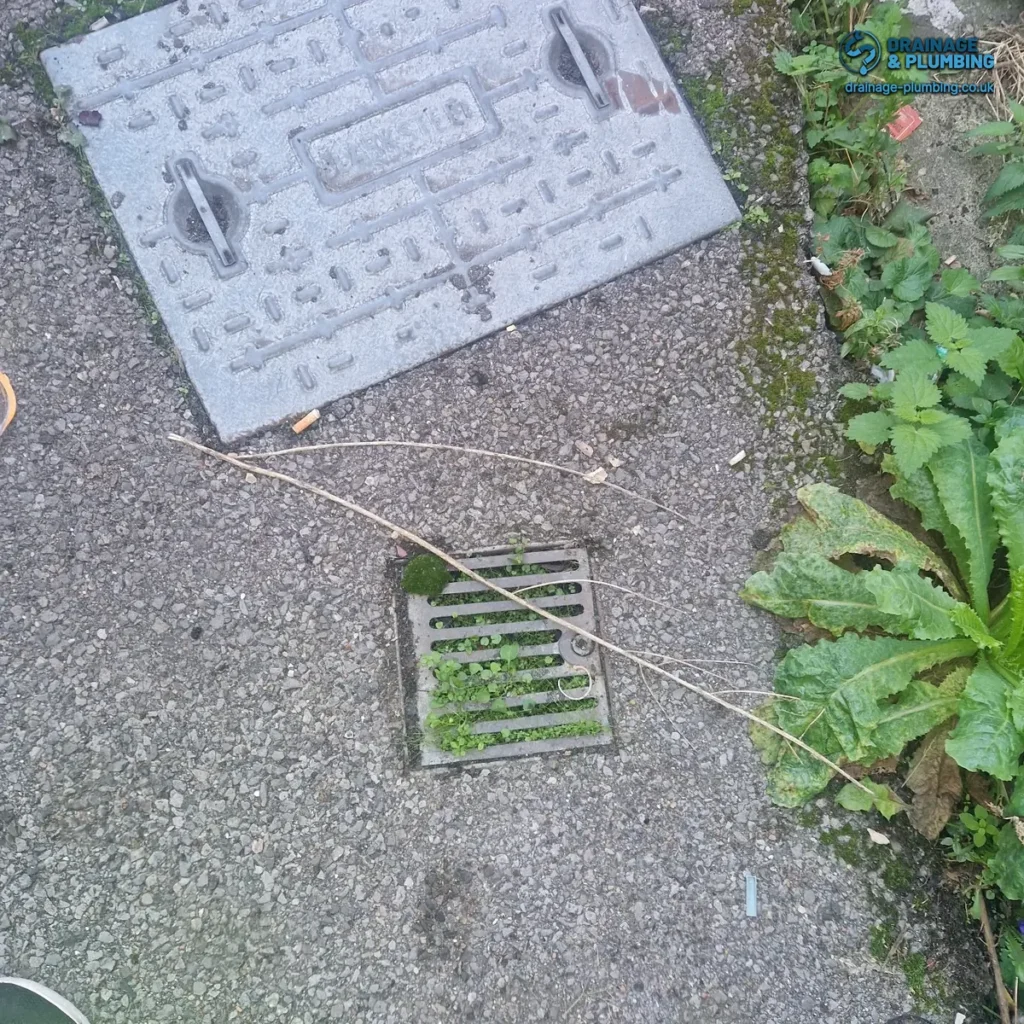
A blocked road gully and a blocked drain at home can look similar when water starts backing up, but they may need different organisations to deal with them. Historic Sutton gully cleaning records also show why it is important to distinguish individual maintenance visits from the condition of a whole drainage system.
Drainage & Plumbing Ltd reviewed three council-supplied files covering an older gully inventory, maintenance tasks and monthly charts. This article explains the recorded figures and gives practical advice for residents. It is an independent company analysis, not a council announcement or endorsement.
What the historic Sutton gully cleaning records show
The detailed task file contains 20,759 records in roundgroup SSGULLYNEW. Selecting its three gully-cleansing task types gives 18,904 tasks scheduled between 2 December 2022 and 2 December 2024. Sweeping and separate unblocking task types are not included in these cleansing totals.
| Recorded task type | Tasks | Marked completed |
|---|---|---|
| Gully cleansing | 13,414 | 9,830 |
| Parked car first return | 2,989 | 394 |
| Parked car second return | 2,501 | 165 |
| Total | 18,904 | 10,389 |
Across these tasks, 10,389 are marked completed, 8,504 not completed and 11 allocated. These are task records, including repeat visits—not a count of unique blocked gullies. A task state does not establish whether the same gully was subsequently cleared, remained clear or needed another visit.
Parked-vehicle reporting labels need careful interpretation
Two recorded resolution labels appear on 7,513 tasks marked not completed:
Blocked – Parked Cars
: 2,735 tasks.NA – Parked Vehicle
: 4,778 tasks.
Together, these are 39.7% of the 18,904 cleansing-task records. The labels are reproduced as recorded. No official code legend was supplied for this analysis, so we have not expanded NA or assigned a formal definition to either code.
This percentage must not be read as saying that 39.7% of Sutton’s drains were physically blocked, or are blocked today. It also does not establish council failure or prove that these visits caused flooding. The return-task categories include 559 tasks marked completed; they cannot be treated as 559 different gullies without a separate asset-level analysis.
Whatever the reporting system, safe access is important for drainage maintenance. Follow any cleansing notices or temporary parking restrictions. For a booked private drainage visit, keep covers accessible and leave a safe route for equipment. Do not move other people’s vehicles, lift highway covers or enter a chamber yourself.
The older inventory is a separate dataset
The January 2021 workbook lists 16,573 unique gully service-unit records. It identifies 396 for three-monthly cleansing and 16,177 for a two-yearly cycle. These are historic classifications, not current condition assessments.
Separately, the council’s initial response dated 14 August 2026 states that Sutton is responsible for 16,437 gullies. That figure and the older workbook’s 16,573 records refer to different dated sources. The information supplied does not establish why they differ, and we have not treated either figure as the denominator for the later maintenance-task totals.
The monthly summary charts extend to March 2025 and use different views, including maintenance attempts and final states after return visits. We have not combined those charts, the 2021 inventory and the later task extract into one completion rate.
Who should deal with a blocked road gully or private drain?
For a suspected blocked road gully in Sutton, use Sutton Council’s reporting guidance. Its guidance describes three-monthly cleaning for gullies on roads prone to flooding and at least two-yearly cleaning elsewhere. TfL-maintained red routes have a different reporting route.
For household drainage, Thames Water’s sewer responsibility guidance explains that drains within your boundary serving only your property are normally your responsibility. Shared and public sewers are generally the water company’s responsibility within its sewerage area. Finding a chamber on your land is not, by itself, proof that you own the pipe below it.
If you suspect a shared or public sewer problem, check with the relevant water company before arranging private work. Outside Sutton, use your own highway authority and sewerage provider rather than assuming the same contacts apply.
Case study: root-filled gullies at a block of flats in Sutton
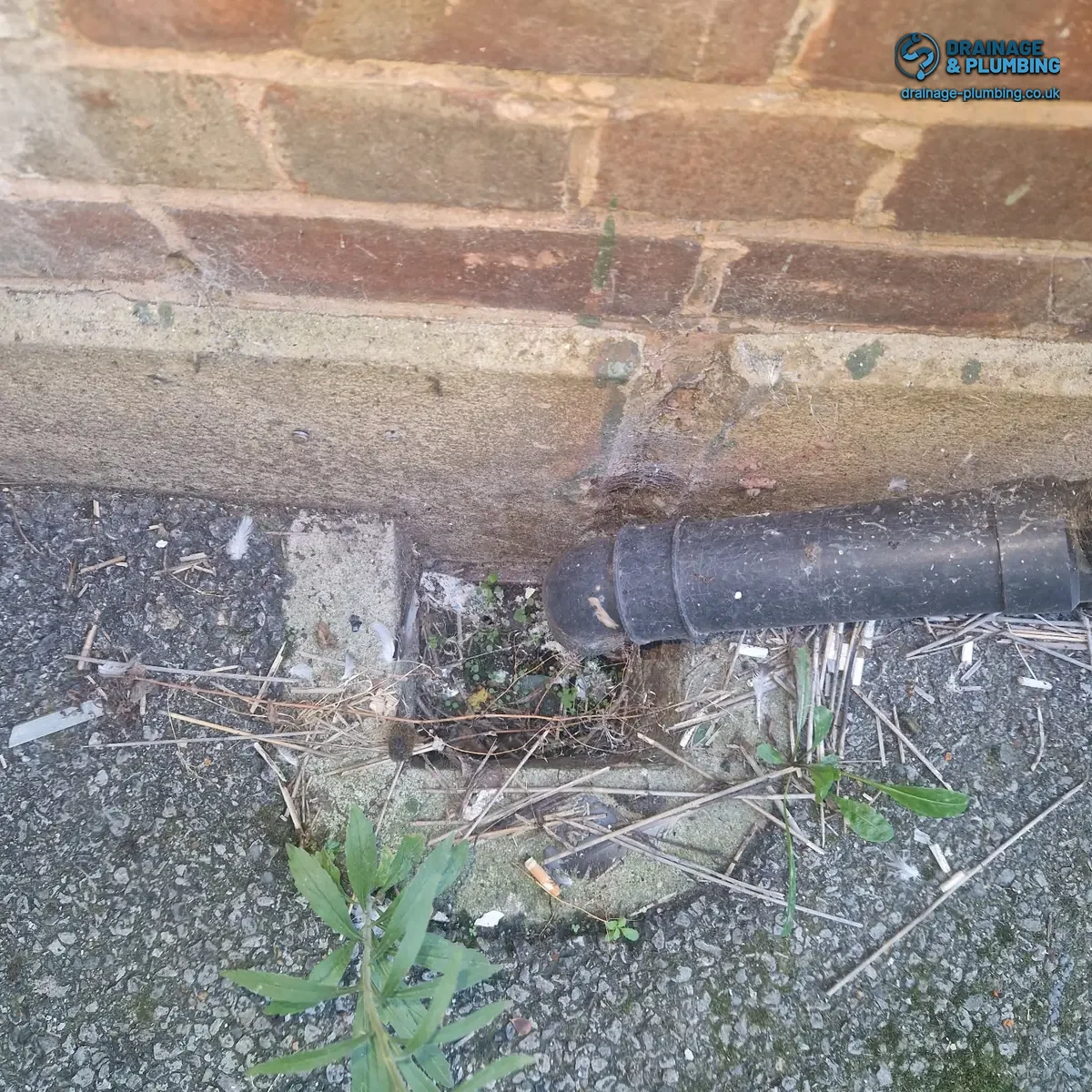
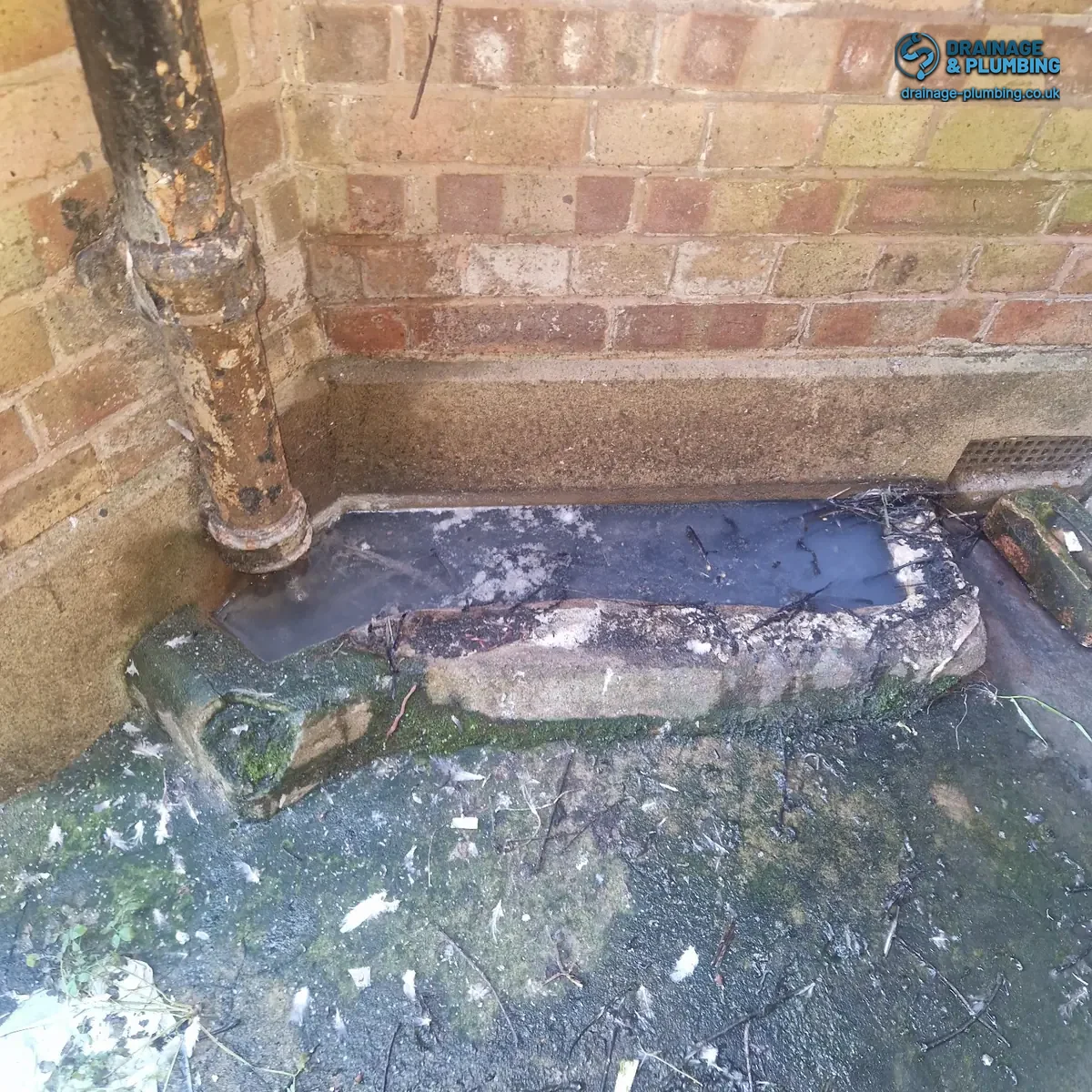
At a block of flats on Sutton Court Road, Sutton, Drainage & Plumbing Ltd attended a drainage job involving multiple gullies. Our engineers found roots in the gullies, making the clearance difficult. This is an account of our own work at a residential property, not a job commissioned by Sutton Council or evidence about the council’s maintenance programme.
Opening and cleaning each gully
The team opened the gullies one by one and cleaned them individually before using high-pressure water jetting to clear the connected drainage. Working through each access point allowed the engineers to address the affected gullies rather than concentrating on just one opening.
Camera inspection after high-pressure jetting
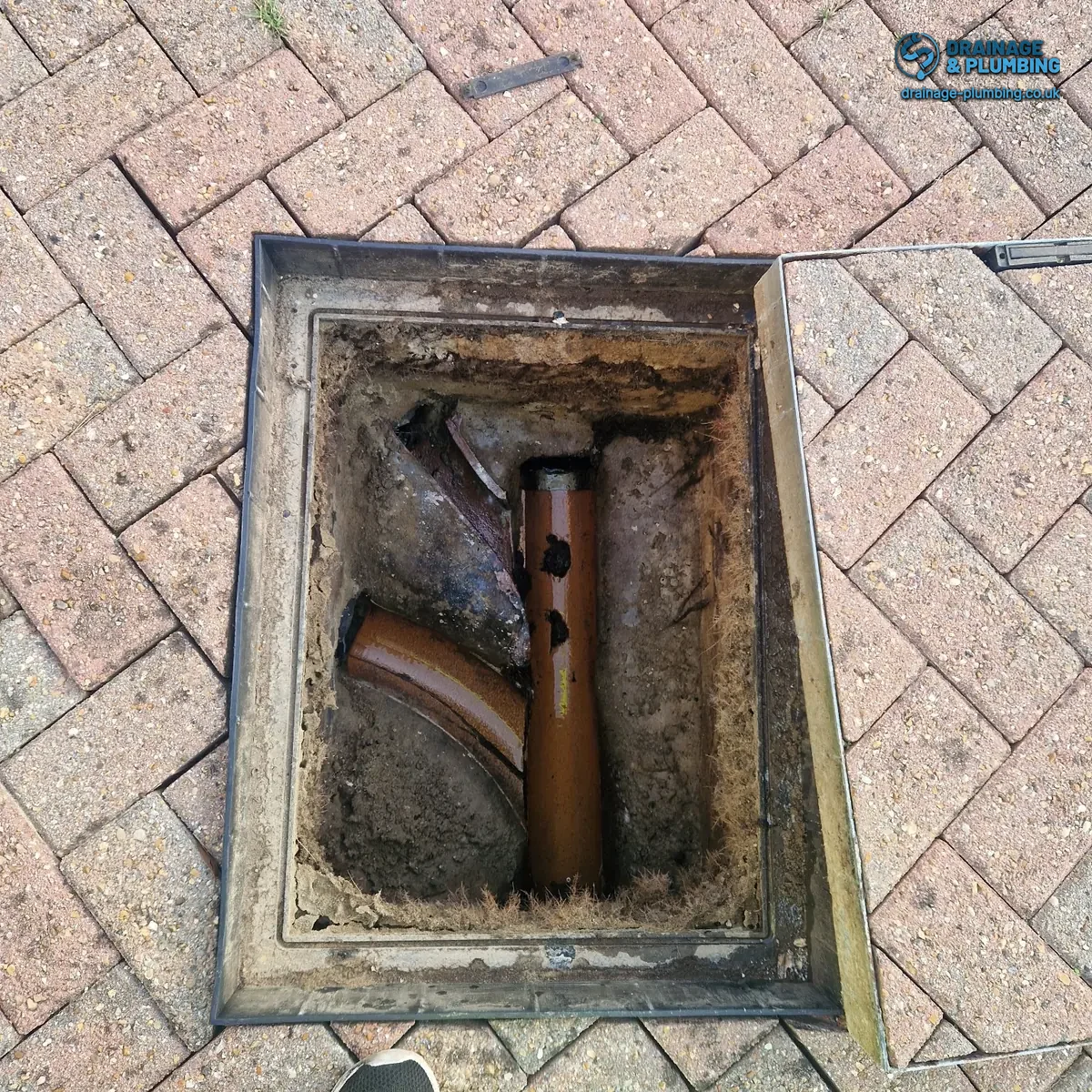
After jetting, the team used a drain camera to check the underground pipework for damage. Clearing obstructions and inspecting pipe condition are different stages: jetting addresses a blockage, while a camera inspection helps investigate visible pipe defects. We do not claim that jetting repairs damaged pipes or permanently prevents roots returning.
Result and advisory findings
Normal drainage was restored following the clearance. The camera inspection identified very small cracks in the pipework. These were recorded as advisory findings, with no immediate repair considered necessary at the time of the inspection. The system was therefore draining normally, but the pipework was not described as entirely free from defects.
What this means for property managers
A block of flats can have several gullies and drainage access points, so repeated problems may need a system-wide assessment rather than attention to a single drain. Keep access points available for a booked visit, record recurring symptoms and ask the engineer whether further inspection or a maintenance plan is appropriate for the actual findings.
For help with a property drainage problem, see our Sutton drain unblocking service. Check ownership and responsibility before authorising work on a shared drain or sewer.
4 essential checks when water backs up
- Keep children and pets away. Avoid contact with floodwater, which may be contaminated. Do not lift highway covers or enter drains.
- From a safe position, record the location, time and symptoms. A postcode, road name and nearby landmark can help the responsible organisation locate the problem.
- Report a suspected road-gully problem to the highway authority, and a suspected shared or public sewer problem to the water company.
- If a private toilet, sink, shower or outside drain is backing up, stop adding water where practical and arrange a drainage assessment. Tell the engineer if the problem has happened before.
When a drain camera inspection is useful
A straightforward blockage may need clearance and a flow check. If the drain blocks repeatedly, a drain camera inspection can help investigate roots, damaged joints, collapsed sections or other defects once access and visibility allow.
High-pressure water jetting can remove suitable deposits and obstructions, but it does not repair broken pipework. Recurring symptoms should be investigated rather than assuming another clearance will solve an underlying defect.
Small steps that help private drainage systems
Keep fat, oil, food waste and wipes out of drains. Thames Water’s blockage-prevention advice explains why wipes and cooking fats can cause problems. Remove accessible surface leaves from private drainage channels safely, without pushing debris into the pipe, and keep access covers clear.
Persistent slow drainage, water backing up or repeat blockages deserve attention. A photograph can help describe the symptoms, but it cannot reliably identify the condition of underground pipework.
Sutton gully cleaning and private drain FAQs
Do these figures show how many drains are blocked today?
No. The detailed figures count historic maintenance tasks, including repeat visits. They are not a current inspection of every gully and do not establish the condition of a specific drain today.
Does every slow-draining road gully need a private drainage company?
No. First check who maintains the asset. A suspected road-gully problem should go to the relevant highway authority. For a suspected shared or public sewer problem, contact the relevant sewerage provider. A private drainage company can assess drains that are the property owner’s responsibility.
Should I book a drain camera inspection for every blockage?
Not necessarily. The engineer can assess whether clearance and a flow check are sufficient. Recurring blockages, suspected damage or an unclear underlying cause may warrant a drain camera inspection when the pipe is accessible and visibility permits.
Can I keep access clear without opening a drain?
Yes. For a booked private drainage visit, move your own vehicle or removable items away from the access point if safe to do so. Leave lifting covers and inspecting chambers to the appropriate trained personnel. Follow official notices for highway maintenance rather than attempting work on a road gully.
Help with private drainage problems
Drainage & Plumbing Ltd provides drainage-only services for homes and businesses across South East England. These include drain unblocking, high-pressure water jetting, drain camera inspection and drain repairs—not boiler or general plumbing work.
Read about our drainage services or contact us about a private drain problem. For Sutton enquiries, see our Sutton drain unblocking page. For a road gully or suspected public sewer problem, contact the responsible authority first.
For private properties in nearby areas, you can also find our Croydon drain unblocking service and Epsom drain unblocking service. These service links do not extend the Sutton council dataset to other towns.
Sources and limits of this analysis
Council-supplied files reviewed: Gully List Post Jan 2021; LBS Gully Data – Dec 22 to Dec 24 – Sheet1; and Monthly Gully Update File 2022-25 – Visuals.
The council’s initial response dated 14 August 2026 and the internal-review response for reference FOIS8097 provide the disclosure context. The review identifies the three supplied reports. The counts and percentages in this article are our own analysis, not figures or conclusions endorsed by the council.
The detailed totals were counted by task ID, including return visits. The inventory was counted by service-unit ID. Source periods are shown above; they are not a present-day survey. Reporting-code definitions were not independently confirmed. Current reporting and responsibility guidance was checked on 5 October 2026.
This analysis does not establish contractual performance, flood causation or the present condition of any individual council asset. The Sutton Court Road case study is based on information and job photographs supplied by Drainage & Plumbing Ltd’s director, who confirmed normal drainage was restored and very small cracks were advisory findings not requiring immediate repair at the time. Its exact date, duration and gully count are not stated because these have not been confirmed. The company job and photographs are separate from the council records. No council quotation, partnership or endorsement is claimed.
No comments yet. Be the first to leave a review.
Comments are closed for this post.