
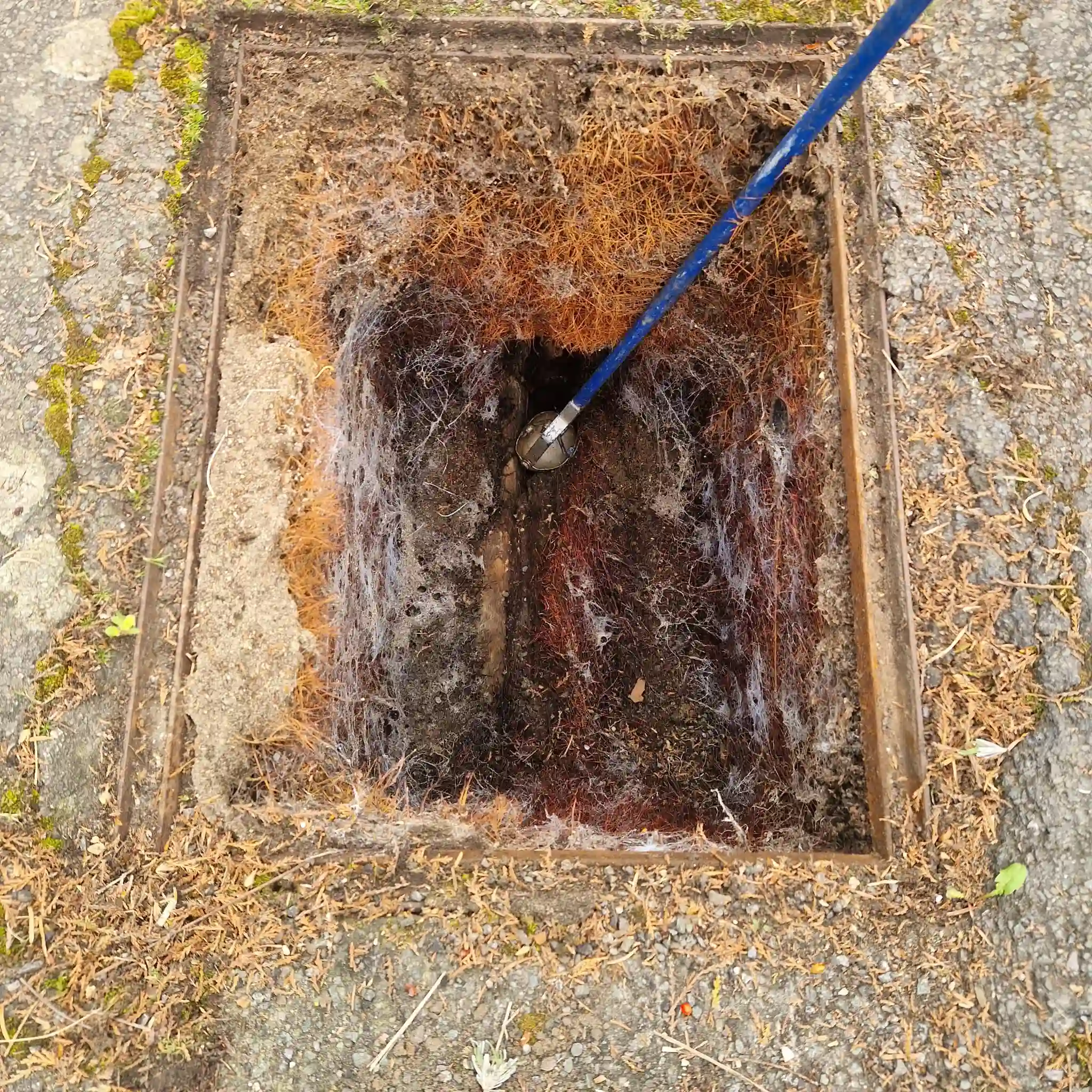
A tree root blockage in South London can quickly turn into a serious drainage emergency, especially in older properties with clay pipe systems. This real case study from a semi-detached house shows how aggressive root ingress caused an overflowing manhole and how Drainage & Plumbing Ltd resolved the issue using professional drain unblocking and jetting.
If you have ever dealt with a blocked drain, an overflowing manhole, or foul smells around your property, you will know how quickly a drainage problem can turn into a serious emergency. In many cases, the cause is not just grease, wipes, or general waste. Sometimes, the real problem is hidden underground, and one of the most destructive examples is a tree root blockage in South London.
I have worked in drainage for many years across South London, and I have dealt with almost every type of blockage you can imagine. However, some jobs stay in your mind because they show just how severe underground damage can become when it is left too long. This case was one of them.
This was a real job at a semi-detached house in Coulsdon, where the customer called because the drainage system was backing up and one of the manholes at the rear of the property was overflowing. At first glance, it looked like a normal blocked drain. However, after inspection, it became clear that this was a major tree root blockage in South London, caused by aggressive root ingress into an old clay pipe.
In this article, I will explain exactly what happened, what I found, how I cleared the drain, and why I strongly advised professional drain repair afterwards. More importantly, I will show you why this type of blockage should never be ignored if you want to protect your home, avoid repeated emergencies, and stop a small defect turning into a much larger repair bill.
If you are searching for help with a blocked drain, root ingress, or emergency drain unblocking in South London, this real example will show you the kind of problem we deal with and how fast action can make all the difference.
Key Takeaways
- A tree root blockage in South London can cause significant drainage issues, often hidden underground.
- In one case, excessive root growth obstructed an older clay pipe, leading to major overflow problems.
- Ignoring drainage symptoms can escalate into emergencies; early action helps prevent costly repairs.
- Homeowners should watch for signs like slow drains and bad smells, especially in areas with mature trees.
- Professional repair is essential after clearing roots to prevent recurrence of the blockage.
The Emergency Callout – Overflowing Manhole at a Domestic Property
This job came in during spring, which is one of the busiest times of year for root-related drainage problems. The property was a semi-detached domestic house, and the customer reported that a manhole at the back of the property was overflowing badly. They were understandably worried because once wastewater starts backing up into chambers, the situation can worsen very quickly.
Overflowing manholes are never something to leave and hope for the best. In many cases, they mean the drainage system is fully or partially blocked, and continued use of toilets, sinks, or other waste outlets can force even more water into a system that already cannot cope. As a result, the risk of sewage overflow, property damage, foul odours, and contamination becomes much higher.
When I arrived on site, I carried out my normal inspection and quickly assessed the layout. There were several manholes connected to the drainage run. Two of the manholes at the back were full and overflowing. Meanwhile, the front chamber was not overflowing in the same way, but it was clear something serious was happening between the rear and front sections of the line.
From experience, that pattern often points to a more serious obstruction than a simple waste blockage. It usually suggests that the flow is being stopped by something substantial in the drainage line or chamber, especially where there is an older drainage system in place.
Because this was an older domestic property with clay pipework, I was already suspicious of root ingress. Clay drains can last for many years, but over time they often develop weaknesses around joints or small cracks. Once that happens, roots can find their way in. After that, the problem keeps growing.
What I Found – A Severe Tree Root Blockage in South London
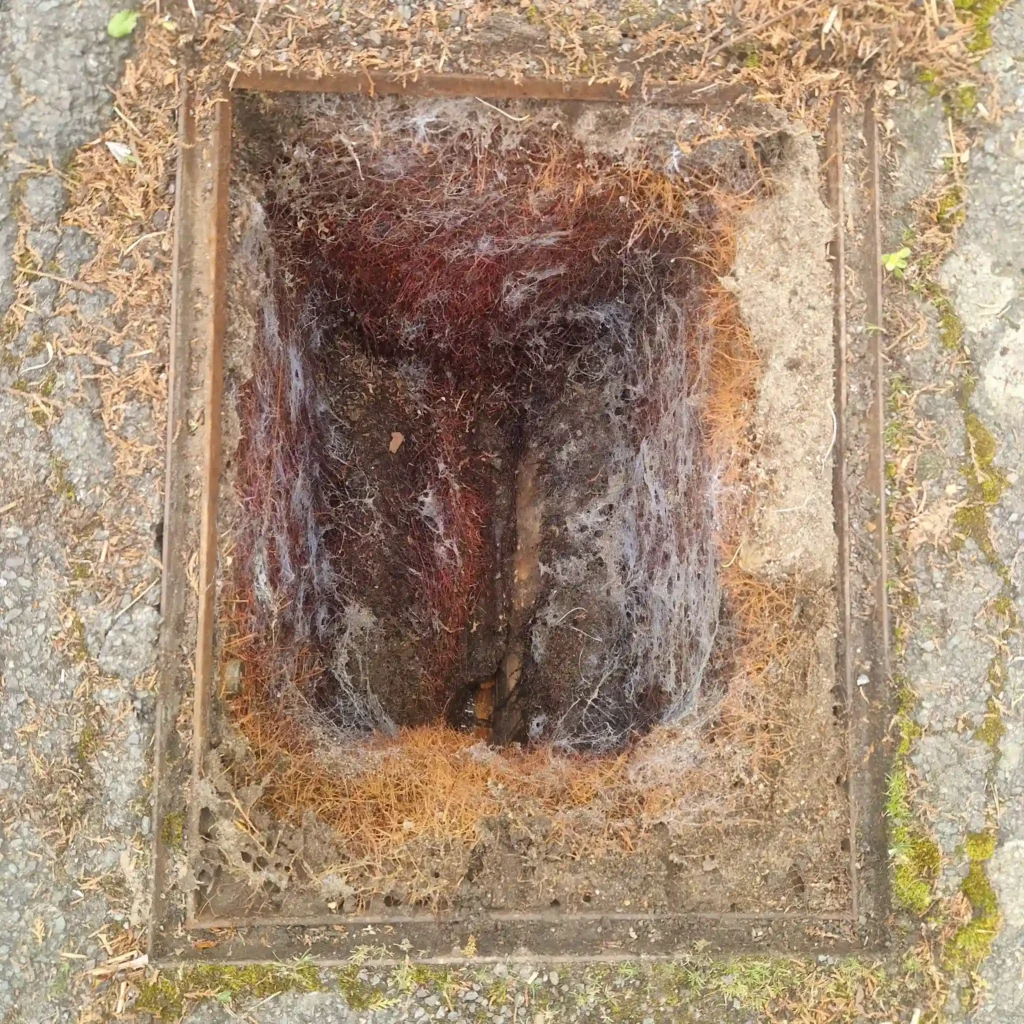
As I continued the inspection, I opened the front chamber and found exactly the kind of issue that turns an ordinary blockage into a serious drainage emergency. There was a huge mass of tree roots built up inside the drainage system, and the amount of root material was extreme.
This was not a small root strand or a minor intrusion. It was a dense, thick, heavily developed root mass that had expanded inside the clay drain over time until it caused a major obstruction. Wastewater could no longer pass through properly, which is why the rear chambers were backing up and overflowing.
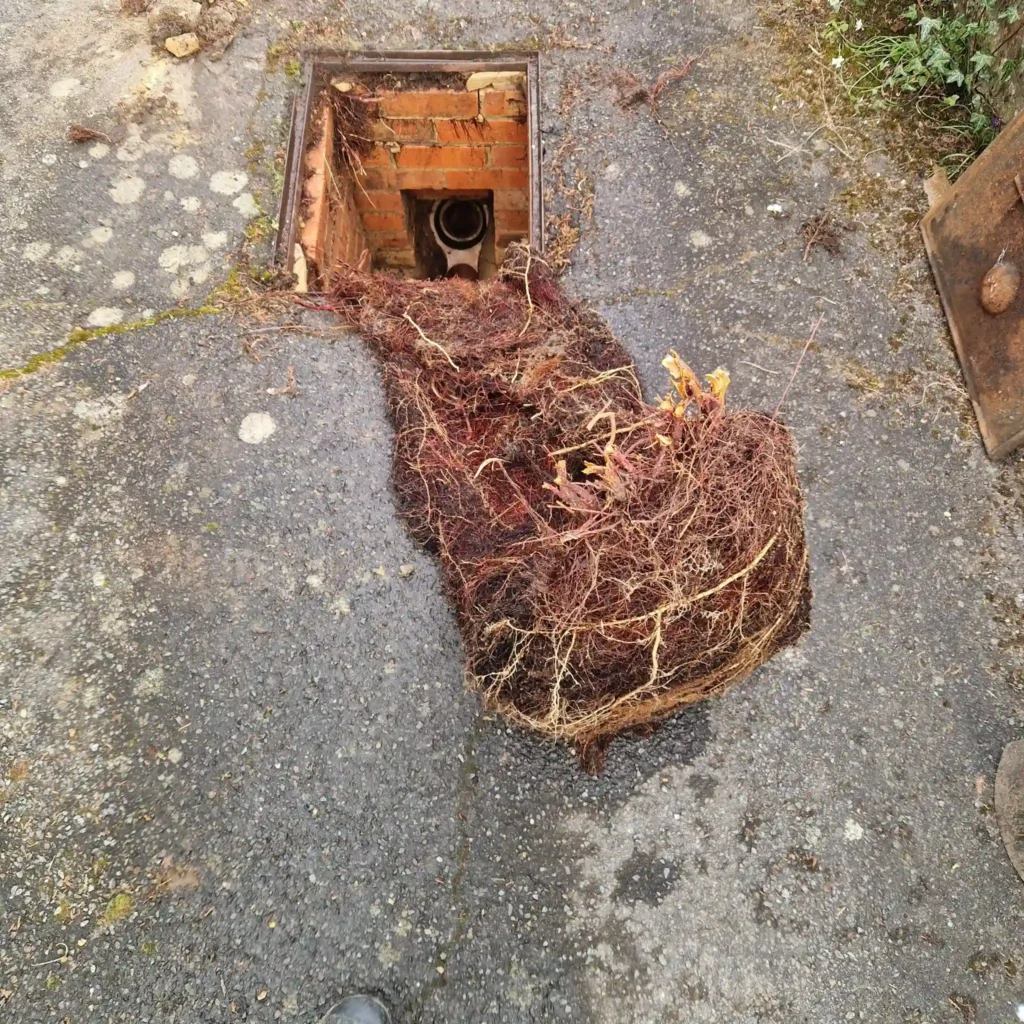
The amount removed was enormous. In fact, it was one of the largest root blockages I have dealt with in a domestic drainage system. The customer was genuinely shocked when they saw how much root material had come out of the drain. Most people do not realise what can be hiding underground until the blockage reaches crisis point.
This is exactly why a tree root blockage in South London can be so dangerous. It often builds up slowly without the homeowner knowing. At first, you may only notice slow drainage, occasional smells, or a minor backup. However, once the roots become thick enough, the system can fail very suddenly.
In this case, the roots had clearly entered through existing defects in the clay pipe system. They had not appeared overnight. This had been developing over time until the system finally became unable to cope.
Why Tree Roots Cause So Much Damage in Clay Drains
One reason I see this problem so often is because many parts of South London still have older drainage systems, especially at domestic properties. Clay pipes were commonly used for many years, and while they were standard at the time, they are more vulnerable to joint displacement, fine cracking, and age-related wear than modern systems.
Tree roots naturally search for moisture. Even a very small crack, loose joint, or weak section can attract them. Once the roots find a way in, they keep growing. As they develop, they trap waste, paper, scale, grease, and other debris. Consequently, what starts as a small intrusion becomes a serious blockage.
In practical terms, roots cause problems in several ways:
- They reduce the internal diameter of the pipe
- They trap passing waste and cause repeated blockages
- They expand inside the line and worsen existing defects
- They disrupt flow and create backups
- They can eventually contribute to cracks, joint movement, and structural failure
This is why a property with tree-lined surroundings, older pipework, or visible root growth nearby should never ignore drainage warning signs.
Why Spring Often Makes Root Problems Worse
This emergency happened in spring, and that detail matters. During spring, root systems become more active. Growth rates increase, soil conditions change, and moisture demand rises. As a result, tree roots become more aggressive in their search for water sources.
In many South London areas, especially where homes have mature gardens or trees planted near boundaries, spring is a time when hidden drainage weaknesses become much more obvious. A line that has been coping poorly all winter may suddenly begin to fail once root growth intensifies.
That is why I often advise customers to take recurring spring drainage issues seriously. If a system smells worse at this time of year, starts draining slowly, or shows signs of backing up, there may be a root-related cause. Delaying action rarely helps. In fact, it normally gives the roots more time to expand and cause greater disruption underground.
The Drainage Layout and the Nature of the Problem
At this property, the drainage run served a semi-detached domestic house. The fact that the rear chambers were overflowing while the obstruction was more evident further forward told me the blockage was stopping normal waste movement through the line. Once the flow became restricted enough, everything upstream started to back up.
This is one of the reasons why homeowners should avoid guessing with severe drainage problems. Sometimes the visible symptom is at the back of the property, but the actual cause is further away in the line. Without proper experience, it is easy to focus on the wrong chamber or the wrong section altogether.
Because the pipework here was clay, and because the root ingress was so severe, clearing the blockage was only one part of the solution. Yes, restoring the flow was essential. However, the underlying defect that allowed the roots to enter still needed attention.
That point is important from both an engineering and a customer care perspective. I do not believe in clearing a major root blockage and pretending the job is complete if the structural issue remains. The roots were a symptom, but the damaged section of drain was the real access point.
How I Cleared the Blockage
This was not a job for a basic plunger, rods alone, or a quick surface clean. Because the obstruction was deep, thick, and heavily established, I had to use the right professional drainage methods to remove the root mass and restore the line properly.
The main tools and methods used included:
High-pressure water jetting
Jetting was essential on this job. High-pressure water jetting helps break down trapped material, flush loose root fibres, and reopen the line so waste can move again. On severe root jobs, jetting is often a major part of the unblocking process because it clears debris that builds up around the roots as well as helping wash out loosened material.
Manual root removal
Where large root masses are involved, there are times when sections need to be physically removed from the chamber after being loosened. That was part of the process here, because the amount of material involved was substantial.
Careful staged clearing
With a blockage like this, the work has to be done methodically. Rushing can leave major debris behind. Instead, I worked through the system in stages, clearing, checking flow, removing additional material, and then continuing until the line was running properly again.
The full process took a few hours. That is another reason I always explain to customers that a severe tree root blockage in South London is not the same as a straightforward domestic blockage. These jobs often take longer because the obstruction is more aggressive and the risks are greater.
The Result After Clearing
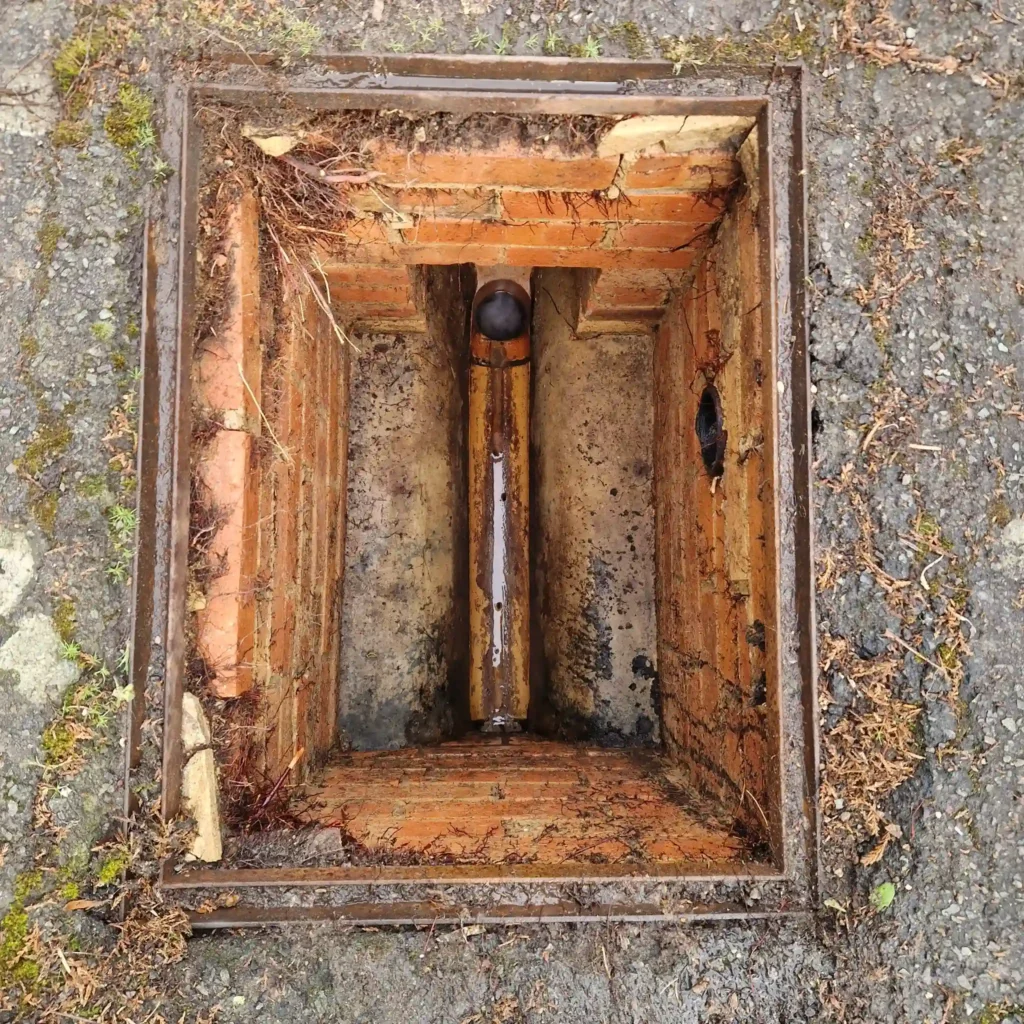
Once the root mass and associated debris had been removed, the drainage flow improved and the backed-up system could finally discharge properly again. The chambers that had been overflowing were no longer under the same pressure because the blockage had been opened up.
This is the point where many customers feel immediate relief, and rightly so. The visible emergency has been controlled, the overflow has stopped, and the property is no longer at the same immediate risk of sewage backup.
However, that is not where responsible advice should stop.
During the job, it was clear that the roots had entered because the drain already had defects. The damage was pre-existing. We did not cause that damage; we uncovered the consequences of it. That distinction matters. When roots have developed to this extent, there is almost always a weakness somewhere in the system that gave them access in the first place.
For that reason, I recommended that the customer arrange professional drain repair as soon as possible through Drainage & Plumbing Ltd. Clearing the roots solved the emergency, but repairing the defective section is what helps prevent the problem from returning.
Why I Recommended Professional Drain Repair Straight Away
A lot of drainage problems are recurring for one simple reason: the blockage gets removed, but the cause gets left behind.
My recommendation to the customer was straightforward. Arrange proper professional drain repair as soon as possible. That was not a sales line. It was honest technical advice based on what I found on site.
That is especially true with roots. If roots entered through a crack, displaced joint, or damaged section of clay pipe, they are highly likely to come back unless that access point is properly repaired. You may buy some time by clearing them, but you have not removed the reason they got in.
Drain repairs matter in cases like this because they can:
- Remove the weak point allowing root ingress
- Restore the structural integrity of the pipe
- Reduce the chance of repeated blockages
- Protect the property from future backups
- Save money compared with repeated emergency callouts
For domestic homeowners, this is often the difference between solving the real issue and just managing the symptoms.
Signs You May Have a Tree Root Blockage in South London
Many people only discover root ingress once a major overflow happens. Even so, there are usually warning signs earlier on. Recognising those signs can help you act sooner and avoid a more serious emergency.
Common signs include:
- Slow-draining toilets, baths, sinks, or gullies
- Repeated blockages that keep coming back
- Gurgling sounds in the drainage system
- Bad smells outside or near inspection chambers
- Wastewater sitting high in a manhole
- Water backing up after heavy usage
- Wet ground or unusual soft patches near drains
- Overflowing chambers during normal household use
If your property has mature trees nearby and you notice one or more of these issues, it is worth treating the situation seriously. A tree root blockage in South London will usually worsen over time, not improve on its own.
Not all drain blockages are caused by tree roots. In many South London properties, fat, grease, and food waste can also build up and create serious obstructions. You can see a real example in our guide, Exposed: See The Massive Fat Blockage Behind Your Sink, which shows how kitchen waste can restrict drainage flow over time.
Why Real Experience Matters on Jobs Like This
One thing I always say is that drainage work is not just about equipment. Experience matters. The ability to read a system, understand what the chamber levels are telling you, judge where the issue is likely to be, and know how to clear it properly all comes from years of practical work.
On this job, experience helped identify very quickly that the blockage was not just a routine domestic issue. The chamber conditions, the layout, the age of the system, and the behaviour of the drainage run all pointed towards a more serious cause. That allowed the right approach from the start.
For customers, that matters because drainage emergencies are stressful. You want someone who understands not only how to unblock the line, but also how to explain the issue honestly and recommend the next step properly.
Why This Type of Content Matters for Homeowners
I do not write case studies like this just to tell a story. I share them because they help homeowners understand what can really be happening underground. A blocked drain is not always “just a blockage.” Sometimes it is the visible sign of a more serious hidden issue.
This particular job is a strong example of how roots can take over a drainage line, especially in older clay systems. It also shows why acting early matters. By the time a manhole is overflowing, the issue has usually been building for quite some time.
If your property is in Coulsdon, Purley, Croydon, Sutton, Bromley, or the wider South London area, and you have trees close to your drainage line, it is sensible to stay alert for warning signs.
Mid-Article Call to Action
If you are dealing with a blocked drain, overflowing manhole, or repeated drainage issues, do not leave it until the problem gets worse. A severe tree root blockage in South London can lead to bigger repairs, higher costs, and serious disruption if it is ignored.
Call Drainage & Plumbing Ltd on 07771200075 for fast, honest help from a local drainage specialist.
Why This Job Was a Lead-Generating Case Study, Not Just an Informational Story
For my website, I do not want content that only attracts casual readers who never make contact. I want the right kind of traffic. That means homeowners, landlords, and property managers who are actively dealing with drainage issues and need professional help.
That is why this case study is valuable. It combines real experience, local relevance, practical advice, and commercial intent. It is not empty theory. also it shows the type of serious blockage that can happen at a real domestic property and the kind of specialist work needed to resolve it.
When people search online for drainage help, they are often looking for one of three things:
- reassurance that somebody understands the problem
- proof that the company has real experience
- confidence that they are calling the right specialist
A real tree root blockage in South London case study helps with all three.
Areas Where We Commonly See Root-Related Drainage Problems
Over the years, I have seen root ingress across many areas of South London and nearby parts of Surrey. It is especially common in locations where there are mature gardens, older homes, boundary trees, and clay drainage systems.
Areas where these problems frequently appear include:
- Coulsdon
- Purley
- Croydon
- Sanderstead
- Kenley
- Sutton
- Bromley
- Caterham
- Surrey border areas
- South London residential streets with older pipework
That does not mean every property in these places has root problems. However, it does mean the local housing stock and environment make root ingress more common than many people realise.
What Makes Drainage & Plumbing Ltd Different
At Drainage & Plumbing Ltd, we focus on drainage work. That is important because specialist drainage issues need specialist drainage knowledge. We are not trying to be everything at once. We deal with blocked drains, emergency drain unblocking, drain cleaning, jetting, and professional drain repairs.
That specialist focus matters on jobs like this one because the problem is not always obvious at first. A severe tree root blockage in South London needs the right diagnosis, the right equipment, and the right recommendation afterwards.
Customers choose us because we offer:
- fast emergency response
- experience with difficult blockages
- honest advice after inspection
- proper drainage-focused service
- practical repair recommendations
- local coverage across South London and surrounding areas
Most importantly, we deal with real drainage problems every day. That hands-on experience helps us solve issues properly and guide customers towards the right long-term fix.
The Cost of Ignoring Root Ingress
Some homeowners delay dealing with drainage problems because the system seems to recover for a while after a temporary backup. Others may use off-the-shelf drain products and assume the issue is solved. Unfortunately, root ingress does not work like that.
When roots are in the line, the risk usually increases over time. If the defective area remains open, the roots can continue growing and trapping more material. That can lead to:
- repeated blockages
- more frequent emergency callouts
- worsening smells and overflows
- greater internal pipe damage
- a more expensive repair later
In other words, ignoring a tree root blockage in South London often turns a manageable issue into a bigger one.
How Homeowners Can Reduce the Risk
No drainage system is completely immune from root problems, especially in older properties. Even so, there are sensible steps homeowners can take to reduce the risk.
1. Do not ignore early signs
Slow drains, repeated backups, and bad smells should never be dismissed, especially where trees are nearby.
2. Be cautious with mature trees near old drains
Large trees and old clay drains are not always a good combination. Their relationship should be considered seriously.
3. Act on recurring seasonal issues
If the same drainage symptoms happen every spring, there may be an underlying root problem.
4. Repair known defects promptly
A cracked or displaced pipe section is an open invitation for roots.
5. Use a drainage specialist
General guesswork can waste time. Proper drainage inspection and specialist advice are more effective.
Frequently Asked Questions
How do tree roots get into drains?
Tree roots enter drains through existing weak points such as cracks, displaced joints, poor connections, or damaged sections of pipe. Once they find moisture, they continue to grow inside the drain.
Can tree roots block a drain completely?
Yes. In serious cases, roots can create a very dense blockage that traps waste and restricts flow so badly that the system backs up and manholes overflow.
Are clay drains more vulnerable to root ingress?
Older clay drains can be more vulnerable because joints and pipe sections may weaken over time, creating entry points for roots.
Can high-pressure water jetting remove tree roots?
Jetting is an effective part of the clearing process, especially when used professionally. It helps break down debris, flush root material, and reopen the line. However, if the roots entered through a damaged pipe, repair may still be needed afterwards.
Will the roots come back after the drain is cleared?
They can. If the defect that allowed them in is not repaired, roots may re-enter and the blockage may return.
Do I need drain repair after root removal?
In many cases, yes. If root ingress happened because of a damaged or weakened section of drain, repairing that defect is the best way to reduce the chance of future problems.
Do you cover Coulsdon and nearby areas?
Yes. Drainage & Plumbing Ltd covers Coulsdon, Purley, Croydon, Sutton, Bromley, and surrounding South London and Surrey areas.
Do you offer emergency drain unblocking?
Yes. We provide fast-response emergency drain unblocking for domestic and commercial properties across our coverage area.
Final Thoughts – Do Not Ignore a Tree Root Blockage in South London
This real case at a semi-detached domestic property in Coulsdon is a perfect example of why root ingress should never be ignored. What started as an overflowing manhole turned out to be a severe tree root blockage in South London, hidden inside an older clay drainage system.
The emergency was cleared using professional methods, including high-pressure water jetting and removal of the root mass. However, the bigger lesson is this: when roots get into a drain, there is usually an underlying defect that also needs attention.
If you leave that defect in place, the problem can return. That is why I advised the customer to arrange professional drain repair as soon as possible with Drainage & Plumbing Ltd. In my experience, that is the responsible way to deal with severe root ingress and protect the property long term.
If your drains are backing up, your manhole is overflowing, or you suspect roots may be causing repeated blockages, get the issue looked at early. Fast action can save you stress, damage, and higher costs later.
Need Help with a Tree Root Blockage in South London?
If you are dealing with a blocked drain, overflowing chamber, bad smells, or signs of root ingress, contact Drainage & Plumbing Ltd today.
We provide specialist help with:
- emergency drain unblocking
- blocked drains
- high-pressure water jetting
- drain cleaning
- root-related drainage problems
- professional drain repairs
Call now: 07771200075
Drainage & Plumbing Ltd
Your local drainage specialist for South London and surrounding areas.