
 Nima Fazli-Pour
 Blocked drains always seem to happen at the worst possible time. Whether it’s a slow-draining sink, a blocked toilet, or water backing up in your shower, the problem quickly becomes stressful. Many homeowners try using a drain snake or auger, but using it incorrectly can actually make the blockage worse.
This guide explains how to use a drain snake properly, when it works, when it doesn’t, and when you should stop and call a professional drain unblocking service.
⚠️ LIVE IN SOUTH EAST ENGLAND? (Croydon, Sutton, Bromley) Stop! If you are in our service area, you don’t need to do the dirty work. We can clear this blockage today.
[Check Availability in Your Area Here] or Call 24/7: 07771 200075
What is a Drain Auger? (And Which Type Do You Need?)
A drain snake (also called a drain auger) is a flexible cable designed to reach inside pipes and break up blockages. It rotates as you feed it into the drain, allowing the corkscrew tip to hook hair, grease, or debris.
There are three main types:
Manual Hand Auger
Best for:
- bathroom sinks
- showers
- bathtubs
Good for small clogs caused by hair or soap buildup.
Toilet Auger
Designed specifically for toilets. It includes a protective sleeve to prevent scratching the porcelain.
Never use a standard drain snake in a toilet — this is a common mistake.
Electric Drain Auger
Used for:
- deep blockages
- main drain lines
- external drains
These are powerful and can damage pipes if used incorrectly.
Safety Tips Before Using a Drain Snake
Before starting, keep these safety rules in mind:
- Never use after chemical cleaners (risk of burns)
- Wear gloves and eye protection
- Remove standing water if possible
- Work slowly and avoid forcing the cable
Most pipe damage happens because people push too hard.
How to Use a Manual Drain Auger on a Sink – Step-by-Step
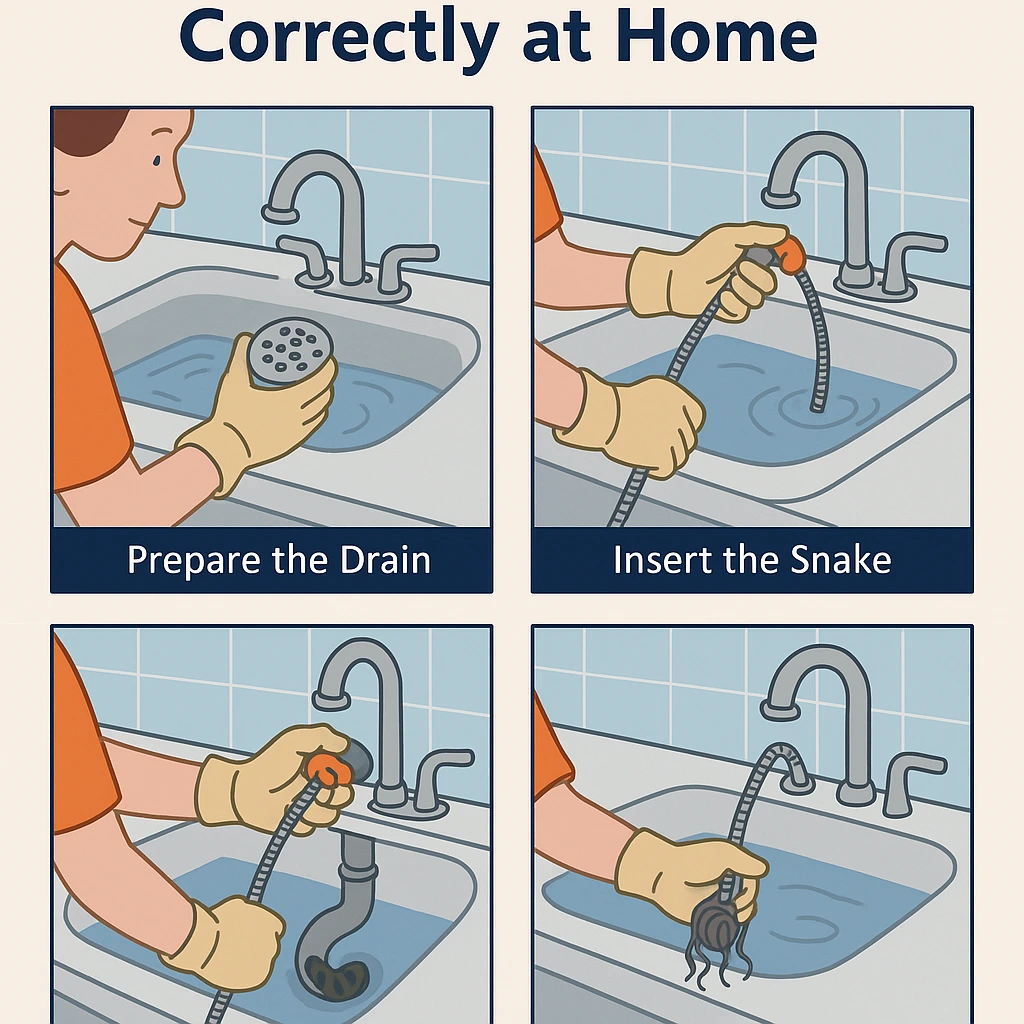
If you are sure it’s a simple clog in a sink or tub, follow these steps to use the tool correctly.
Step 1: Prepare the Drain
Remove the pop-up stopper or strainer.
- Pro Tip: For bathroom sinks, the clog is often in the P-trap (the U-shaped pipe under the sink). Place a bucket underneath, unscrew the P-trap, and clean it out by hand first. This is often easier than snaking!
Step 2: Insert the Cable
Loosen the thumbscrew on the drum. Feed the tip of the cable into the drain slowly. Push gently by hand until you feel resistance. This is usually the bend in the pipe (the trap).
Step 3: Rotate and Advance
Tighten the thumbscrew so the cable is locked. Rotate the handle clockwise while applying gentle forward pressure. This allows the snake to “slither” around the corner of the pipe.
- Note: You may need to loosen the screw, pull out more cable, tighten it again, and keep rotating.
Step 4: Hook the Blockage
When the cable stops moving freely and feels “mushy” or soft, you have hit the clog. Keep rotating to let the corkscrew tip hook into the hair or debris.
Step 5: Pull it Out
Slowly retract the cable back into the drum. If you pull out a clump of hair or soap scum, you succeeded! Run hot water for 2–3 minutes to flush the remaining debris.
How to Use a Toilet Auger Properly
- Place the protective boot into the toilet outlet
- Rotate the handle slowly
- Push gently into the trap
- Reverse the handle to remove
Never force the cable — toilets crack easily.
⚠️ Troubleshooting: What if the Snake Gets Stuck?
This is a common panic moment for DIYers. If the snake refuses to move forward or backward:
- Do NOT pull hard: You might snap the cable or break the pipe.
- Rotate backwards: Turn the handle counter-clockwise slowly while gently pulling back.
- Call a Pro: If it is truly stuck, it may be wrapped around a tree root or caught in a collapsed pipe section. Forcing it will result in an expensive excavation job.
Need help extracting a stuck tool? We have specialized retrieval gear. Call Drainage & Plumbing LTD at 07771 200075 before you cause permanent damage.
Common Mistakes to Avoid
We see this every day in Croydon and Bromley. A homeowner tries to fix it, but makes the problem worse.
- Forcing the cable: Pushing too hard does not clear the clog; it breaks pipes.
- Skipping the clean-up: If you don’t wash the snake after use, it will rust and smell terrible.
- Ignoring the “Clunk”: If you hear a loud noise while snaking, you may have cracked the pipe.
- Using the wrong tool: A sink auger is too small for a 4-inch main line; it will just flip over inside the pipe and get tied in a knot.
Prevention: How to Stop Clogs Returning
Once you know how to use a drain auger, you should focus on never needing it again.
- Install Drain Strainers: These cheap mesh screens catch hair and food before they enter the pipe.
- Grease Control: Never pour oil or grease down the sink. It hardens like concrete. Wipe pans with a paper towel first.
- Hot Water Flushes: Once a week, pour a kettle of boiling water down the sink to melt building-up soap scum.
- Enzyme Cleaners: Use biological enzyme cleaners (not harsh chemicals) once a month to eat away organic buildup.
When DIY Fails: The “Red Flags”
Sometimes, a snake isn’t enough. If you followed the steps above and the drain is still slow, you have a secondary issue that requires professional equipment.
You need to call a professional if:
- The clog comes back in 48 hours: This means you just poked a small hole in the sludge, but didn’t clean the pipe walls. You need Hydro-Jetting.
- Bad Smells: A rotten egg smell indicates a sewer backup deep in the line or a dry P-trap.
- Multiple Clogs: If the sink and the toilet are clogged, or if water comes up in the shower when you flush the toilet, the problem is in your Main Sewer Line. A hand snake cannot fix this.
Fast Drain Cleaning in South East England
Don’t let a blocked drain ruin your home. As drain unblocking specialists, Drainage & Plumbing LTD serves Croydon, Sutton, Wallington, Coulsdon, Bromley, and the wider area.
We use advanced technology that you can’t rent at the hardware store:
- CCTV Camera Inspections: We insert a camera to see exactly what is blocking the pipe (roots, grease, or collapse).
- High-Pressure Hydro-Jetting: We use 4000 PSI water jets to scrub the inside of your pipes, restoring them to “like-new” condition.
- No-Dig Technology: We can often fix broken pipes without digging up your driveway.
Get it fixed right the first time. 📞 Call: 07771 200075 📧 Email: support@drainage-plumbing.co.uk 🌐 Book Online
FAQ Section
How do you use a drain snake properly?
To use a drain snake properly, insert the cable slowly into the drain, rotate the handle clockwise, and apply gentle pressure. When you reach the blockage, continue rotating to hook debris, then pull the cable back carefully and flush the drain with hot water.
Can a drain snake damage pipes?
Yes. A drain snake can damage pipes if forced too hard or used incorrectly. Older pipes, plastic pipes, and clay drains are especially vulnerable to cracking or scratching.
Why is my drain still blocked after using a snake?
If your drain is still blocked, the problem may be deeper in the system. Common causes include grease buildup, tree roots, collapsed pipes, or a main sewer line blockage.
Should I use chemicals before using a drain snake?
No. Using chemicals before snaking is dangerous. The spinning cable can splash chemical water and cause burns to your skin or eyes.
When should I call a professional instead of using a drain snake?
You should call a professional if multiple drains are blocked, the blockage returns quickly, there are bad smells, or water backs up in other fixtures.
Final Word
Knowing how to use a drain snake is a practical skill that can save you money on small, simple clogs. However, if the problem keeps coming back or affects multiple drains, a professional inspection is the only way to solve it permanently.
For fast, reliable help, Drainage & Plumbing LTD is always ready to keep your plumbing in perfect working order.
No comments yet. Be the first to leave a review.
Comments are closed for this post.