

There’s nothing worse than coming home after a long day and being greeted by an unpleasant smell lingering in the air. A foul odour drifting up from your drains can quickly turn a cosy, welcoming space into somewhere you’d rather avoid.
Whether it’s a sudden rotten egg smell in the kitchen, a damp musty scent in the bathroom, or a heavy sewage-like odour creeping through the hallway, drain smells should never be ignored. They don’t just appear out of nowhere. In most cases, they’re your home’s way of warning you that something isn’t functioning properly below the surface.
It’s tempting to reach for a quick fix. Candles, air fresheners, strong chemical cleaners — they might mask the smell for a while. But if the real issue is deeper inside your pipework, that unpleasant odour will almost certainly return.
Let’s look at what actually causes drains to smell — and what you can realistically do about it.
Quick Answer: What Causes Smelly Drains?
In most homes, unpleasant drain smells are caused by one of three common issues:
- A dry P-trap allowing sewer gases to escape
- A build-up of bacteria and grease (also known as biofilm)
- Trapped, decomposing food waste
In mild cases, running hot water or using baking soda and vinegar can help. However, if the smell resembles sewage and keeps coming back, the problem could involve a blocked vent pipe or even a main sewer line issue — which usually requires professional attention.
As drainage specialists working across South East England, we deal with blocked and smelly drains every day. We’ve seen minor issues escalate into serious problems — and we know what genuinely works.
This guide will explain the real causes behind drain odours, outline practical DIY solutions, and help you recognise when it’s time to call in an expert.
We’ll also share a real-life example of a case where what seemed like a minor smell turned out to be a completely blocked external manhole.
Let’s get started.
Why Do Drains Start Smelling?
Drain odours are usually caused by trapped gases, bacteria, waste build-up, or excess moisture in areas where it shouldn’t be. These issues tend to develop gradually, which is why the smell often becomes noticeable only once it’s quite strong.
Here are the most common culprits:
Dry P-Traps: The Hidden Cause of Rotten Egg Smells
Every sink, shower, bath, and toilet has a curved pipe underneath called a P-trap. Its purpose is simple but essential: it holds a small amount of water that acts as a barrier, preventing sewer gases from travelling back into your home.
When that water seal is intact, everything works as it should.
But if a drain isn’t used regularly, the water inside can evaporate. Once that happens, nothing stops sewer gases from rising up through the pipe.
This is especially common in:
- Guest bathrooms
- Utility sinks
- Basement floor drains
- Spare showers
Typical smell: Sulphur, rotten eggs, or sewage.
Simple fix: Run the tap for a minute to restore the water seal.
Biofilm Build-Up: The Source of Musty Drain Odours
Over time, a sticky layer of bacteria and organic material can form inside your pipes. This is known as biofilm.
In kitchens, it’s usually made up of:
- Grease
- Cooking oils
- Food residue
- Soap deposits
In bathrooms, it often contains:
- Hair
- Dead skin
- Toothpaste
- Shampoo and soap
Bacteria feed on this material and release unpleasant gases, which create that sour or stagnant smell.
Typical smell: Musty, mouldy, or sour water.
Trapped Food Waste in Kitchen Pipes
Even if it looks like food has washed away, tiny particles can cling to pipe walls or get caught in bends and traps. As they break down in the damp, dark environment, strong odours develop.
That’s why kitchen sink smells are often strongest right at the plughole.
Blocked or Damaged Vent Pipes
Your drainage system relies on airflow to function correctly. Vent pipes (also called soil stacks) allow sewer gases to escape safely above your roofline.
If these vents become blocked — by leaves, debris, nests, or even ice — pressure imbalances can occur. In some cases, flowing water can actually pull water out of your P-traps, breaking the protective seal.
When this happens, sewer gases can enter multiple rooms at once.
Main Drain or Sewer Line Problems
Persistent, heavy smells may indicate a deeper issue within the main drainage system. Possible causes include:
- Cracked or collapsed pipes
- Tree root intrusion
- Sagging pipe sections
- Severe blockages
When waste cannot flow away properly, it accumulates and begins to decompose. The gases created have to escape somewhere — and often that means through the lowest fixtures in your home.
Mould and Mildew Growth
Dark, damp spaces are ideal environments for mould. It can develop in shower traps, overflow pipes, under sinks, or inside wall cavities.
If the smell worsens after hot showers or during humid weather, mould may be the real cause.
Typical smell: Earthy, damp, or stale.
Hidden Pipe Leaks
Small leaks beneath sinks, behind walls, or under floors can create constant moisture. Over time, this leads to damp materials, hidden mould, and even structural damage.
Sometimes the smell isn’t coming from the drain itself — but from rotting materials around it.
If you notice damp patches alongside unpleasant odours, a leak is highly likely.
Real Case Study: When a “Minor Smell” Wasn’t So Minor
A recent customer contacted us about a persistent sewage smell in their ground-floor bathroom and hallway.
They had already tried:
- Strong cleaning chemicals
- Store-bought drain unblockers
- Air fresheners
- Flushing with boiling water
Nothing worked. Since water seemed to drain normally, they assumed the pipes were simply old.
Our Investigation
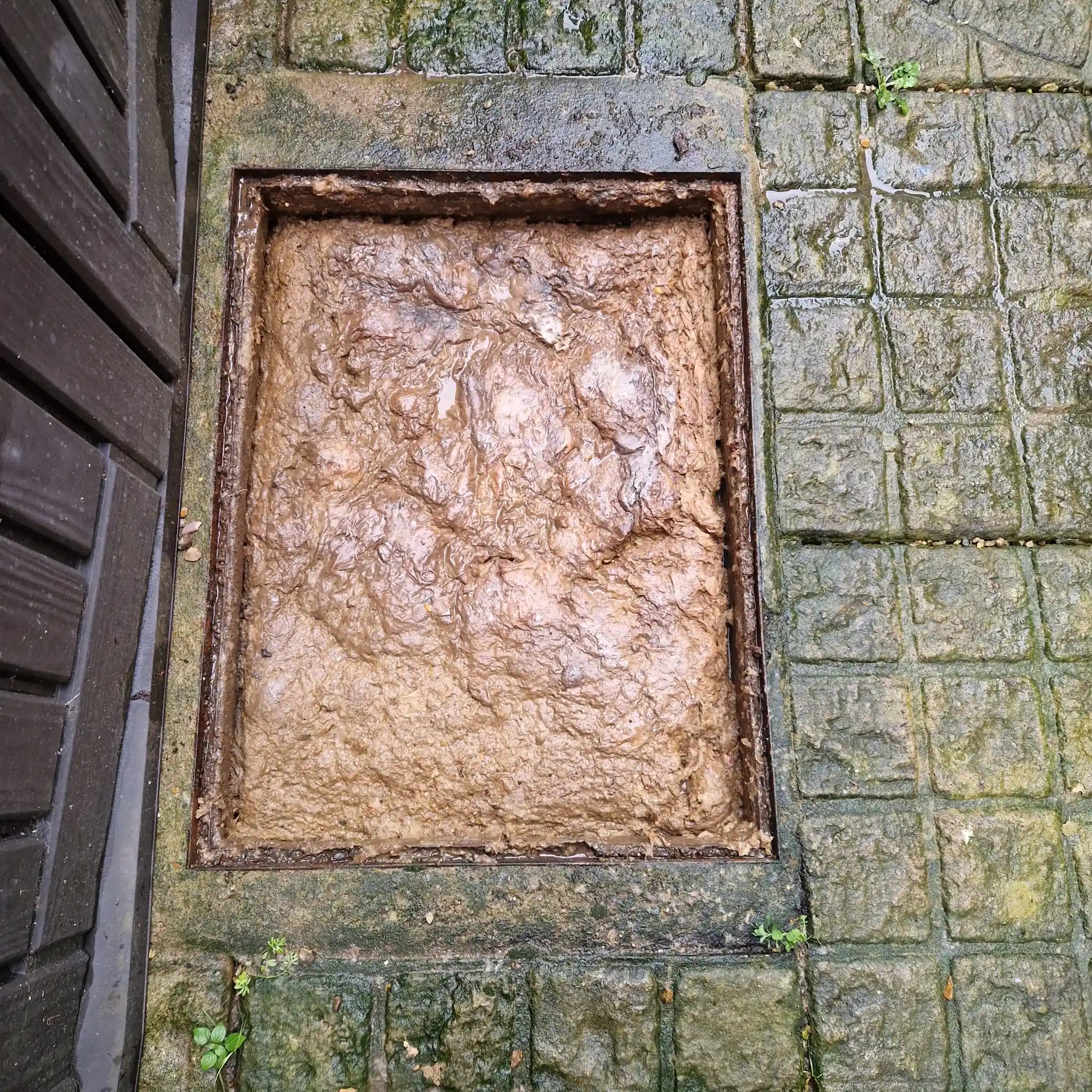
We inspected the external manhole and lifted the cover. The chamber was completely full.
A heavy build-up of grease, debris, and non-flushable materials had caused a severe blockage. Waste had been slowly backing up underground, releasing gases that travelled back through the system and into the house.
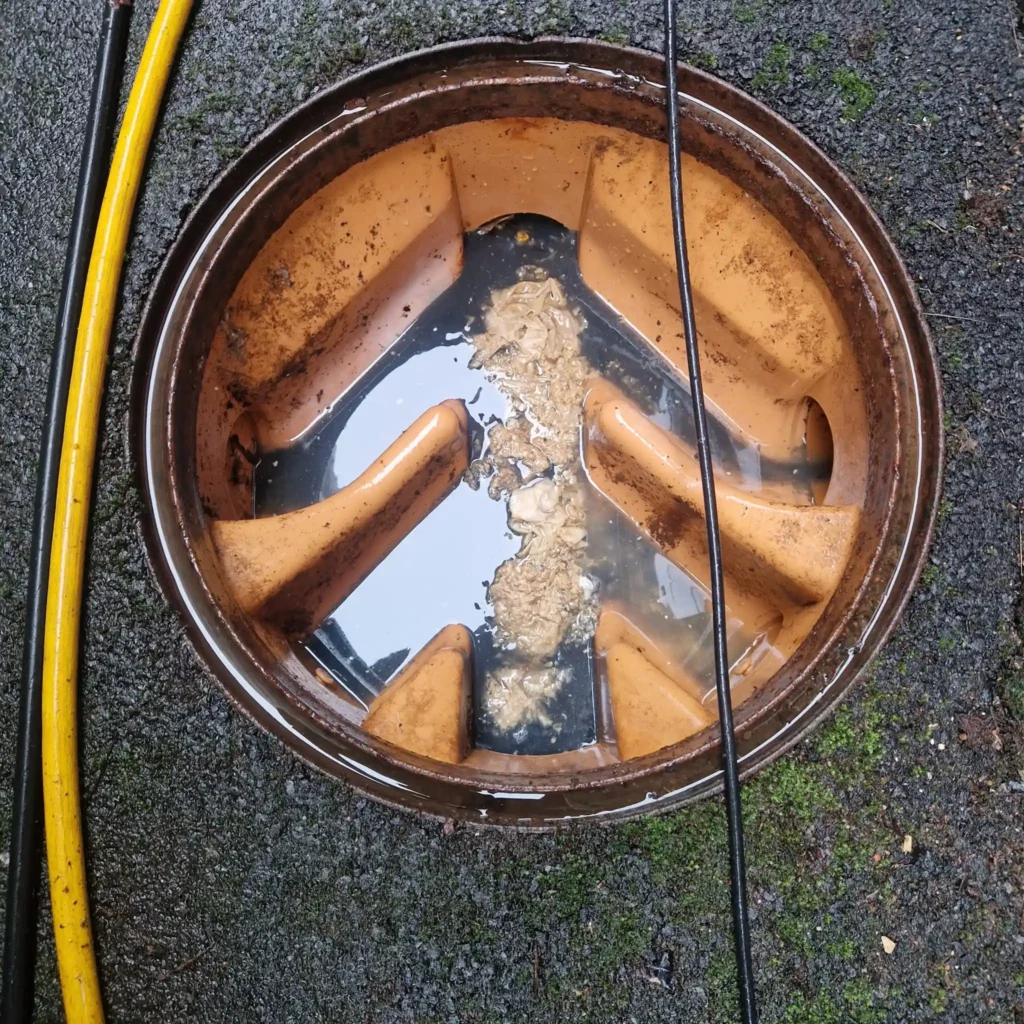
There was no indoor flooding yet — but it was only a matter of time.
The Solution
Using high-pressure water jetting, we cleared the blockage and cleaned the chamber thoroughly.
Within an hour, the smell had disappeared entirely.
This case highlights an important lesson: persistent smells often signal a much larger issue below ground.
Practical DIY Solutions for Mild Drain Smells
If the issue is minor and caught early, you can try:
✔ Run Water Regularly
Keep rarely used drains active by running water weekly to maintain the P-trap seal.
✔ Hot Water Flush
Pour very hot (not boiling) water down kitchen drains weekly to break down grease.
✔ Baking Soda & Vinegar
Half a cup of baking soda followed by one cup of white vinegar. Let it sit for 15 minutes, then flush with hot water.
✔ Clean Plugholes
Remove hair and debris from strainers and stoppers regularly.
✔ Use Enzyme Cleaners
These break down organic waste naturally without damaging pipework.
When to Call a Professional
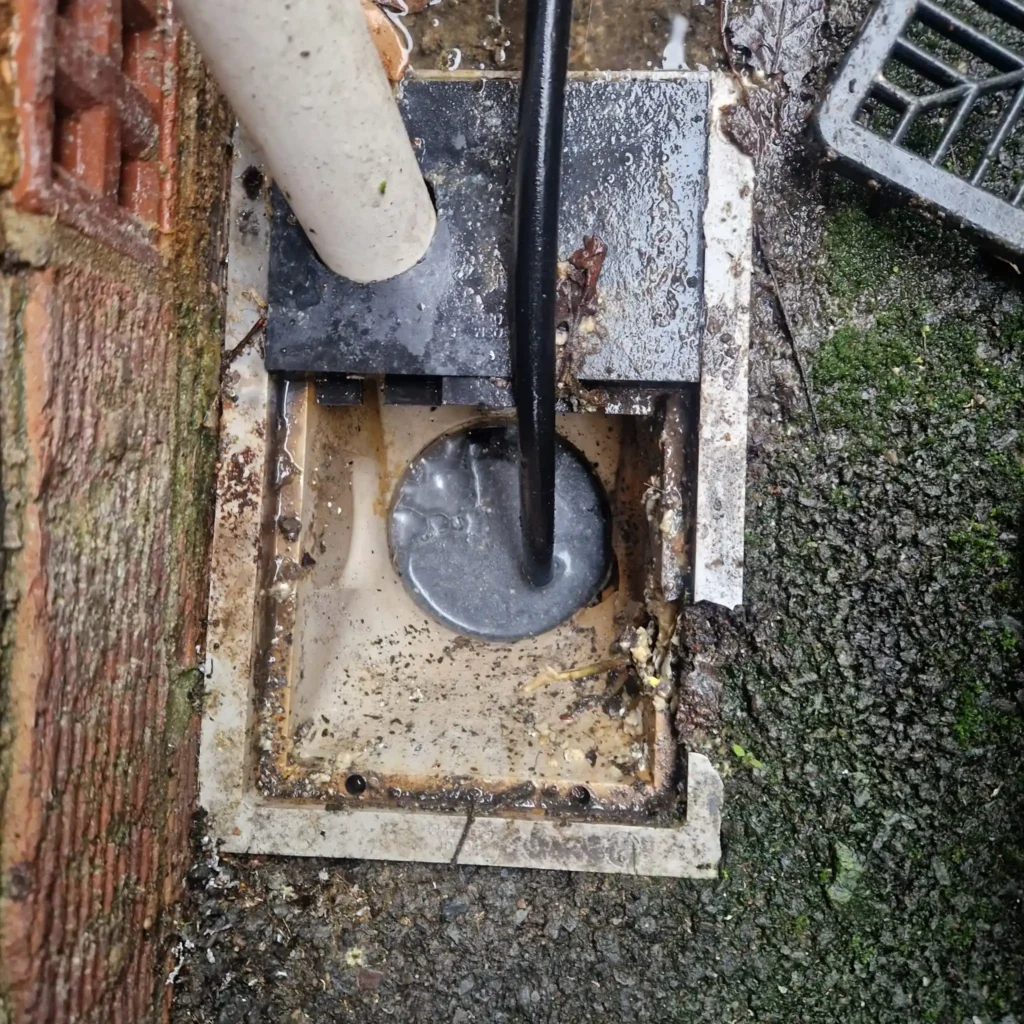
DIY solutions are effective for surface-level issues. But if the smell keeps returning, the problem may be deeper within the system.
Seek professional help if:
- The smell quickly comes back
- Multiple drains smell at once
- Water drains slowly
- Toilets gurgle when sinks run
- Outdoor manholes are overflowing
- The odour is strongest outside your property
These signs often indicate a system-wide blockage.
Professional Drainage Services in South East England
At Drainage & Plumbing Ltd, we provide comprehensive inspection and repair services, including:
- Emergency drain unblocking
- CCTV drain surveys
- High-pressure water jetting
- External manhole clearance
- Sewer line inspection and repair
- Advanced leak detection
Using modern equipment, we identify the root cause quickly and efficiently — without unnecessary disruption.
Areas We Cover
We provide rapid-response services across South East England, including:
Croydon, Sutton, Wallington, Coulsdon, Banstead, Bromley, Mitcham, Epsom, Reigate, Redhill, Leatherhead, Kingston upon Thames, Wimbledon, Richmond, Caterham, Guildford, Crawley, and Haywards Heath.
Frequently Asked Questions
Why do drains smell worse at night?
Lower water usage allows gases to build up and become more noticeable.
Are drain smells harmful?
Yes. Sewer gases contain methane, ammonia, and hydrogen sulphide. Prolonged exposure can cause headaches, nausea, and irritation.
Why does my drain smell after heavy rain?
Heavy rainfall can overload public sewers and push gases back into residential systems.
Is bleach a good solution?
Not really. Bleach may kill surface bacteria but won’t remove physical build-up — and overuse can damage pipes.
How often should drains be cleaned professionally?
Typically every 12–24 months, depending on household usage.
Can a blocked outdoor manhole cause indoor smells?
Yes. Trapped waste releases gases that travel back through your internal pipes.
Final Thoughts
Drain smells are never random. They are clear signs of trapped waste, ventilation issues, hidden leaks, or deeper blockages.
Addressing them early protects your property, your health, and your finances.
If you’re unsure about the source of the smell, seeking expert advice is often the most cost-effective step.
Need help eliminating a drain smell for good?
📞 Call: 07771200075
✉️ Email: support@drainage-plumbing.co.uk
One Response