
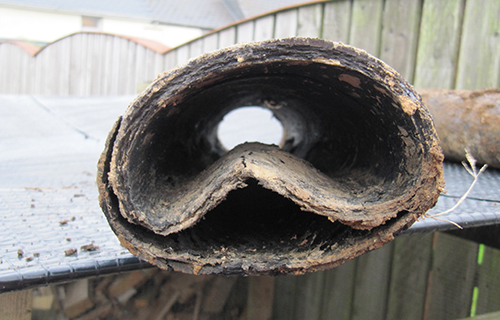
If your home was built between the 1950s and 1970s, there’s a good chance your drainage system includes pitch fibre pipes. These lightweight pipes were once considered a breakthrough, but today they’re one of the most common causes of repeated blockages, slow drains and even ground movement.
The positive news is that most pitch fibre drains can be repaired without digging up your driveway or garden. Modern no‑dig technology allows engineers to restore the pipe from the inside, saving time, money and disruption.
This guide explains everything you need to know in 2026 — from warning signs and repair options to costs, insurance and what to do if you’re buying a house with pitch fibre drains.
What Are Pitch Fibre Drains?
Pitch fibre pipes were widely installed across the UK between the 1950s and late 1970s. They were made from compressed wood fibres mixed with coal tar pitch, creating a lightweight and affordable alternative to clay pipes.
Why They Were Popular
- Much lighter than clay
- Easy to transport
- Quick to install
- Ideal for mass‑built housing estates
Why They Fail Today
Pitch fibre was originally marketed as long‑lasting, but in reality it has a lifespan of around 40–50 years. Most of these pipes are now well past that age, which is why so many homeowners are experiencing problems.
How Pitch Fibre Pipes Fail
Pitch fibre pipes tend to deteriorate in three predictable stages.
- Blistering (Delamination)
Hot water, fats and household chemicals cause the inner layers to bubble and peel. These blisters catch toilet paper and wipes, leading to frequent blockages. - Deformation (Squashing)
As the pipe weakens, soil pressure causes it to flatten. This restricts flow and traps air, which often creates gurgling noises. - Collapse
Eventually the pipe can flatten completely. At this point, excavation is usually the only option.
Common Signs Your Pitch Fibre Drains Are Failing
If you notice any of the following, it’s worth arranging a CCTV drain survey.
Recurring Blockages
If your drains block every few weeks, blistering is often the cause.
Gurgling or “Glugging” Sounds
When flushing the toilet causes sinks or baths to gurgle, the pipe may have squashed into an oval shape.
Dips or Cracks in the Ground
Small dips in the driveway or garden can indicate a collapsed pipe beneath the surface.
Neighbours Having Drain Repairs
Entire estates were often built with the same materials. If your neighbour’s pitch fibre has failed, yours may be in a similar condition.
The No‑Dig Solution: Pitch Fibre Re‑rounding and Lining
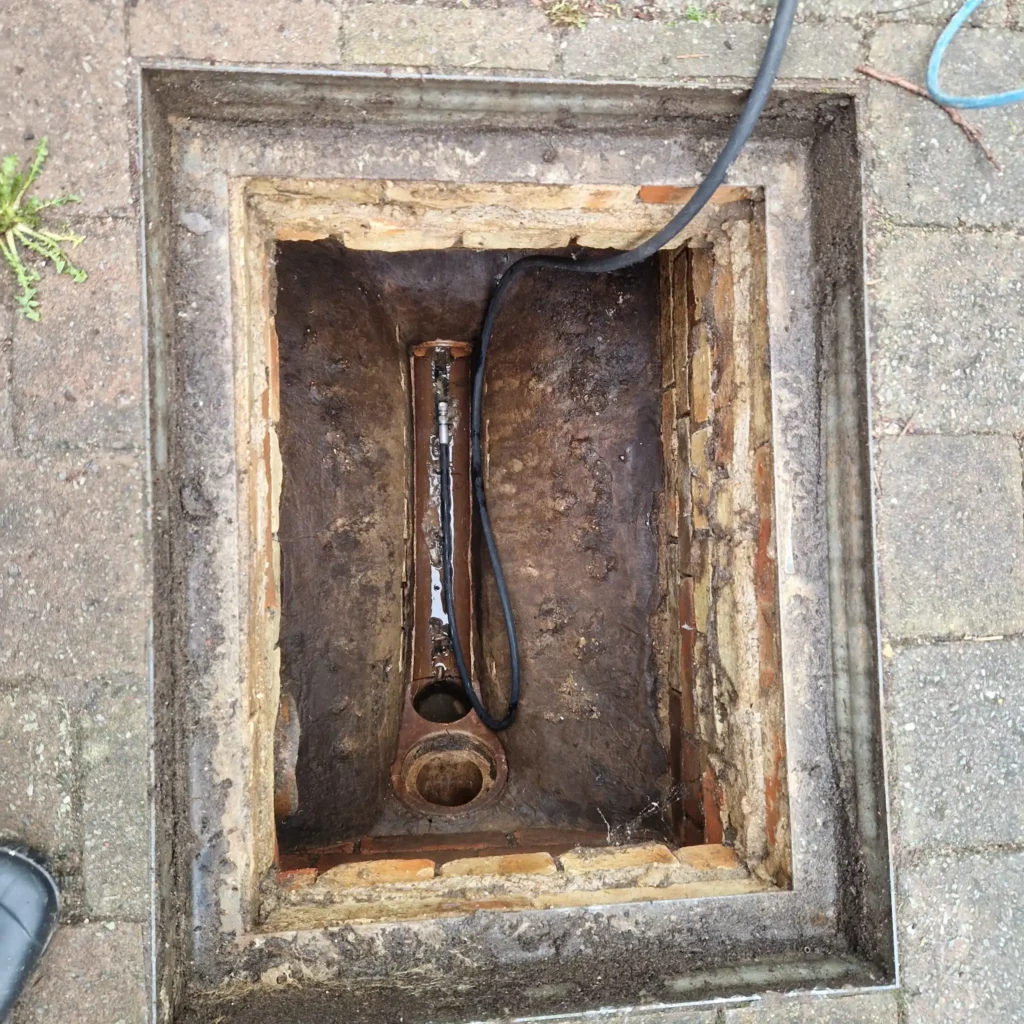
Modern trenchless technology allows engineers to repair pitch fibre pipes without excavation. This method is cleaner, faster and far more cost‑effective than digging.
Here’s how the process works.
Step 1: CCTV Survey and Cleaning
A camera is inserted to assess the condition of the pipe.
A specialist jetter then removes internal blisters and restores the original diameter.
Step 2: Mechanical Re‑rounding
A steel expander head is pulled through the pipe using a winch.
This pushes the squashed pipe back into a round shape.
Step 3: Installing a Structural Liner
A resin‑soaked liner is inserted and inflated.
It hardens into a strong, joint‑free plastic pipe inside the old pitch fibre shell.
Benefits of No‑Dig Repair
- No excavation
- No damage to driveways or gardens
- Completed in one day
- 50‑year lifespan
- Stronger than PVC
Excavation vs. No‑Dig Repair: Cost and Disruption
Most homeowners save between £2,000 and £6,000 by choosing no‑dig repair.
Buying a House Built Between 1950 and 1980?
Pitch fibre drains are extremely common in homes from this era.
However, standard RICS Homebuyer Surveys do not inspect the inside of drains.
The Risk
You move in, the drains back up, and a CCTV survey reveals a collapsed pitch fibre system.
Repairs can cost £5,000–£10,000, and the new homeowner is responsible.
The Solution
Before exchanging contracts:
- Arrange a CCTV drain survey
- Receive a full technical report
- Use the findings to negotiate the price
This simple step has saved buyers thousands of pounds.
Will Home Insurance Cover Pitch Fibre Repairs?
It depends on the policy.
Often Covered
- Sudden collapse
- Accidental damage
- Tree root intrusion
- Water damage to the property
Often Not Covered - Wear and tear
- Gradual deterioration
- Age‑related failure
Pitch fibre degradation is usually classed as “natural aging,” so insurers may reject claims unless collapse or damage has already occurred.
A detailed CCTV report can help support your case.
Frequently Asked Questions
Can pitch fibre be patch‑repaired?
It’s possible, but not recommended. The rest of the pipe is usually in the same condition, so patching one section often leads to another failure soon after.
How long does re‑rounding take?
Most jobs are completed within a single day.
How long does the liner last?
Modern liners are designed to last 50 years or more.
Do I need to replace the whole run?
If one section has failed, the rest is usually close behind. Full‑length lining is the most reliable long‑term solution.
Why Choose Drainage & Plumbing LTD
We specialise in pitch fibre re‑rounding and no‑dig repairs across the UK.
What You Get
- Free telephone consultation
- Fixed price quotes
- No hidden equipment fees
- 24/7 emergency response
- 50‑year guarantee on all liners
- Experienced drainage engineers
We’ve repaired thousands of pitch fibre systems nationwide.
Get Your Pitch Fibre Drains Fixed
If you suspect your drains are failing, don’t wait for a collapse.
A quick CCTV survey could save you thousands.
Drainage & Plumbing LTD
📞 07771 200075
📧 support@drainage-plumbing.co.uk
🌐 Our website
One Response