
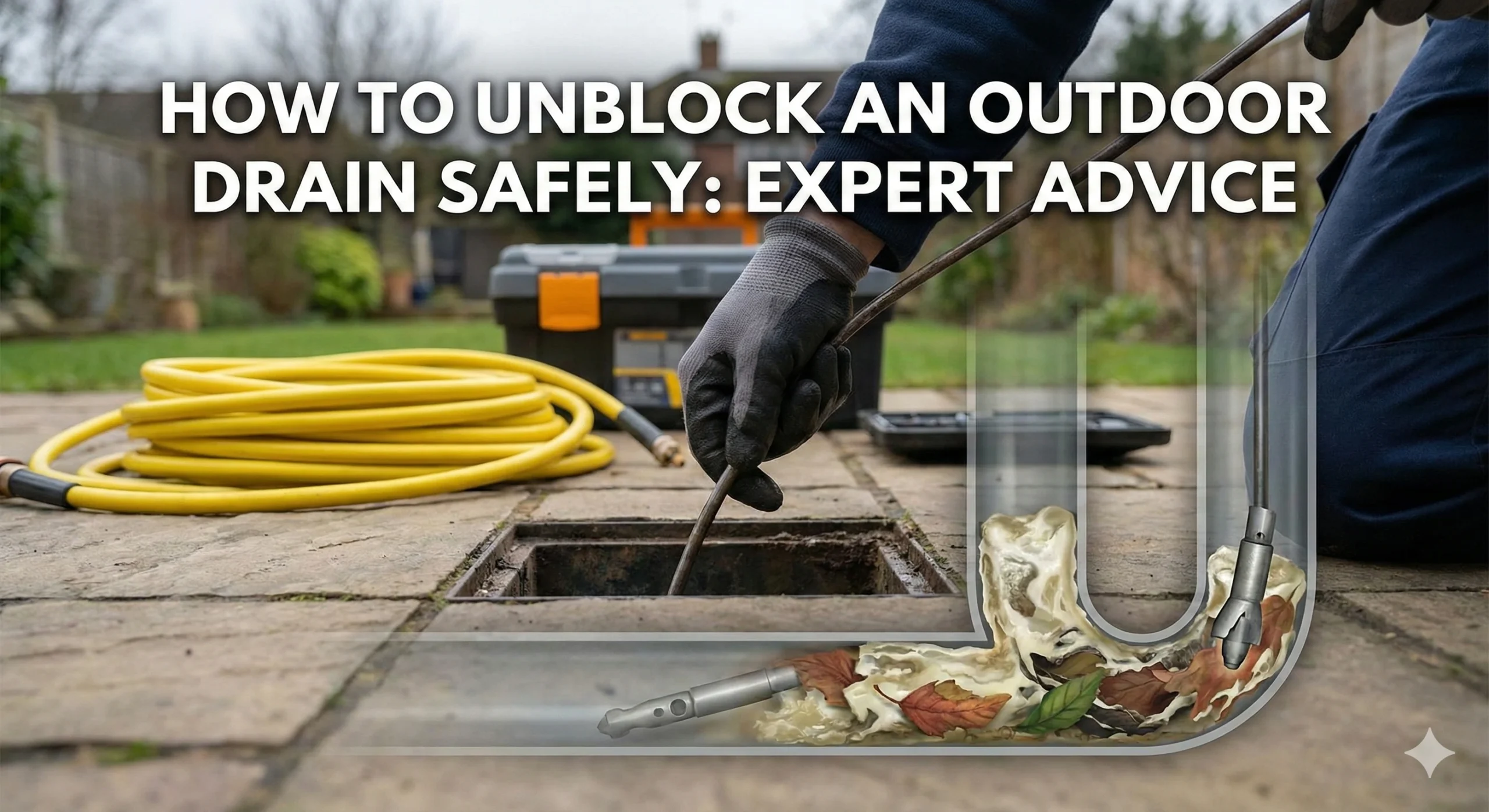
Outdoor drain blockages are one of the most common problems homeowners face, especially as the weather turns colder. After more than 17 years working hands-on in the drainage industry, I’ve seen how a small outdoor drain issue can quietly turn into a stressful and expensive situation when the wrong steps are taken.
At first glance, an outdoor drain looks simple. However, in reality, it plays a critical role in your home. In most properties, it collects kitchen wastewater and carries it into the main drainage system. In many cases, washing basins or bath waste pipes also connect to the same outdoor drain. As a result, it regularly handles grease, soap residue, food particles, and everyday waste.
Because of this constant workload, outdoor drains block far more often than people expect. Knowing how to unblock an outdoor drain safely—and knowing when to stop—is the key to avoiding unnecessary damage and cost.
What an Outdoor Drain Is Designed to Do
Outdoor drains are designed to move wastewater away from your home efficiently and safely. When they work properly, you rarely think about them. However, blockages tend to build slowly and out of sight.
Kitchen wastewater is usually the main cause. Even if you never pour fat down the sink, small amounts of grease pass through the system every day. Over time, as the water cools, that grease sticks to the pipe walls. If bathroom waste also feeds into the same drain, soap scum and fine debris combine with the grease and make the problem worse.
During colder months, this process accelerates. The ground temperature drops, grease hardens more quickly, and water flow slows down. This is often the point where homeowners start searching for how to unblock an outdoor drain, as the pipe narrows so much that water can no longer pass freely.
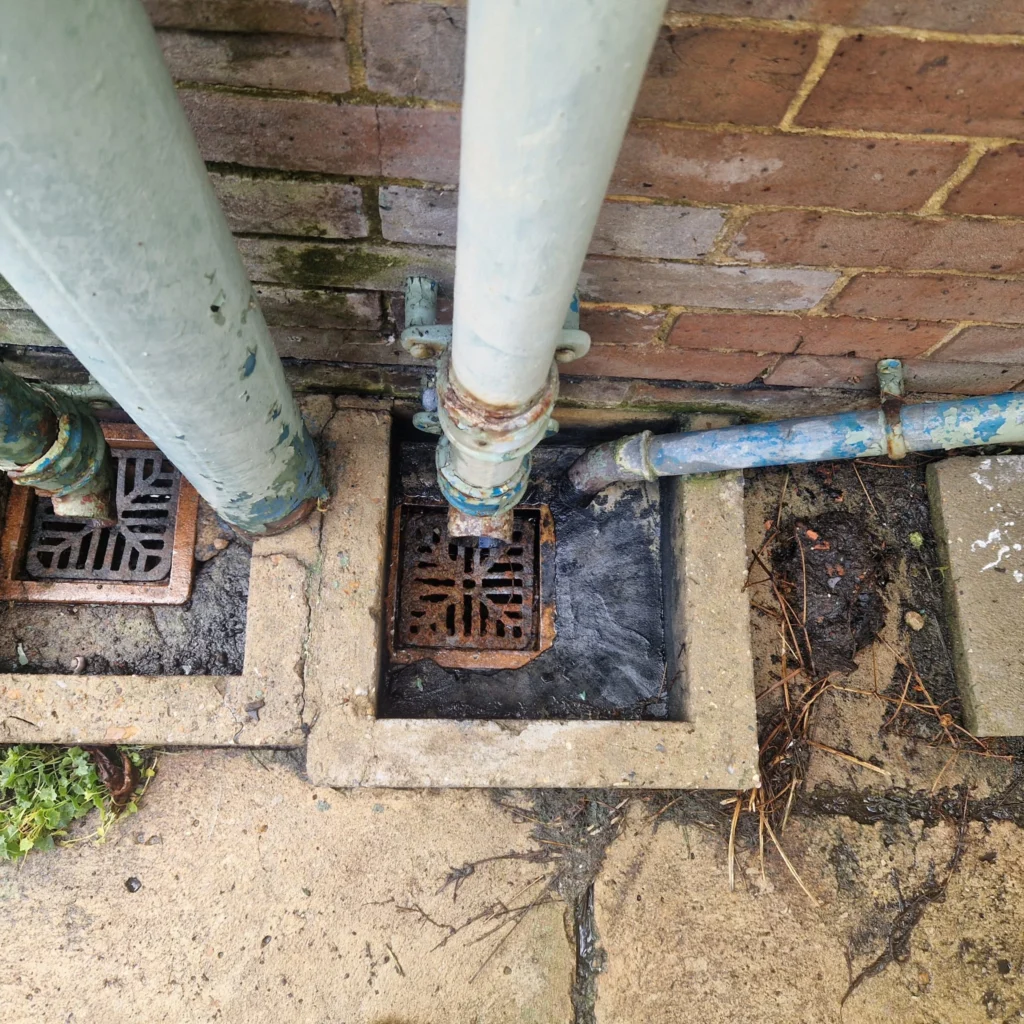
What Causes Outdoor Drains to Block?
To deal with a blockage properly, it helps to understand what is happening underground. In most cases, outdoor drain blockages are caused by a combination of factors rather than a single issue.
The most common causes include:
- Solidified grease
Fats and oils cool down in outdoor pipes and harden like candle wax. - Soap scum and debris
When bath or basin waste connects to the same drain, soap residue binds with grease and forms a solid mass. - Leaves and silt
External debris can wash through the drain grid and settle in the gully trap. - Cold weather
In winter, grease solidifies faster and water flow slows down, making blockages more likely.
For this reason, outdoor drain problems are often seasonal and appear more frequently during autumn and winter.
Early Warning Signs Your Outdoor Drain Is Blocked
Outdoor drain blockages rarely happen overnight. Instead, they usually give clear warning signs first.
Common signs include:
- Slow-draining kitchen sinks
- Gurgling or “glug-glug” sounds after using water
- Unpleasant smells near the gully or patio
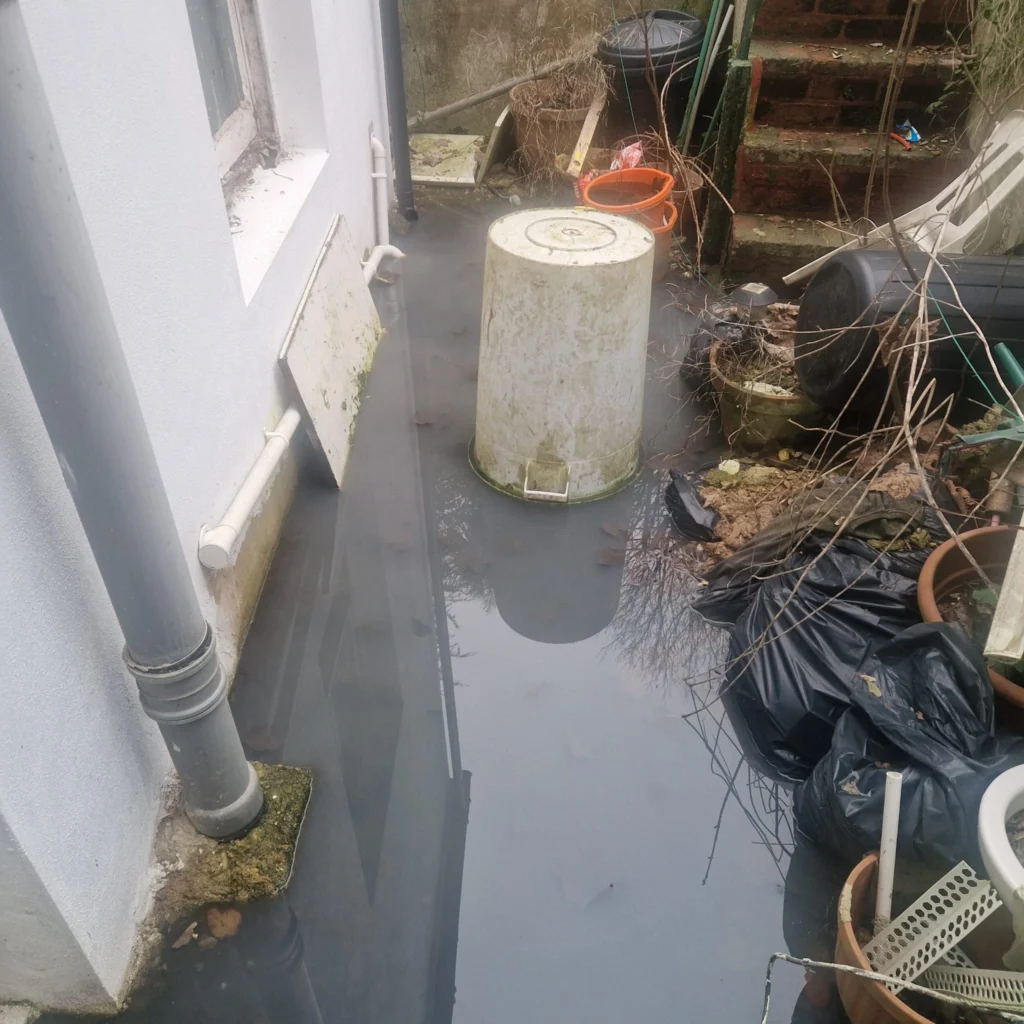
- Standing water around the drain cover
- Water backing up during heavy use
If you notice these signs early, you have a much better chance of resolving the issue before it escalates.
Cold weather and grease buildup are recognised causes of drain blockages. Water authorities such as Thames Water have also highlighted the impact of fats, oils, and food waste on household drainage systems
A Real Case Study: The Danger of DIY Rodding (Coulsdon, South London)
One job that always stays with me happened in Coulsdon, South London.
An elderly gentleman noticed his outdoor kitchen drain was overflowing. He was practical and wanted to save money, so he bought a set of drain rods and attempted to clear the blockage himself. This is a very common DIY approach.
At first, he felt resistance. Naturally, he pushed and twisted the rods harder, trying to break through the blockage. Then, suddenly, the rod felt light in his hands. When he pulled it back, the metal head—and part of the rod—had disappeared into the pipe.
The critical mistake
Drain rods screw together. If they are twisted anti-clockwise while underground, they simply unscrew. This often happens when someone hits resistance and tries to pull back.
The result
What started as a straightforward blockage turned into a complex retrieval job. We had to use a CCTV drain camera to locate the lost rod and specialist tools to remove it without cracking the pipe.
He was understandably upset and told me, “I wish I’d just called you first.” Once we cleared the drain properly, he felt relieved and later left us a very positive Google review. The experience taught him an expensive lesson he could have avoided.
Before Trying DIY, Ask Yourself One Simple Question
Before you attempt to unblock an outdoor drain yourself, pause for a moment and ask:
Why not book a free inspection first?
At Drainage & Plumbing Ltd, we often see situations where a short inspection or a friendly conversation could have prevented serious problems. During a free inspection, we can explain whether DIY methods are suitable and, in some cases, even show you how to use drain rods correctly and safely.
We also offer regular DIY guidance for customers who want to understand their drainage system better. These are not sales visits. Instead, they are about giving honest, practical advice.
Sometimes, a quick chat with one of our drainage experts is all it takes to understand:
- Whether DIY is safe in your situation
- What tools you should—or should not—use
- When stopping early will save money
A few minutes of advice can prevent hours of stress later.
How to Unblock an Outdoor Drain Safely (The DIY-Safe Method)
If you are confident the blockage is minor and you have taken advice, there are safe steps you can try.
Step 1: Manual cleaning
Put on long rubber gloves. Lift the drain grid and remove any visible leaves, silt, or debris from the gully trap. In some cases, the blockage is simply surface-level debris.
Step 2: Hot water flush
Boil a kettle, then allow it to cool slightly. Never pour boiling water directly into plastic pipes. Pour hot, soapy water down the drain to help soften grease buildup.
Step 3: Use a plunger
A heavy-duty plunger is often safer than drain rods. Create a seal over the drain opening, push down slowly, then pull up sharply. The suction can dislodge soft blockages without damaging the pipe.
When You Should Stop and Call a Professional
If the water is still standing after these steps, stop immediately.
Continuing to force the blockage often leads to:
- Compacted debris that is harder to remove
- Damaged pipe joints
- Lost tools inside the drain
At Drainage & Plumbing Ltd, we use high-pressure water jetting to cut through grease and debris safely. However, in many cases, a professional drainage inspection is the best first step, as it allows us to identify the cause of the blockage before any work starts. We also use CCTV drain cameras to confirm the drain is fully clear before we leave.
Advice From 17 Years of Hands-On Experience
Outdoor drain blockages are common, particularly in cold weather. However, costly mistakes are often avoidable.
From experience, one thing is clear:
Early advice saves money.
That’s why we offer free inspections. In many cases, the problem can be identified—or avoided—before it turns into a major repair.
📞 Call Drainage & Plumbing Ltd on 07771 200075
A friendly chat or free inspection can often save far more in the long run.
Frequently Asked Questions (FAQ)
How do I know if my outdoor drain is blocked?
Slow drainage, bad smells, standing water near the gully, and gurgling sounds are common early signs.
Can I use drain rods on an outdoor drain?
Drain rods can work in some situations. However, without knowing the drain layout, they can easily get stuck or cause damage.
Why do outdoor drains block more in winter?
Cold temperatures cause grease to harden faster. Combined with slower water flow and fallen leaves, winter creates the perfect conditions for blockages.
Are chemical drain cleaners safe?
Heavy chemicals can damage older pipework and are harmful to the environment. They can also be dangerous for engineers if professional help is later required.
Is it expensive to unblock an outdoor drain?
It is usually far cheaper than repairing a collapsed or damaged pipe caused by incorrect DIY attempts. Free inspections help keep costs under control.
🔧 Drainage Specialist Tip: Don’t forget that your driveway and patio need protection too. If you have channel drains (eco drains), they require a specific cleaning technique to avoid damage. Read our full [step-by-step guide on how to safely maintain your channel drains here].