
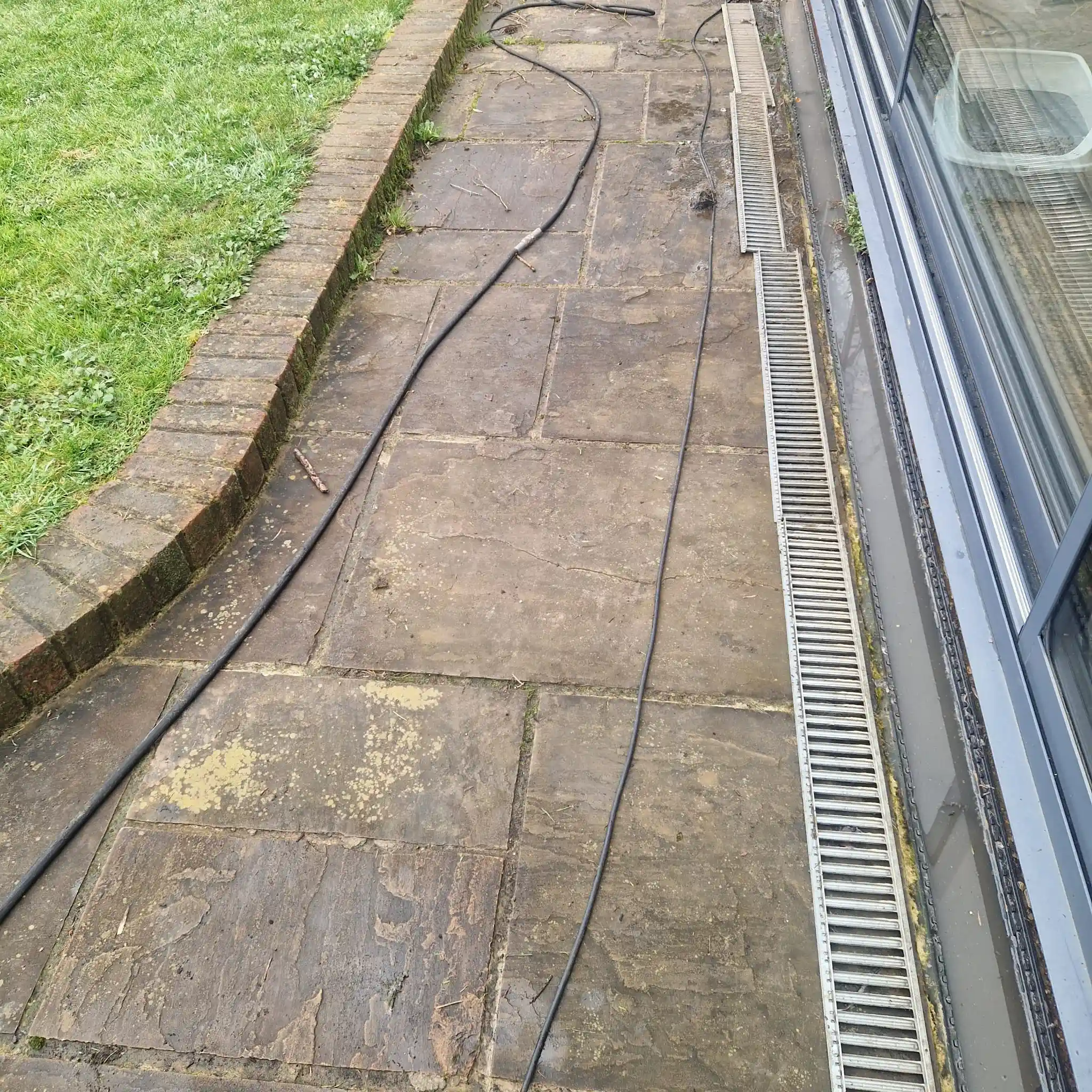
If you have a driveway, a patio, or a paved garden anywhere in the UK, you likely rely on a channel drain to keep your property dry. Also known in the industry as “eco drains” or trench drains, these long, grated drainage systems are your home’s absolute first line of defense against surface water flooding.
Because they sit entirely flush with the ground, blending into your block paving or concrete, they are incredibly easy to forget about. But ignoring them can lead to severe blockages, foul odors, and even damp penetrating your home’s foundations.
At Drainage&plumbing Ltd, we are dedicated specialists providing top-tier drain unblocking services across London, Surrey, Sussex, Kent, and the South East. We see the costly consequences of neglected channel drains every single day. A recent emergency callout to a customer named Jamie perfectly highlights what hides beneath the surface, why standard plumbers often fail to fix the issue, and how regular maintenance can save you hundreds of pounds.
💡 Key Takeaways:
What is a channel drain? A surface-level trench drain (eco drain) designed to move rainwater safely away from your paving.
Top signs of a blockage: Pooling rainwater, foul swampy odors, visible mud through the grate, or weed growth.
The biggest threat: Tree roots seeking moisture can completely colonize and destroy underground channels.
Maintenance rule: Carefully remove the grates to clean clogged drains at least once a year.
When to call a pro: If grates are stuck, roots are thick, or water won’t drain after surface cleaning, call local drainage contractors immediately.
The Story: Expecting a 90-Minute Job, Finding a Root-Infested Nightmare
When Jamie first called us, the situation was urgent: water no longer drained from the driveway, and a severe blockage choked the channel drain, threatening to flood toward the house. Due to Jamie’s age, hands-on property maintenance—like lifting heavy, stubborn, and rusted drain grates—posed a safety risk. Consequently, no one had cleaned the drain in years.
Before finding us, Jamie had actually hired a general plumber to try and unclog the clogged drain. Unfortunately, the plumber couldn’t get the job done and had to walk away.
Expert Insight: Many people instinctively search online for a “blocked drain plumber near me” when they see water pooling. However, while our name is Drainage&plumbing Ltd, we are strictly drainage specialists, not general plumbers. Unblocking a severely compromised exterior eco drain requires heavy-duty, commercial equipment that standard plumbers simply do not carry in their vans.
When my team arrived on site, we estimated a standard 90-minute clearance. But the moment we carefully lifted the channel drain cover, we realized we were in for a long, highly physical afternoon.
The “Oh Wow” Moment
The smell of stagnant water and decomposing leaves hit us first. But when we looked inside the trench, we didn’t just find a few damp autumn leaves.

The entire channel was choked with a massive, incredibly dense network of tree and plant roots. Beneath the roots was a dark, damp ecosystem filled with thick sludge, compacted mud, and an unbelievable number of slugs. The tree roots had actively sought out the moisture, entered through tiny, microscopic joints in the plastic pipework, and completely colonized the drain. They acted like a solid net, catching every single piece of dirt and debris that washed in.
Because of the sheer volume and thickness of the root ingress, standard plumbing rods were completely useless. We had to utilize our specialized drainage tools to fix the issue. also we deployed electromechanical root cutters and a commercial high pressure drain unblocker to painstakingly slice through the root mass. We had to extract years of compacted sludge without damaging the fragile channel casing itself.
What was supposed to be a quick job took a few hours of intense, specialist labor. But when the water finally flowed freely again, Jamie was absolutely thrilled and immensely relieved that the property was safe from flooding.
What Exactly is a Channel Drain (Eco Drain)?
To successfully unclog your drain and prevent what happened to Jamie, it helps to know exactly what materials you are dealing with. A channel drain is a linear surface water drainage system consisting of an enclosed trough with a removable grating on top. Depending on the age of your property, yours will likely be made of one of the following:
Plastic Drains: Highly common in modern homes and DIY store purchases. They are lightweight but can become brittle over time due to harsh UV exposure and freezing winter weather.
Concrete Drains: Usually found on older properties or commercial-style driveways. They are incredibly durable but very heavy, and the concrete edges can chip easily if handled roughly.
Metal Drains: Usually made of galvanized steel or cast iron. These are extremely strong, but if the protective coating wears off and they rust, the grates can seize firmly into place.
Mixed Materials: A very common, modern setup is a plastic underground channel body topped with a decorative metal grate.
The Warning Signs: How to Spot a Blockage Early
The good news about channel drains is that, unlike deep underground sewer pipes, they are very shallow. This means that a blockage is usually highly visible before it causes a catastrophic flood. Here are the warning signs indicating you need a professional drain clog service or some DIY maintenance:
Visible Debris: If you look down through the slots of the grate and see mud, impacted leaves, or roots rather than an empty channel, you have a blockage forming.
Pooling Water: After a rainstorm, if water is sitting on top of the grate or pooling around the edges of your driveway rather than flowing away instantly, the channel is choked.
Foul Odors: A bad, swampy smell coming from your patio is a clear indicator of rotting organic matter trapped in the drain.
Weed Growth: If you see grass or weeds physically growing out of the drain grate, it means there is enough soil and root structure inside the drain to support plant life. You need to act immediately.
The Danger of Ignoring the Signs
If you ignore these signs, the surface water has nowhere to go. It will eventually pool against your exterior brickwork. Over time, this constant moisture can bridge your damp-proof course (DPC) and lead to penetrating damp, peeling wallpaper, and dangerous mold inside your home.
The Specialist’s Guide: How to Maintain Your Channel Drains

As I told Jamie, the absolute secret to avoiding an expensive emergency callout is simple: Regular Maintenance. I highly advise homeowners to practice routine drain cleaning at least once a year (ideally in late autumn after the trees are bare).
If you keep on top of it, you will likely never need to call a professional. Here is our step-by-step guide to doing it safely:
1. Safe Grate Removal (The Crucial Step)
This is where DIYers accidentally break their drainage systems. Grates get jammed tight with grit, dirt, and rust.
Plastic Covers: Never pry violently from one end; cold plastic snaps very easily. Use two flathead screwdrivers to gently lever the grate up from both sides simultaneously, working your way down the line.
Metal Covers: Check for retaining screws! Many metal grates are screwed directly into the channel. If you pry them with a crowbar, you will permanently rip the threads out. If screws are rusted, apply penetrating oil (like WD-40) and let it sit for ten minutes before unscrewing.
Concrete Covers: Use proper lifting keys if the grate has keyholes. Lift straight up vertically to avoid chipping the channel edges.
(Note: When we visit a property, we are always happy to show our customers the exact, safe technique for removing their specific drain covers!)
2. Clear the Debris
Put on thick, waterproof gardening gloves. Use a small trowel or a child’s plastic spade to carefully scoop out the mud, leaves, and sludge. Bag this waste up and dispose of it in your garden waste bin. Do not wash heavy mud down the drain with a hose; this will just push the blockage deeper into your underground sewer pipes.
3. Check for Root Ingress
If you see fine, hair-like roots, snip them away with secateurs. If you see thick, woody roots that have physically breached the channel walls, DIY time is over. You have a structural issue and need a specialist to assess the underground pipework.
4. Flush the System
Once you have scooped the trench clean, use a garden hose to flush the channel. The water should move swiftly down the line to the outlet pipe. If it backs up and fills the trench, the blockage is deep underground, requiring professional drain unclogging services.
DIY vs. Calling a Professional: Honest Advice
Unlike many drain cleaner companies that push for unnecessary callouts, at Drainage&plumbing Ltd, we believe in total transparency. We don’t want to charge you for a job you can safely do yourself.
You can handle it yourself if:
You are physically able to safely lift the heavy grates without forcing them.
The blockage consists purely of loose leaves and surface mud.
Water flows freely down the pipe after you scoop the surface clean.
You need to call the specialists if:
The grates are completely seized, rusted, or screwed tight and won’t budge.
The channel is infested with thick tree roots (like Jamie’s drain was).
Water won’t drain away even after the surface trench is sparkling clean.
You smell raw sewage (indicating a serious cross-contamination with your foul water line).
If you are ever unsure, just pick up the phone. We regularly advise customers over the phone to help them determine if it’s a quick DIY fix or if they require our heavy-duty equipment.
Why Choose Drainage&plumbing Ltd?
When exterior surface water drains fail, standard plumbing tools will not fix the root cause. You need a dedicated team focused entirely on sewer and drain cleaning.
We carry commercial-grade equipment that general plumbers don’t have access to. This includes:
High-Pressure Water Jetters: To blast away compacted concrete-like mud and grease.
Electromechanical Root Cutters: To safely slice away invasive tree roots without destroying the plastic pipes.
CCTV Drain Cameras: To visually inspect the health of your underground pipes and ensure no further blockages are forming.
As your premier local drainage contractors, we proudly serve London, Surrey, Sussex, Kent, and the entire South East of England.
Frequently Asked Questions (FAQs)
How often should I clean my channel drains? We recommend a thorough visual inspection and cleaning at least once a year, preferably in late autumn after the leaves have fallen. If your driveway is surrounded by large, shedding trees, you may need to check them twice a year.
Can I use chemical drain unblockers on my exterior eco drains? No. We highly advise against this. Chemical unblockers are designed for indoor fat, grease, and hair clogs. They will absolutely not dissolve mud, leaves, or thick tree roots. Furthermore, these chemicals are highly toxic to the environment and wildlife, and they can severely damage the plastic components of your exterior drains.
Why do tree roots grow into channel drains? Roots are constantly searching for moisture, oxygen, and nutrients. Because channel drains are filled with water and decaying organic matter (like autumn leaves), they act as a massive magnet for roots. Even a microscopic, hairline gap in the plastic drain joints is enough for a root to enter, expand, and eventually crush the pipe.
A plumber couldn’t fix my outside drain?
Why can a drainage specialist do it?
General plumbers carry tools suited for smaller, indoor pipes (like kitchen sinks, toilets, and radiators). Drainage specialists use heavy-duty, vehicle-mounted high-pressure water jetting units and mechanical root cutters specifically designed to obliterate tough exterior blockages like compacted earth, rubble, and thick tree roots.
Are my blocked driveway drains causing damp inside my house?
Yes, they absolutely can. If a channel drain is blocked, surface rainwater has nowhere to go. It will pool against your exterior brick walls. Over time, this constant sitting moisture can bridge your damp-proof course (DPC) and lead to penetrating damp inside your living room or hallway.
Don’t wait for pooling water to cause permanent damp in your home. Get the experts on the job.
Don’t Just Take Our Word For It
When it comes to tackling a severely blocked channel drain or extracting thick tree roots, you need a team you can rely on to do the job right the first time.
At Drainage&plumbing Ltd, we pride ourselves on our reputation. We are fully vetted and highly recommended on Checkatrade, with over 650 positive customer reviews from homeowners and businesses across the South East.